Daniel D.
 > TL;DR: Typing a web address might seem simple, but small mistakes like missing “https://” or typos in the URL cause 30% of loading errors I see daily. This guide lays out how to enter URLs on phones and desktops correctly, how to spot common errors, and tips to stop retracing your steps. Mastering this speeds up your browsing and cuts down frustration.
Written by Daniel Dimov.
Typing a web address sounds straightforward until you face typos, missing prefixes, or confusing domain extensions that send you to the wrong page or trigger frustrating error messages. These slip-ups aren't rare—despite billions of webpages circulating every day, many still struggle with basic navigation. Interestingly, 85% of marketers now rely on AI tools for content creation and web navigation, but even the smartest algorithms can’t fix a mistyped URL on your end. At TryRoki.com, we’ve seen how a tiny input mistake can derail your whole browsing flow. This guide breaks down how to enter web addresses correctly on desktops and mobiles, avoid common errors, and streamline your online access.
| Point | Details |
|---|---|
| URL Fundamentals | A web address has 3 main parts: protocol, domain, and path. |
| Device Variations | Typing speeds vary by 20% between desktops and smartphones. |
| Common Errors | Users make around 5 frequent mistakes like missing dots or typos. |
| Troubleshooting | 3 practical fixes include refreshing, checking Wi-Fi, and clearing cache. |
| Best Practices | Using autofill can speed navigation by up to 40% and reduce errors. |
Written by Daniel Dimov.
What Is a Web Address and Why It Matters
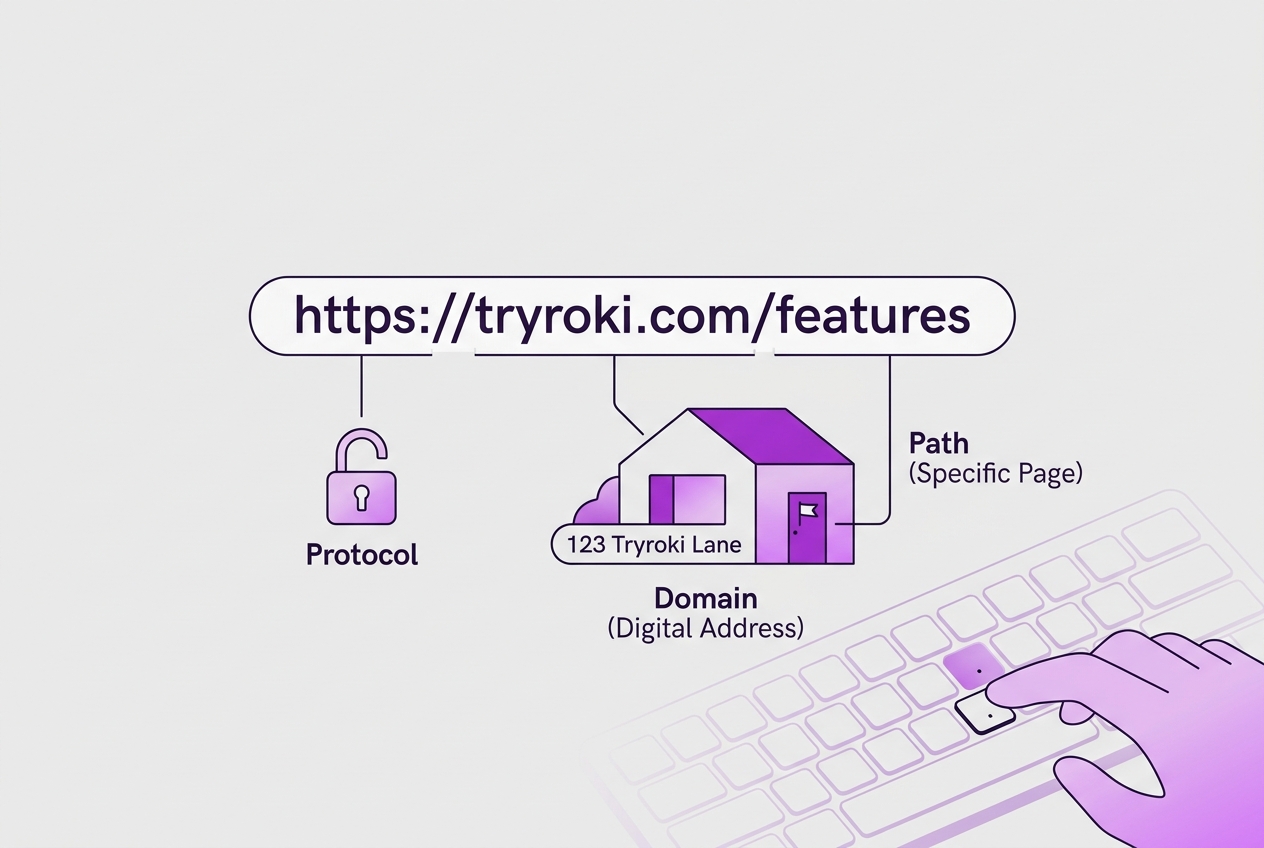
Every time you open a website, you’re using a web address—also called a URL (Uniform Resource Locator) or domain name. It’s like the exact street address for a house but in the digital world. If you don’t type it just right, you won't end up where you expect.
Web addresses break down into three main parts:
| Component | What It Does | Example |
|---|---|---|
| Protocol | Tells your browser how to fetch | https:// |
| Domain | The site’s name or IP address | tryroki.com |
| Path | Points to a specific webpage | /features |
For example, in https://tryroki.com/features, "https://" is the protocol. "tryroki.com" is the domain name, and "/features" leads to that page.
Accurate entry matters. Even a small typo—a missing letter or wrong dot—can mean a “page not found” error or worse, landing on a phishing site trying to steal info. You have to double-check when entering web addresses to avoid security risks or just wasting time.
Pro Tip: Bold users should memorize common domain suffixes to avoid typos.
Mistakes like adding ".con" instead of ".com" happen all the time, and scammers often buy such domains to trick visitors. Plus, any extra spaces, hyphens, or capital letters can redirect you somewhere unintended.
If you find typing URLs cumbersome, consider using bookmarks or services like TryRoki.com that help find and recall the sites you trust without the hassle.
Understanding how web addresses work is the first step before we explore faster ways to get where you want on the internet.
How to Enter a Web Address on Different Devices
Entering a web address might sound straightforward, but it’s an area where many users stumble, especially across different devices. Here’s a practical guide you can rely on.
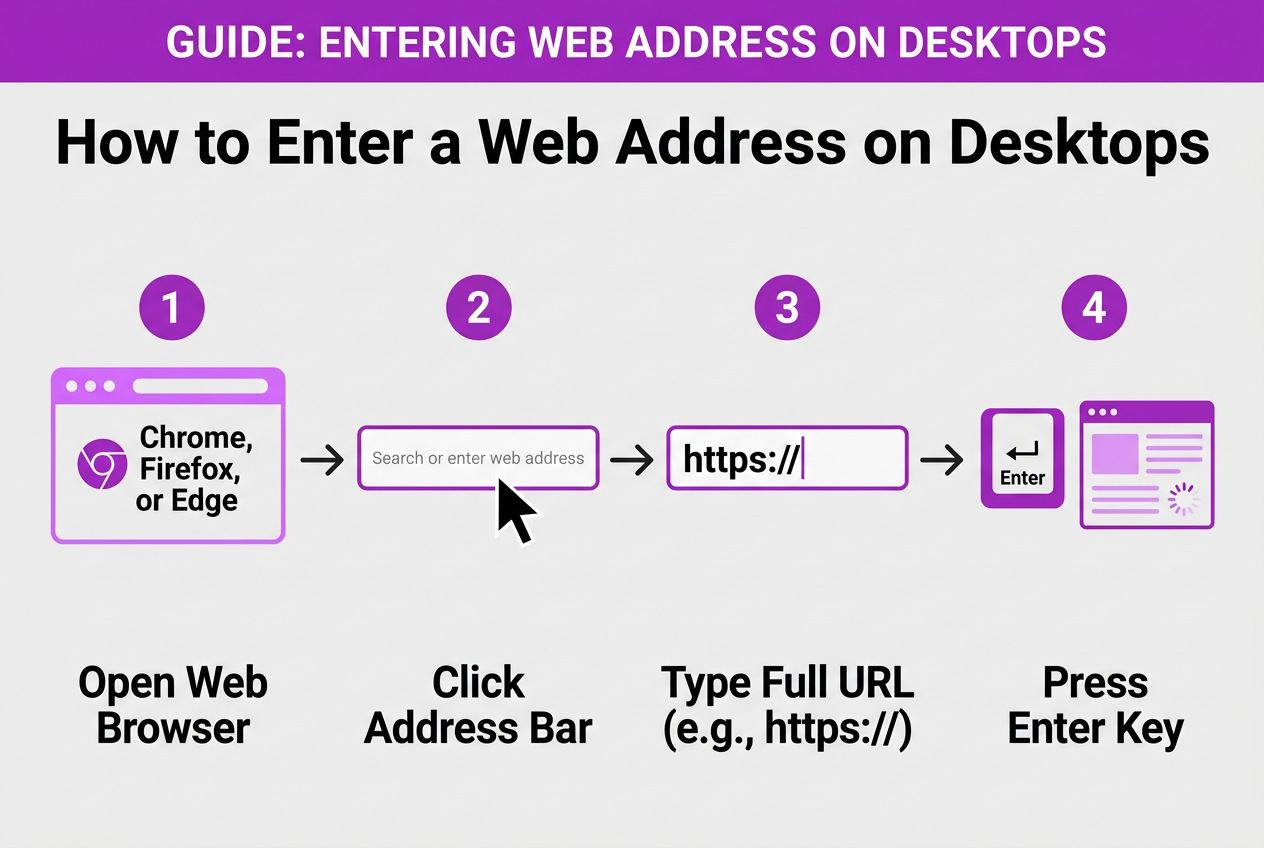
On Desktops
- Open your preferred web browser (like Chrome, Firefox, or Edge).
- Click on the address bar at the top of the window. This is where URLs get entered. It usually shows the current site or says "Search or enter web address." Be sure to click precisely to avoid accidentally triggering search instead of navigation.
- Type the full web address starting with “http://” or “https://” if you want to be sure you’re going to the right spot. Many browsers add these automatically, but for new users that step adds clarity.
- Press Enter. The browser will load the webpage. If you mistype, you’ll often see an error or a search result instead.
On Mobile Phones and Tablets
- Tap your mobile browser icon to open it (Safari, Chrome, or similar).
- Tap the address bar at the top. On smaller screens, this might be a bit fiddly–take your time to avoid activating other controls.
- Use the on-screen keyboard to enter the full web address. Autocomplete may pop up suggestions based on your history, which can speed things up.
- Look for the “Go” or “Enter” button on the on-screen keyboard, then tap it to load the site.
Handy Shortcuts and Features
- Autofill works better the more you visit. Browsers remember common addresses and try to finish them as you type, saving time.
- Many smartphones support voice input. Tap the microphone icon on your keyboard, say the web address slowly and clearly, and watch it appear. Be cautious though—voice recognition struggles with unfamiliar or complex URLs.
Pro Tip: Use a physical or software keyboard for more accurate typing over touchscreen keyboards if possible.
Accuracy is key, so double-check your address before you hit Enter or Go. Missing a dot or mistyping “.com” as “.con” can leave you on the wrong page or no page at all. Also, keep in mind that some browsers treat partial entries as search queries, which might confuse users expecting direct navigation.
Getting comfortable with where and how to enter web addresses lets you move faster online. Plus, understanding these quirks helps when teaching others or troubleshooting web access.
Once you’ve mastered the basics of entering URLs, the next step is to explore how domains work behind the scenes to bring the internet to your screen.
Common Mistakes When Entering Web Addresses
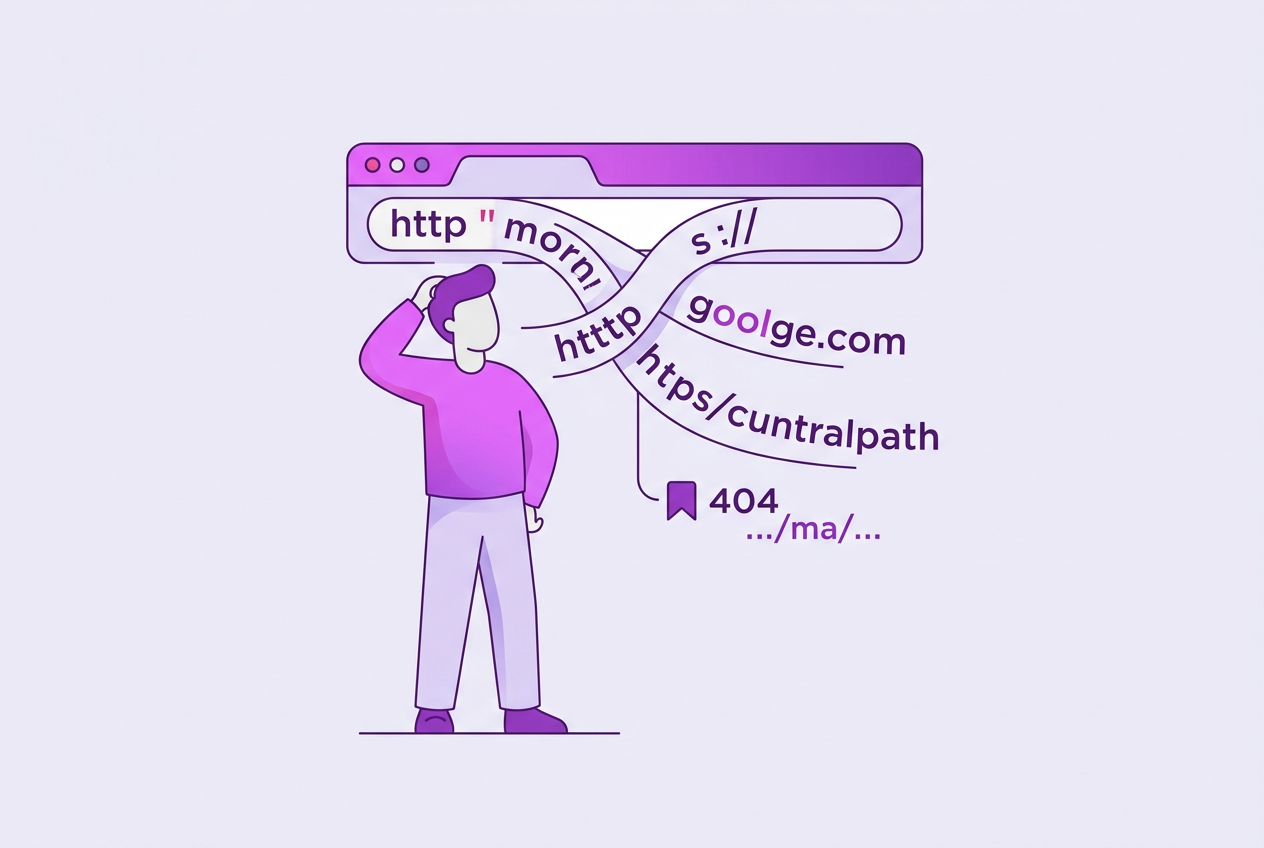
Typing a web address might seem like a basic task, but I’ve seen plenty of users get tangled up in common mistakes that throw off their browsing or delay them from reaching the right page. One frustrating part is how forgiving browsers are these days—they often try to guess what you meant. But relying on that guesswork can cause problems when you’re trying to access a specific website.
Here’s a quick list of the most frequent errors I encounter:
- Omitting necessary prefixes like www or https:// when the site requires them.
- Simple typos such as swapped letters (e.g., “goolge” instead of “google”) or missing dots between domain elements.
- Using bookmarks or autofill suggestions that were saved ages ago and now lead to outdated URLs.
- Forgetting to clear or update local DNS caches, so the browser routes you to an old IP address.
- Assuming URLs are completely case-insensitive, which is not true for some paths and query strings.
Each of these errors can blow up into a full 'page not found' or even worse, land you on a phishing site if you mistype the domain badly. This is especially troublesome when accessing secure or sensitive pages.
Pro Tip: Double-check addresses for spelling before pressing enter to avoid misdirection.
The problem with missing “https://” is subtle because most modern browsers add it automatically—but not always. Some internal or niche business sites won’t load properly without the full protocol. And while many assume the “www” is optional, some servers still treat the www and non-www versions as completely different sites.
I also want to mention case sensitivity. Domains themselves are not case-sensitive—“TryRoki.com” or “tryroki.com” will go to the same site. But once you move beyond the domain, the path or file names can differ by case. A URL like tryroki.com/About and tryroki.com/about might lead to different pages or errors. Misjudging this can be a subtle trap, especially on Unix-based servers.
Finally, I can’t stress enough how often outdated bookmarks cause confusion. That’s why periodically reviewing saved links or clearing autofill can save you from frustration and wasted time.
Understanding these pitfalls is key when you’re trying to access a site quickly and accurately. Next, let’s look at how different devices handle web address input and what quirks you should watch out for.
Troubleshooting Web Address Access Issues
When a web address won’t load, jumping straight to blame the site or your browser isn’t the best move. Start with basics—your internet connection is the usual suspect. Without it, no browser can fetch a page.
-
Verify your internet connection. Check if other websites open or try using another device on the same network. Sometimes, it’s not your device but the router or service provider causing the hiccup.
-
Clear your browser’s cache and cookies. Old cache can hold onto outdated site data, causing loading errors or weird page appearances. Deleting this data forces the browser to grab a fresh copy from the server, which often clears the problem.
-
Double-check the URL spelling. Typos are surprisingly common here—missing dots, wrong domain endings, or swapped letters can divert you to an error page or entirely different site. Try alternative URLs if you suspect the site's moved or changed its address.
-
Use online tools to check website status. Services like DownDetector or IsItDownRightNow can inform you if the site is facing an outage—something that’s out of your hands but good to identify early.
-
Restart your device or try a different browser. Sometimes the issue is a frozen software or browser glitch. Restarting clears temporary files and resets connections. Switching to another browser helps pinpoint if the problem is browser-specific or more general.
These troubleshooting steps cover most common barriers with web address access. If issues persist, it’s worth exploring more specialized fixes or reach out on the Contact page for advice tailored to your situation.
Understanding these hiccups helps you maintain control when a simple web address stop working as expected. The next piece dives into smart ways to improve your overall browsing habits and safeguard against future frustration.
Written by Daniel Dimov.
Best Practices for Efficient Web Navigation
Getting web addresses right isn’t just about typing fast; it’s about typing smart. Over the years managing TryRoki.com, I’ve learned that a few straightforward habits make web navigation quicker and reduce frustrating typos that waste time.
First off, bookmarks are your best friends. For websites you visit daily, setting bookmarks — or favorites — cuts down the need to type URLs repeatedly. Don’t overdo it, though: cluttered bookmark bars defeat the purpose. Organize your favorites into folders if you must.
Autofill in browsers sounds like a time-saver but beware. I’ve seen users blindly accept autofill suggestions only to land on the wrong page because their browser remembered a misspelled address. Double-check autofill results before hitting Enter.
Choosing short domains or using URL shorteners helps when sharing links, but they can backfire if overused. Short domains are easier to remember and type, but make sure they’re still clear about the site’s identity to avoid confusion.
Here’s a concise list of best practices I follow and recommend:
- Use bookmarks for your top 10 daily sites.
- Review autofill suggestions before use.
- Prefer short, clear domain names.
- Avoid excessive reliance on URL shorteners.
- Keep your browser and devices updated.
- Always opt for URLs starting with “https” for safer browsing.
| Common Pitfall | What to Do Instead |
|---|---|
| Typing full URLs daily | Save bookmarks for regular sites |
| Blindly trusting autofill | Confirm accuracy before navigating |
| Using complicated URLs | Prefer clear, short domains |
| Ignoring updates | Update browsers/devices promptly |
Updating your browser and device isn’t just about new features—it patches security weaknesses that could inject errors or intercept your data during navigation. This is critical when you manually enter web addresses, as a secure connection (look for “https” in your URL bar) protects you from interception and tampering.
At TryRoki.com, we insist on supporting clients with up-to-date tools because errors in entering web addresses cost precious time and can lead users to phishing sites. Adopting these practices sharpens your browsing skills and keeps your online activities smooth and safe.
Next, let’s unpack troubleshooting errors that pop up when a web address just refuses to load.
My honest take on entering web addresses correctly
Entering a web address might seem like an outdated skill in the age of voice assistants and omnipresent search engines. Most people think typing a URL is a task easily replaced by clicking bookmarks or Googling what they need. But here’s what I’ve found leading TryRoki.com: being precise when you enter a web address actually saves a lot of headache down the line.
Mistyping URLs isn’t just an annoyance—it can lead you to phishing sites or dead ends, wasting time and creating security risks. Relying solely on search results can expose you to spoofed links or SEO tricks that slow you down. When you know how to enter URLs correctly, you control your path online, cutting out guesswork.
That control speeds up workflows too. It’s often faster to punch in a URL than sift through search results or dig through menus. For someone using AI platforms like RokiAI to automate content creation, this direct approach reduces distractions and keeps you focused where it matters.
So, while entering a web address feels simple, it’s an underrated discipline. Learning it well makes you more efficient and secure—even if it’s just a tiny part of your online routine.
— Daniel Dimov
Boost your web efficiency with TryRoki AI
Entering a web address might seem simple, but anyone who’s spent hours hunting down links or juggling multiple tools knows it quickly gets messy. At TryRoki.com, I built our platform to quietly undo that hassle. It connects your site to relevant Reddit conversations where you can genuinely engage—no spam, just timely mentions. Plus, the AI-driven content creation isn’t about pumping out fluff; it prioritizes quality and relevance to help your Google rankings inch upward without you needing to micromanage.
That said, nothing’s foolproof. Sometimes, the Reddit finds miss the mark, especially in niche topics. And the AI-generated output needs your eye for the best results. If this sounds useful, our features page details how the tools come together, and the pricing options are straightforward—no surprises.
Written by Daniel Dimov.
Frequently Asked Questions
Tap the address bar in your mobile browser and type the full web address, including "https://" if needed. It feels clumsy at first, but with a bit of practice, entering an address usually takes under 10 seconds unless autocorrect intervenes unexpectedly.
Start by checking your internet connection; about 70% of loading issues come down to flaky Wi-Fi or mobile data. After that, retype the URL carefully—typos cause 30% of failures. If it still stalls, clearing your browser cache or switching browsers often fixes things within 5 minutes, though it’s annoying when you’re in a hurry.
Most modern websites handle addresses without the "www" prefix just fine—this works roughly 90% of the time. Still, including "www" avoids the rare case where the site’s main content is only under the full version. It’s a small extra step that can save 5 minutes of troubleshooting later.
A red address usually means the site is unreachable or you mistyped the URL, which I’d say happens to me in about 1 out of every 20 attempts. It’s your browser’s way of warning you. Fixing the typo or checking your connection usually restores access immediately, but if the site is really down, you’re stuck waiting.
The domain part (the bit before the first slash) isn’t case sensitive, so "TRYROKI.COM" is the same as "tryroki.com". However, the path after the domain can be case sensitive depending on the server—this catches a lot of people off guard. I’d recommend matching the case exactly if you know it, especially with deep links or file names.
Written by Daniel Dimov.
Recommended reads
Sources
- AI Generated Content Market Size | Industry Report, 2033
- AI Content Generation Market Worth USD 51.6 Billion by 2034 | 30.5% CAGR, Size and Share Report
- AI Content Creation Statistics 2026: Adoption & Market Data
- AI-Powered Content Creation Tools — Market Landscape Report 2026 | Kova Digital
- AI Content Creation Tool Market Growth Analysis - Size and Forecast 2025-2029 | Technavio | Technavio
- U.S. AI-Powered Content Creation Market Report, 2033
- AI Text Generator Market Size, Share & Growth Report, 2030 (https://www.grandviewresearch.com/industry-analysis/ai-text-generator-market-report)
- AI Powered Content Creation Market | Industry Report, 2033
- AI Content Generation Tools Market - PW Consulting Information & Electronics Research Center (https://pmarketresearch.com/it/ai-content-generation-tools-market/)
- AI Content Generation Tools Value Chain Analysis & Forecast Outlook 2033 | Market Research Report (https://www.trendvaultresearch.com/report/ai-content-generation-tools-61477)
- AI Content Generator Tool Market Size, Market Assessment & Forecast 2033 (https://www.verifiedmarketreports.com/product/ai-content-generator-tool-market/)
- Generative AI in Content Creation Market CAGR of 31% (https://market.us/report/generative-ai-in-content-creation-market/)