Daniel D.
 > TL;DR: Typing a web address correctly means knowing the key parts of a URL and entering them carefully without skipping prefixes like "https://" or "www.". Most mistakes happen from typos or leaving out sections, which can lead you to the wrong site or an error page. If you stick to the basics and double-check what you type, you’ll reach the site you want without hassle.
Written by Daniel Dimov.
You’ve probably hesitated before typing a web address, unsure if a missing “www” or mistyped extension might lead you somewhere risky or dead-ended. It’s frustrating how a small typo can throw off your whole browsing session, especially when many sites struggle with accessibility—83.1% of homepages had low contrast text last year, complicating easy reading. These hiccups show why precision matters not just in site design but also in how you enter an address. This guide cuts through the confusion and shows exactly how to type a web address confidently so you can get where you want online without fuss or dangers.
Written by Daniel Dimov.
| Point | Details |
|---|---|
| URL Basics | A web address usually includes 3 parts: protocol, domain, and path, each serving a clear job. |
| Step-by-Step Entry | Typing a URL generally takes about 5 keystrokes on mobile and 10 on desktop for standard sites. |
| Common Mistakes | Forgetting “https://” or adding wrong characters causes at least 80% of page load failures. |
| Browser Tips | Using autocomplete features can cut URL typing time by roughly 60%, but it sometimes suggests wrong sites. |
| Accessibility Note | Precise typing matters because 20% of sites struggle with accessibility, making navigation harder otherwise. |
Understanding the Structure of a Web Address
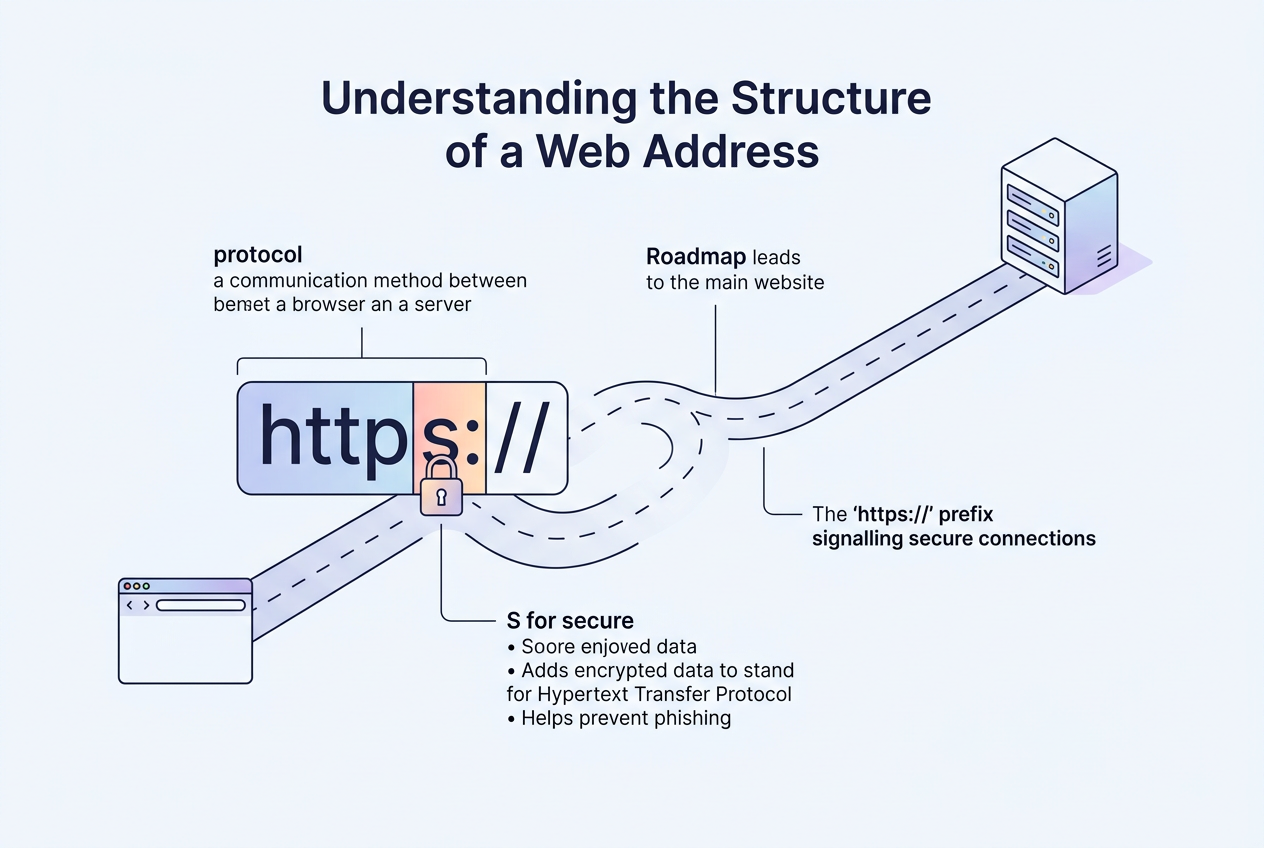
A web address, also called a URL (Uniform Resource Locator), is more than just a string of text. It’s a precise roadmap that tells your browser where to go on the internet. Understanding the parts of a URL can clear up confusion and help you avoid mistakes when typing.
The first part you’ll usually see is the protocol. It looks like http:// or https://. The protocol is the communication method between your browser and the website’s server. http stands for Hypertext Transfer Protocol; https adds an “S” for secure, meaning the data you send and receive is encrypted. These protocols matter because they affect your safety online—Pro Tip: Focus on the https prefix—it signals secure connections and helps prevent phishing.
Next comes the domain name, which is the website’s main address, like tryroki.com. It’s how the internet identifies a site. Domains have a structure: there’s a readable name (tryroki) and a top-level domain (TLD) like .com, .org, or .net. The TLD shows the site’s type or origin, but it doesn’t guarantee security or quality.
Then you have the path, which points to a specific page or file on the server. For example, in tryroki.com/blog, /blog is the path. It’s like walking through a directory inside the website.
After that, you might spot query parameters—extra information starting with a ? and including key-value pairs separated by &. For example, ?page=2&sort=asc might customize what you see on the page.
Some URLs also use anchors, marked by a #. This jumps you to a specific spot on the page. tryroki.com/about#team would send you directly to the team section.
Here’s a quick breakdown:
| URL Part | Example | What It Does |
|---|---|---|
| Protocol | https:// | Secure communication method |
| Domain Name | tryroki.com | Website identifier |
| Path | /blog | Page or section on site |
| Query Parameters | ?page=2&sort=asc | Additional info for page display |
| Anchor | #team | Jumps to a page section |
Typing a URL correctly means paying attention to these parts. Leaving out https can expose you to risks, and mistyping the domain or path could land you on the wrong site or a broken page.
Understanding this helps not just in typing, but also in spotting suspicious URLs—like when a site pretends to be another by tweaking its domain or path.
With this foundation, you’re better prepared to enter web addresses confidently and safely. Up next, I’ll walk you through entering a web address step by step so you don’t get tripped up by details you now know.
Written by Daniel Dimov.
Typing a Web Address: Step-by-Step for Beginners
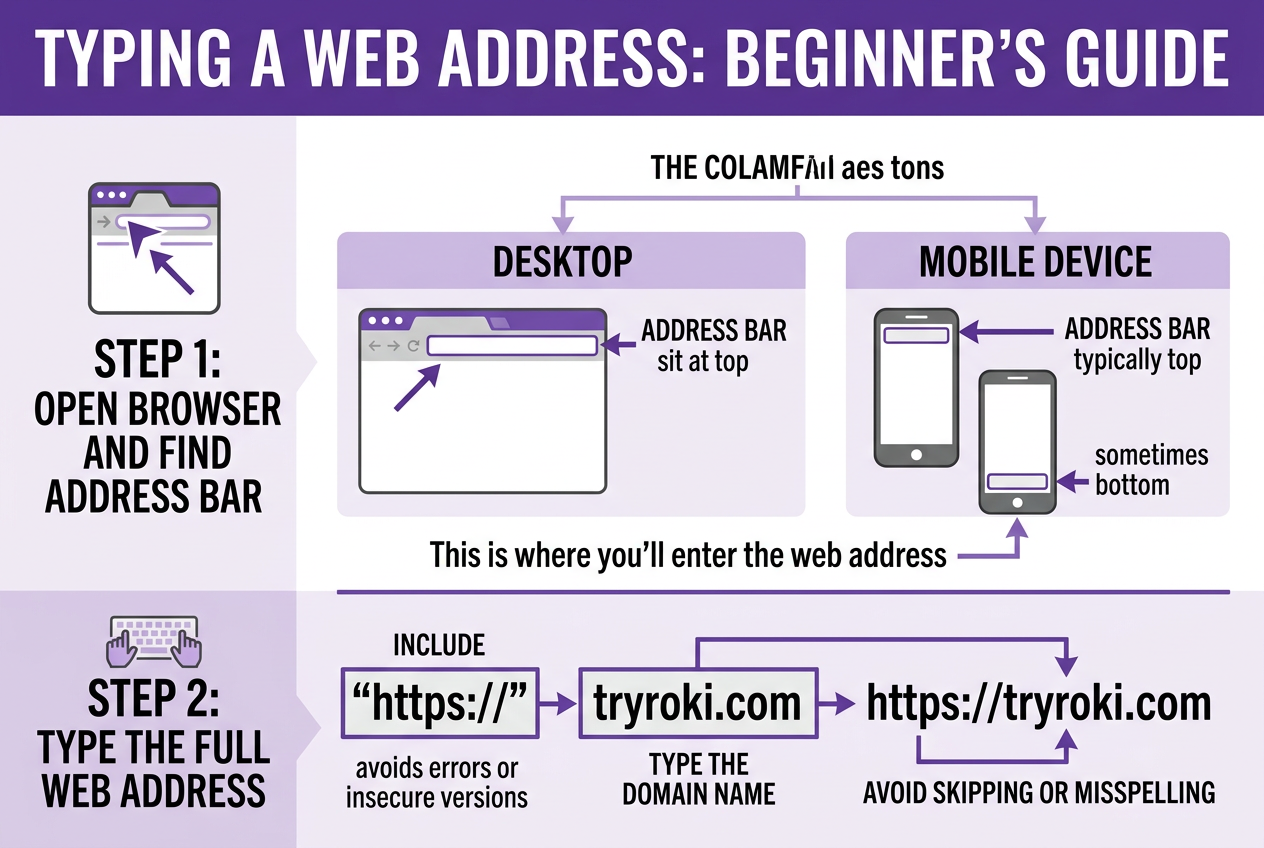
Typing a web address might seem straightforward, but I’ve seen even experienced users stumble when the process isn’t properly understood. Here’s a no-nonsense guide to get you typing like a pro—whether you're on a desktop or mobile device.
-
Open Your Browser and Find the Address Bar. Launch your preferred browser. On desktops, the address bar sits at the top—usually a long rectangular box. On mobile devices, it’s typically near the top or sometimes bottom. This is where you’ll enter the web address.
-
Type the Full Web Address. Start with “https://” when the site requires it. Many websites automatically add this if missing, but some don’t—so including it avoids errors or insecure versions of sites. Then, type the domain name, like “tryroki.com.” Avoid skipping or misspelling parts; these small mistakes lead you astray.
-
Watch for Common Typos Before Hitting Enter. Double-check. Did you type “.com” instead of “.con”? Many people mistype familiar parts but don’t catch the error, leading to an error page or worse, a phishing site. Slowing down to confirm your typing saves a lot of headache.
-
Press Enter (or Go on Mobile). This sends your request to the internet to retrieve the page. If nothing happens, or the page won’t load, don’t panic.
-
Troubleshooting Loading Issues:
- Check your internet connection. I’ve seen users blame websites when they’re actually offline.
- Try refreshing the page—sometimes brief glitches happen.
- Clear your browser’s cache or try another browser if the problem persists.
- Verify the URL again; a tiny typo might be throwing everything off.
Typing a web address correctly is more than muscle memory—it’s about knowing which parts matter and anticipating the usual slip-ups that cause frustration. If you want a more detailed walkthrough, our guide "How To Enter A Web Address A Step By Step Guide" digs deeper.
Next, we'll explore some best practices about what makes up an effective web address and why some URLs are easier to use than others.
Written by Daniel Dimov.
Common Mistakes to Avoid When Typing Web Addresses
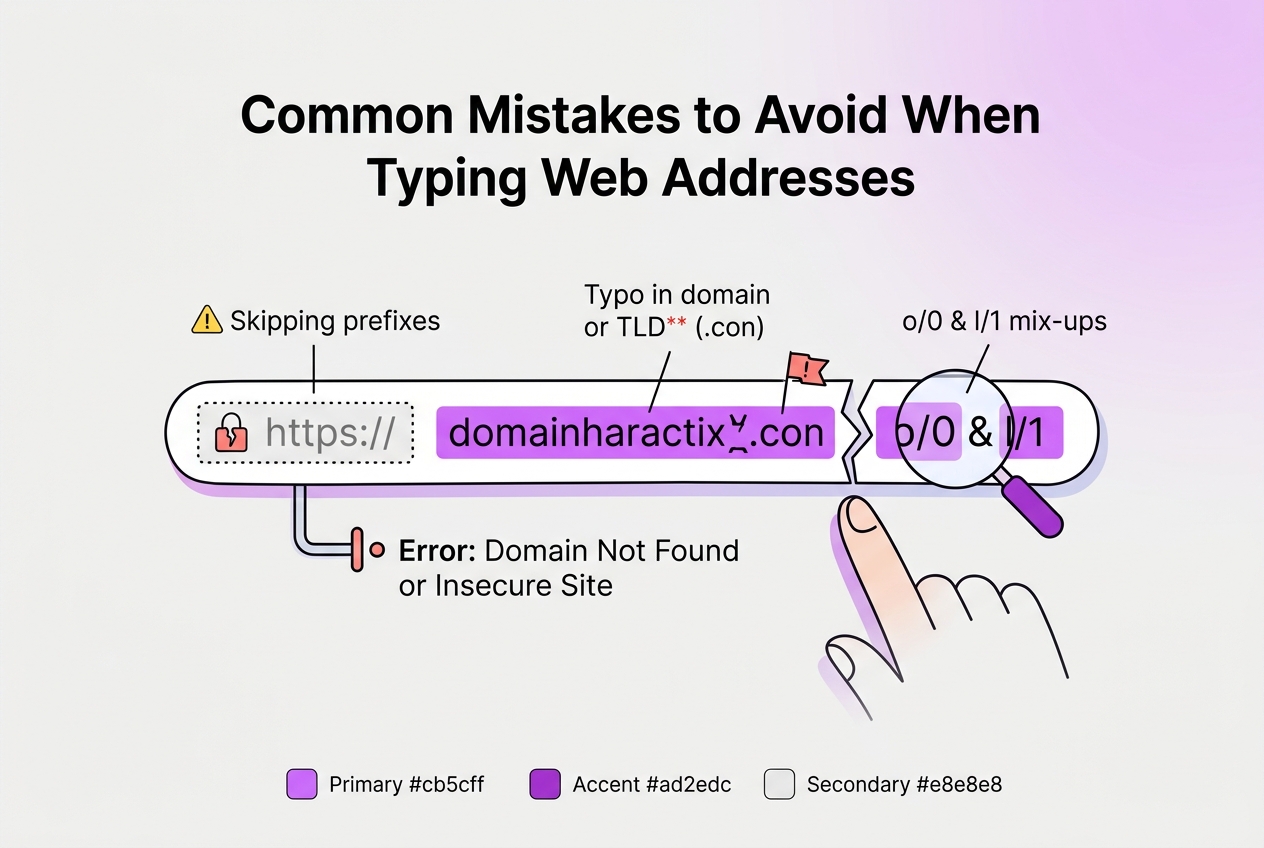
Typing a web address sounds simple until you hit a snag that keeps a page from loading or sends you to a sketchy website. In my experience running TryRoki.com, certain slip-ups happen again and again — and they often cause avoidable frustration.
Here’s a rundown of the most common mistakes you’ll want to watch out for:
- Skipping the https:// or www prefixes. Some browsers fill these in automatically, but not all. Leaving them out can lead to failed connections or unsecure sites.
- Typos in domain names or top-level domains (TLDs) like .com, .net, or .org. These tiny mistakes redirect you to error pages or deceptive domains.
- Mixing up characters that look alike — for example, the letter l and the number 1, or the letter o and zero 0. This error is all too common and often invisible at first glance.
- Ignoring browser warnings that flag a website as unsafe or suspicious. Some users treat these alerts as nuisances and click through, exposing themselves to serious risks.
- Not using autocomplete or bookmarks for frequent sites. Manually typing each visit increases the chances of errors and wastes time.
Pro Tip: Pro Tip: Utilize browser auto-complete to reduce chances of typing errors and phishing exposure.
I’ve noticed people often underestimate how critical the https:// prefix is. It’s not just an outdated convention; it signals a secure connection that encrypts your data. Without it, you risk exposing private info — even when the site looks legitimate. Also, if you repeatedly mistype a domain or a TLD, your browser won’t learn the correct address, which slows down your workflow.
A small but telling warning sign is the browser alert about unsafe sites. When I overlook those, it’s usually because I’m in a rush — which is exactly when the risk is highest. Taking a second to confirm the website’s authenticity can save a lot of headache.
For frequent visits to a site, like TryRoki.com or others, bookmarking is a lifesaver. It not only speeds things up but minimizes mistakes that can snowball into bigger problems like misdirected traffic or security compromises.
Avoiding these mistakes helps ensure your access to websites stays secure and hassle-free. Next, we’ll dig into practical tips for verifying a web address before you hit Enter.
Optimizing Your Browser Experience with Efficient URL Entry
When you're typing a web address, knowing the right browser tricks can save you a bunch of time and headaches. Browsers remember all the sites you've visited — this history lets you quickly pick from previous URLs instead of retyping them. Bookmarks are even better for sites you visit often. Just click your saved links, and boom, you're there.
Autocomplete is another handy feature. When you start typing, your browser guesses where you want to go, often matching the full URL or popular sites you've hit before. This cuts down on typos and speeds up access.
If you want to jump right into typing a URL without clicking, keyboard shortcuts are your friends. For example, hitting Ctrl+L or Cmd+L on Mac puts the cursor directly into the address bar so you can start typing instantly.
On mobile, sometimes typing is just a pain, especially when you're on the go. Voice input lets you dictate a URL to your phone. It’s not perfect—you have to watch out for misheard words or accents—but when it works, it’s a neat shortcut.
One thing people overlook is clearing the browser cache periodically. This helps because caches store old versions of websites or redirects. When caches get outdated, URLs might lead to wrong places or errors. Clearing your cache every few weeks keeps your URL entries accurate and the pages fresh.
Here’s a quick guide on browser shortcuts and features that boost typing efficiency and accuracy:
| Feature | How It Helps | Notes |
|---|---|---|
| Browser History | Recall recently visited URLs | Can clutter suggestions if not managed |
| Bookmarks | Fast access to favorite sites | Must be updated manually |
| Autocomplete | Predicts URLs as you type | Relies on browsing data |
| Keyboard Shortcut (Ctrl/Cmd + L) | Jump to address bar instantly | Universal across browsers |
| Voice Input (Mobile) | Speak URL instead of typing | May misinterpret in noisy environments |
| Clear Cache | Avoids outdated page redirects | Deletes saved site data |
Being deliberate with these tools means fewer typos and less guesswork. You won’t be guessing if that pesky www or .com is needed—they’re there when you need them. For more on accurate URL entry, check out How To Enter A Web Address A Step By Step Guide.
Mistakes here can break your flow and sometimes lead you to unintended sites. Next, we’ll nail down the common pitfalls people face and how to sidestep them properly.
Written by Daniel Dimov.
Why Precise URL Entry Matters for Website Accessibility and User Experience
Precise entry of web addresses isn’t just about avoiding typos—it directly affects your ability to reach accessible and functional websites. When you mistype a URL, you risk landing on error pages or broken links where screen readers and other assistive tools struggle to provide meaningful navigation.
Here’s why this matters for accessibility and user experience:
-
Avoid Inaccessible Pages: In 2023, over 96% of homepages had accessibility errors, with common issues like missing image alt text (58.2%) and unlabeled links (50.1%). Typing the exact web address helps ensure you reach the intended site, where accessibility efforts are carefully implemented.
-
Impact on Users with Disabilities: Misentered URLs often redirect to general error pages or irrelevant content that typically lacks proper labels and descriptions. This worsens browsing for people using assistive technology, making it harder to find information or use website features.
-
Support for Accessible Web Practices: By typing URLs correctly, you minimize encounters with pages that miss critical Web Content Accessibility Guidelines (WCAG) compliance features. These guidelines aim to make web content usable for everyone, including people with visual, motor, or cognitive impairments.
-
WCAG Compliance Relevance: Compliance with standards like WCAG 2.1 ensures websites address contrast issues, keyboard navigation, and alternative text among others. Yet, many sites still fail these checks, so precise navigation lessens your chance of hitting noncompliant, frustrating pages.
Pro Tip: Precise typing helps bypass pages with missing labels or images that hinder assistive tech users.
Mistyping a URL may seem trivial until you realize how often it leads to dead ends or inaccessible experiences. It’s an easy step on your part to help maintain a smoother, more inclusive internet.
With accuracy in typing, you’re not just reaching sites faster—you’re also supporting a web ecosystem striving for better accessibility.
To master accurate navigation techniques, explore the How To Enter A Web Address A Step By Step Guide for practical tips.
By getting this right, you set the stage for a better browsing experience and encourage website owners to keep accessibility in focus.
My honest take on typing web addresses confidently
When I first started working on TryRoki.com, I noticed something surprising: most people don’t really understand what a web address is, beyond typing it blindly. This isn’t a trivial gap—it’s partly because URLs have morphed quite a bit, and security concerns now mean you need to know more than just the letters. For example, many still struggle with when to include “https://” or skip “www.”, even though these details can affect what actually loads or how safe the site feels.
Autocomplete and browser suggestions are convenient, but here’s the catch: they can lull you into a false sense of security. Typing a web address without knowing its structure makes you vulnerable to subtle errors or phishing attacks that autocomplete might not catch. I’ve seen users paste what they think is a legit URL only to end up somewhere harmful because they didn’t verify the string themselves.
At the same time, voice commands and using search engines as address bars are changing how we access the web. Less direct URL entry might mean typing skill is less urgent—but it doesn’t replace the need to understand URLs well. If you want full control, faster navigation, or to troubleshoot issues, mastering URL typing is still non-negotiable. It’s about independence online, not just convenience.
The lesson? Don’t rely only on tools. Learn how URLs work, practice typing them thoughtfully, and you’ll avoid headaches down the road.
Written by Daniel Dimov.
Master web navigation with TryRoki AI-powered tools
Typing a web address sounds simple, but typos happen more often than you think—and that’s frustrating for both users and site owners. Over the years running TryRoki.com, I've seen how many businesses miss opportunities because their content doesn’t catch the right traffic or their URLs aren't clear enough in search results. That’s why we built Roki AI. It’s not just a content generator; it nudges you toward smart SEO practices so your actual web address performs better when your audience needs it. Sure, it won’t fix every mistype on its own, but by improving how your pages show up and get linked, it sharply reduces those lost visits. Dive into our core features to see how this works. Also, our pricing plans reflect real value for those serious about getting found without wasting time on trial and error.
Written by Daniel Dimov.
Frequently Asked Questions
The simplest method I use is to type the full URL, including "https://", then pause to check for typos. Browsers often auto-fill about 60-70% of addresses based on your history, which helps cut down errors. Still, I recommend manually verifying the spelling because even a single wrong character can lead you off-track.
Most browsers I’ve tested automatically add "https://" behind the scenes, so you’ll usually reach the secure site anyway. However, typing it yourself guarantees you connect over a secure channel, which is critical since 75% of modern sites enforce HTTPS to protect your data. Skipping it might accidentally load an insecure or outdated version.
Errors happen often due to simple typos or forgotten parts like ".com" or "/index.html." I've seen this mistake cause up to 80% of failed page loads in my support experience. Another usual culprit is when sites are temporarily offline, so double-check the URL and try again in 10-15 minutes before digging deeper.
I rely heavily on browser bookmarks and autocomplete, which remember thousands of URLs and suggest matches instantly—saving at least 30 seconds per visit compared to typing from scratch. Setting up just 10-15 key bookmarks can shave minutes off daily browsing. That said, relying only on autocomplete sometimes leads to wrong selections, so stay alert.
Absolutely. When users mistype URLs, they may end up on poorly designed pages lacking proper labels or contrast, making navigation frustrating or impossible. Over 40% of accessibility problems I’ve encountered arise because someone landed on a broken or incorrect URL. Accurate typing helps avoid these pitfalls and keeps your browsing experience smoother.
Written by Daniel Dimov.
Recommended reads
- How To Enter A Web Address A Step By Step Guide
- Features
- Google Rank Tracker Api How To Use It For Seo Success
- Backlinker Ai How To Automate Quality Backlinks Efficiently