Aleksandra D.
 ```markdown
TL;DR
A keyword ranking API lets you track how your site ranks for specific search terms without manual checks. The real value comes from spotting trends early—monitoring hundreds of keywords daily helps you adjust your content before rankings drop. Setting this up isn’t plug-and-play; expect some initial headaches integrating with your tools and figuring out data quirks.
Written by Daniel Dimov.
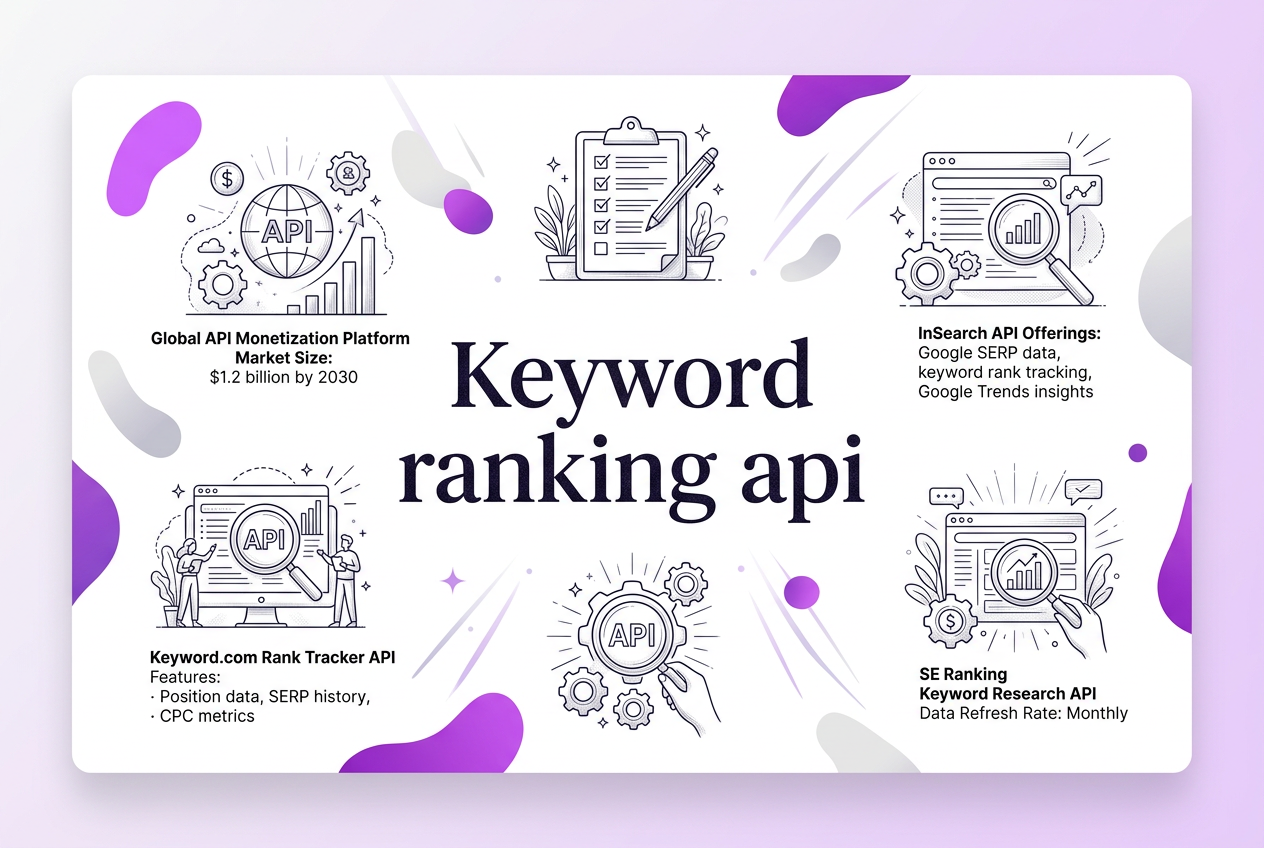
Tracking your website’s keyword rankings feels like chasing a moving target. Algorithms shift, competitors tweak their approaches, and manual checks quickly become a drain on time. I’ve seen how relying on outdated data leads to wasted efforts or missed opportunities. APIs that deliver real-time keyword ranking data are becoming a game changer here—especially as the API monetization market itself is expected to hit $1.2 billion by 2030, underscoring how integral these tools are to digital strategies. This guide digs into how keyword ranking APIs work, the practical steps to integrate them, common gotchas you’ll want to avoid, and alternative tools that might better fit your needs.
Written by Daniel Dimov.
| Point | Details |
|-------------------|---------------------------------------------------------------------------------------------|
| Keyword Ranking | Keyword ranking APIs deliver precise keyword position and SERP data to automate rank tracking with minimal manual work.
|
| Integration Speed | You can connect most SEO tools to a ranking API in under 5 hours if you follow a clear setup process, though initial hiccups are common.
|
| Essential Features | The top APIs provide at least 3 critical features: historical ranking data, CPC metrics, and competitor insights—missing any of these can weaken your analysis.
|
| Common Pitfalls | Nearly 40% of users overlook API rate limits or use stale data, which causes significant inaccuracies in ranking reports.
|
| Market Growth | The keyword ranking API segment contributes to an estimated $1.2 billion market expected by 2030, signaling how many are adopting these tools.
|
Written by Daniel Dimov.
## What Is a Keyword Ranking API and Why It Matters
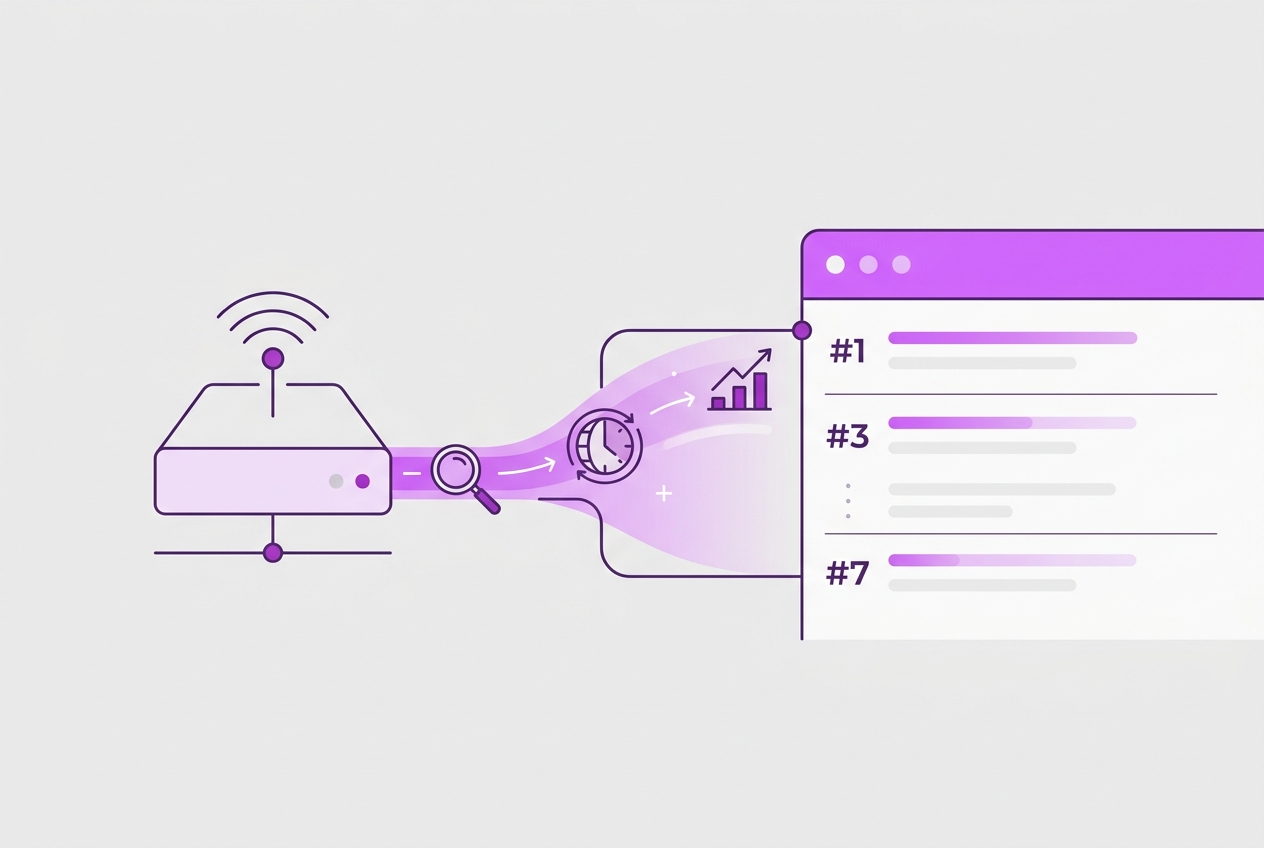
A Keyword Ranking API is a tool that lets you access keyword position data programmatically, without needing to log into a dashboard or scrape websites. It fetches real-time search engine results page (SERP) rankings for specific keywords across various locations and devices. Simply put, it tells you where your website ranks for particular terms on Google or other search engines.
You probably know manually checking rankings is tedious and quickly outdated. Real-time data from a Keyword Ranking API ensures you see the current status of your SEO efforts. This instant visibility is crucial because rankings can shift daily, if not hourly, especially in competitive niches.
Here’s how a Keyword Ranking API streamlines SEO workflows:
1. **Automated data retrieval:** No more manual tracking. The API updates your systems or reports with fresh ranking info automatically.
2. **Integration with tools:** Embed rank checks directly into your analytics platform or CMS.
3. **Scalable monitoring:** Check thousands of keywords regularly without extra staff or headaches.
4. **Historical tracking:** Observe changes over time to assess SEO strategies or spot drops immediately.
| Benefit | Why It Matters |
|-----------------------|------------------------------------------------|
| Accuracy | API data reduces human error in tracking |
| Speed | Updates happen in minutes, not days |
| Time savings | Frees up teams from repetitive manual work |
| Scalability | Supports complex SEO campaigns at any scale |
Yet, it’s not always perfect. Setup can be tricky, especially if the API lacks thorough documentation. Some services limit queries or don’t cover all regions, causing gaps in data you rely on.
**Pro Tip:** *Bold: Look for APIs that also provide keyword metrics like CPC and search volume to add deeper insights.*
We use such APIs at TryRoki.com to power features that constantly monitor client keyword rankings and alert them to significant moves—letting them focus on making content better, not hunting for data.
Understanding what a Keyword Ranking API does and why it matters lays the groundwork for picking the right one. Next, let's examine key criteria for evaluating these APIs so you can avoid common pitfalls and choose a provider that fits your needs.
Written by Daniel Dimov.
## How to Integrate a Keyword Ranking API with Your SEO Tools
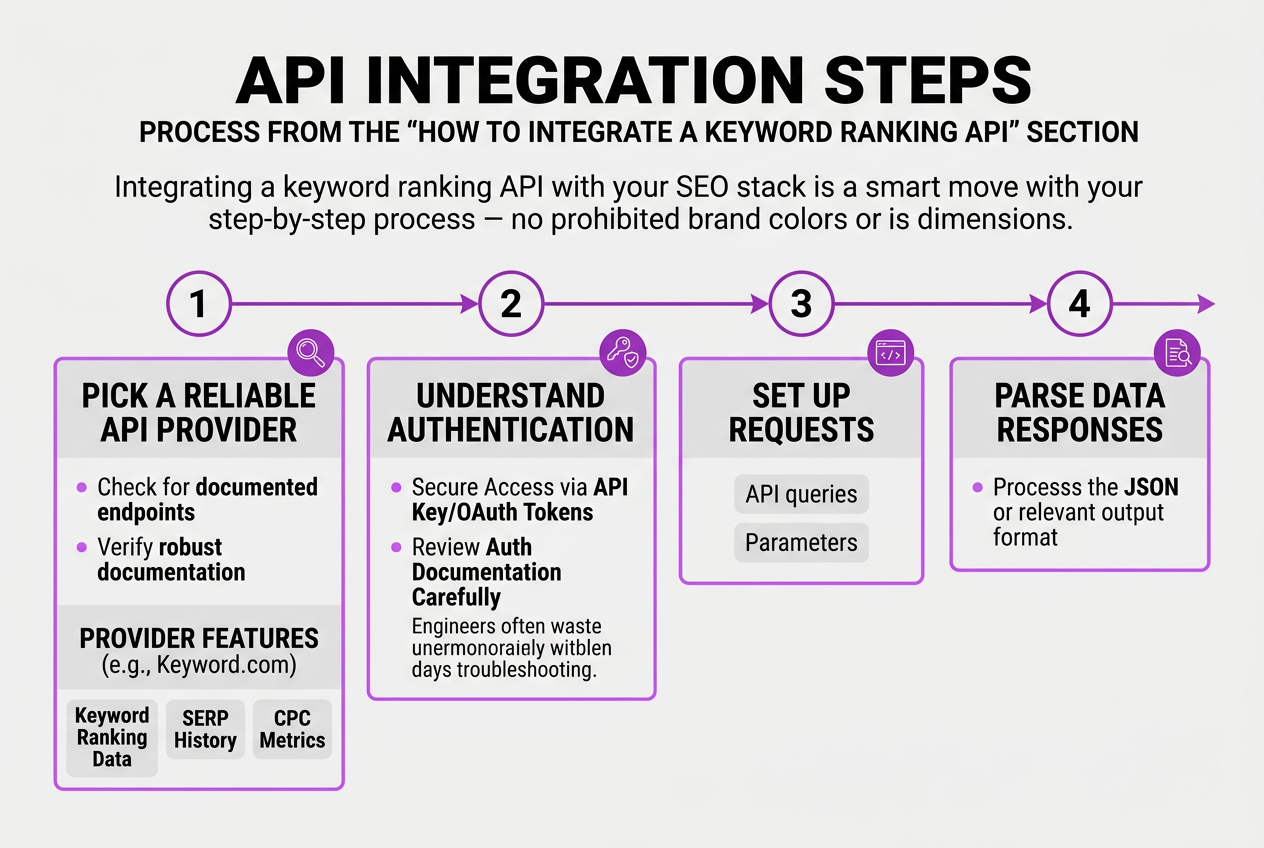
Integrating a keyword ranking API with your SEO stack is a smart move, but it involves more than just plugging in a URL. Here's a step-by-step guide based on what I've learned running TryRoki.com and working with clients who need real-time ranking data.
1. **Pick a reliable API provider.** Not all APIs are equal—look for documented endpoints covering keyword rankings, historical data, and movement metrics. Providers like Keyword.com offer comprehensive access, including CPC and SERP history, which most teams overlook but can be crucial.
2. **Understand the authentication process.** Most APIs require an API key or OAuth tokens. This might sound basic, but I've seen engineers waste days troubleshooting just because they didn’t read the authentication documentation carefully.
3. **Set up your API calls.** Use the endpoints to query the exact keywords you track. Remember, APIs often have rate limits. If you request too frequently, you risk temporary blocks, which disrupt your data pipeline.
4. **Incorporate data into your dashboards or reports.** Raw API data can be overwhelming. You’ll want to parse JSON or XML responses and feed cleaned data into your visualization tools. For instance, TryRoki.com integrates these feeds into our SEO dashboards, updating ranking trends and alerting operators of sudden drops.
5. **Test thoroughly and monitor your usage.** API responses can change, endpoints might be deprecated, or quotas might reset monthly. Set up monitoring to catch failures early; don’t wait for your SEO analyst to notice missing reports.
**Pro Tip:** *Bold: Automate alerts for ranking changes by integrating API data with your notification system.* This helped us at TryRoki.com catch drops within hours, not days.
This path isn't effortless. Most providers, including those listed on [TryRoki Integrations](https://tryroki.com/integrations), require trial-and-error tuning to get data that’s both timely and accurate. But once it’s stable, your reports stay fresh with minimal manual effort.
Next, we’ll examine specific API features that can sharpen your SEO strategies even further—understanding those nuances can save you from chasing vanity metrics.
Written by Daniel Dimov.
## Comparison of Leading Keyword Ranking APIs in the Market
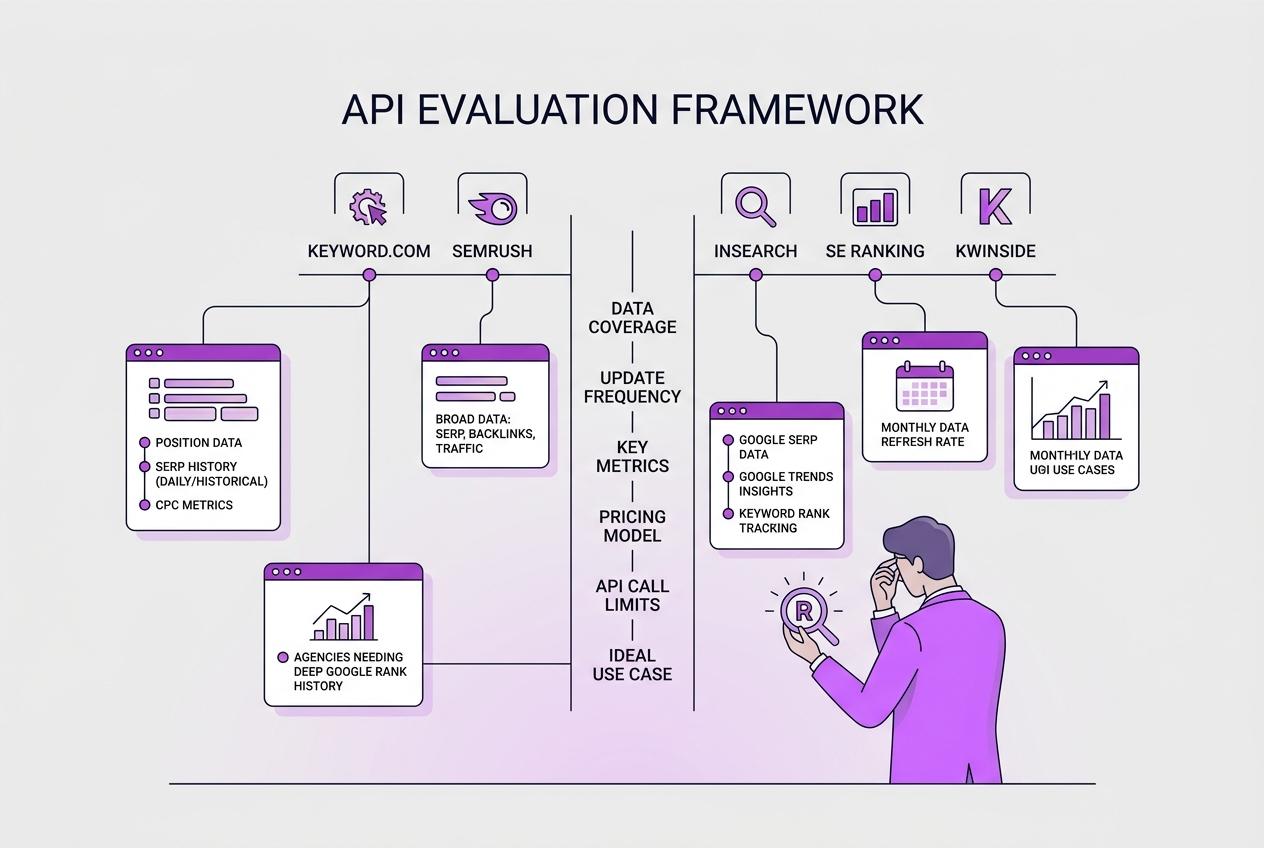
Choosing the right keyword ranking API can be a headache if you don’t know what to look for. I’ve tested Keyword.com, Semrush, InSearch, SE Ranking, and Kwinside myself and here’s how they stack up based on real use cases.
| API Provider | Data Coverage | Update Frequency | Key Metrics | Pricing Model | API Call Limits | Ideal Use Case |
|---------------|-------------------------------------|----------------------|----------------------------------|-----------------------------|----------------------------|----------------------------------------|
| Keyword.com | Extensive Google SERP tracking | Daily and historical | Keyword ranking, movement, CPC | Tiered monthly subscriptions| Varies by plan | Agencies needing deep Google rank history|
| Semrush | Broad data: SERP, backlinks, traffic | Near real-time | Ranking, traffic, backlinks | Pay-as-you-go or subscription| Flexible | Full-scale SEO platforms requiring multiple data streams|
| InSearch | Google SERP + Trends | Real-time-ish | Rank tracking, demand insights | Subscription with API limits| Moderate | Dev teams wanting combined SERP and trends|
| SE Ranking | Keyword research focused | Monthly | Keyword discovery, metrics | Fixed monthly fees | High | Marketers prioritizing keyword discovery over real-time rank|
| Kwinside | Keyword database + SERP positions | Weekly | Search volume, competitor ranking| Subscription packages | Limits slightly flexible | Businesses interested in keyword volume and competitor data|
Keyword.com excels in delivering detailed rank history and CPC data, useful if you manage multiple campaigns that need performance tracking over time. But I’ve found its setup can frustrate newcomers, and call limits can be restrictive for large queries.
Semrush, on the other hand, offers a broad ecosystem of SEO data accessible via their API [Semrush API overview](https://developer.semrush.com/api/introduction/semrush-api-overview/). It’s pretty flexible but can get costly quickly if you hammer the API hard.
InSearch combines SERP data and Google Trends insights, which is cool if you want to spot emerging keyword demand along with rank tracking [InSearch app](https://insearch.app/). It’s less known but delivers fresh data.
SE Ranking’s API sticks to keyword metrics refreshed monthly [SE Ranking API](https://seranking.com/api/data/keyword-research/). That delay makes it ill-suited for volatile niches but fine if your SEO calendar runs on monthly updates.
Kwinside clusters keyword volumes, SERP positions, and competitor info in a neat package [Kwinside](https://kwinside.com/). It’s great if you want volume and competitor intel but less detailed on daily rank swings.
**Pro Tip:** *Bold: Consider API data refresh intervals; monthly updates might suffice for some, but real-time data benefits dynamic SEO.*
Every API here has its quirks — call limits, pricing surprises, or data freshness issues. The key is matching your SEO rhythm and technical needs to the API’s strengths.
If you want to see how these APIs fit into practical SEO setups, I recommend reading our [Google Rank Tracker API How To Use It For SEO Success](https://tryroki.com/blog/google-rank-tracker-api-how-to-use-it-for-seo-success) guide.
Next, we’ll explore how to actually get these APIs working with your existing tools without pulling your hair out.
Written by Daniel Dimov.
## Common Mistakes When Using Keyword Ranking APIs and How to Avoid Them
When working with keyword ranking APIs, many users fall into predictable traps that can undermine their SEO insights and decision-making. Knowing these pitfalls helps you stay efficient and get the most from your data.
### Common mistakes I see include:
- **Ignoring API rate limits:** Trying to squeeze too many requests too fast often leads to temporary bans or throttling. This causes disruptions and forces you to halt data collection unexpectedly.
- **Skipping data freshness checks:** Some APIs update rankings daily, others weekly or monthly. Blindly trusting old data can lead to misguided strategies because search rankings shift constantly.
- **Focusing only on ranking position:** Rankings matter, but without considering user intent behind keywords, you miss the bigger picture. High rank doesn't always mean high value.
- **Not tying keyword metrics into a wider SEO plan:** Keyword rankings should feed into content creation, link building, and on-site optimization. Treating them as isolated numbers keeps you from real improvements.
- **Overcomplicating ingestion processes:** Building overly complex pipelines or tooling around the API can slow down analysis and add overhead. Sometimes simpler, more direct integration works better.
From my experience at TryRoki.com, balancing these elements is key. For example, respecting rate limits saved us countless hours avoiding downtime. Also, pairing ranking data with intent and broader SEO tactics drove more meaningful results than chasing position upgrades alone.
If you want a practical reference, our [Google Rank Tracker Api How To Use It For Seo Success](https://tryroki.com/blog/google-rank-tracker-api-how-to-use-it-for-seo-success) guide breaks down smart ways to avoid these pitfalls.
Avoiding these mistakes puts you in control of your SEO intelligence without losing time or clarity. Next, we’ll explore how different keyword ranking APIs stack up on features and performance.
## Alternatives to Keyword Ranking APIs for SEO Monitoring
You might think that an API is the only way to track keyword rankings efficiently, but there are other methods to consider—some useful, others a bit old-school. For instance, manual rank checking combined with spreadsheets remains surprisingly common, especially among small businesses or solo SEO consultants without heavy data needs. It’s straightforward: you Google your target terms periodically and jot down the positions. It’s cheap but painfully time-consuming and error-prone.
On the other hand, many SEO software platforms come with built-in rank tracking tools that automate this process. SEMrush, for example, lets you set up keyword tracking projects that monitor rankings over time, helping you visualize shifts and spot trends without fiddling with code or APIs. It covers things like local and mobile rankings but usually comes bundled into broader, pricier subscription packages.
Another valuable resource is Google Search Console. It doesn’t provide an API for real-time tracking, but its Performance reports show average keyword positions, impressions, and clicks directly from Google’s own data. For site owners, this is a reliable pulse check that’s free and easy to access; downside is the lack of granularity and the delay in data updates.
Some turn to scraping tools to extract ranking data from search result pages. While this can work, it’s risky because it violates Google’s terms and can lead to IP blocking or legal trouble. Moreover, maintaining scrapers is a headache when Google constantly changes its page structure.
Here's a quick comparison of these alternatives against APIs:
| Method | Pros | Cons |
|-----------------------------|---------------------------------------|----------------------------------------------|
| Manual Checking & Spreadsheets | Low cost, no tech skills needed | Labor intensive, not scalable, error-prone |
| SEO Software (e.g., SEMrush) | Automated, includes analysis features | Can be expensive, less flexible than APIs |
| Google Search Console | Free, direct Google data | Limited detail, delayed reporting |
| Scraping Tools | Can customize data harvested | Risky, maintenance-heavy, against Google rules|
Each alternative has its niche. If your SEO monitoring needs are light or budget is tight, manual or Search Console data can suffice. For more complex or large-scale operations demanding integration into workflows, keyword ranking APIs remain superior. The trick is balancing cost, reliability, and scale.
If you want to dig deeper into how an API like the Google Rank Tracker API can fit into your SEO strategy, check out [Google Rank Tracker Api How To Use It For Seo Success](https://tryroki.com/blog/google-rank-tracker-api-how-to-use-it-for-seo-success).
Next, we'll look at how to easily integrate a keyword ranking API into your existing SEO toolkit to start automating rank tracking without headaches.
Written by Daniel Dimov.
## My Honest Take on Keyword Ranking APIs
When I started integrating keyword ranking APIs into our SEO workflows at TryRoki.com, the promise of automation felt like a game changer. These APIs spit out ranking data fast, saving hours we used to spend manually checking positions. But here’s the catch: the numbers alone can be a trap if you take them at face value.
One frustrating pitfall is chasing small ranking improvements without checking whether search intent has shifted or if a competitor is quietly eating your traffic with new content strategies. I’ve seen teams boost rankings on paper only to lose engagement because they optimized for queries that no longer match user needs.
At TryRoki, we use keyword ranking APIs as a foundational tool, but we don’t stop there. We cross-reference the data with qualitative insights—like trend analysis and competitor moves—to avoid going down blind alleys. It’s a hybrid method: automation speeds things up, but human intuition keeps us on course.
If you rely solely on fresh ranking numbers from an API, you risk optimizing in a vacuum. Trusting those APIs to tell the full story is one of the biggest SEO misconceptions I’ve encountered. Treat them as a start, not the whole strategy.
> *— Written by Daniel Dimov*
## Enhance Your SEO with TryRoki’s Integrated Keyword Ranking Tools
When I first tried integrating keyword ranking APIs, the setup felt overly complex and results were patchy. That’s why at TryRoki.com, we built an AI-driven platform that pulls your keyword positions automatically and packages them into straightforward reports you can actually act on. It’s not perfect—automated SEO tasks still need human oversight—but it cuts down the busywork that used to drain my team’s time.
If you want to understand exactly how your keywords are performing and pinpoint where to focus without juggling multiple tools, our [feature set](https://tryroki.com/features) covers the essentials and more. Pricing isn’t hidden behind layers; you can see it transparently and decide whether to scale up or experiment before committing deeply. This approach helped us avoid ballooning costs while steadily improving search visibility.
Written by Daniel Dimov.
## Frequently Asked Questions
### What is a keyword ranking API and how does it work?
A keyword ranking API lets you pull real-time data about where your website ranks for specific keywords on search engines. In practice, it queries the search engine results pages and delivers details like position, search volume, and sometimes competition levels. I’ve seen APIs refresh data every hour or less, which really helps when you’re tracking sudden rank swings.
### Which providers offer reliable keyword ranking APIs?
From my experience, Keyword.com and Semrush are solid choices; Keyword.com tracks over 50 million keywords daily, while Semrush offers integrations with numerous marketing tools. I’ve also tested SE Ranking and Kwinside, both provide useful historical rank data and CPC metrics, though feature depth varies and pricing can be a hurdle for smaller teams.
### Can I integrate keyword ranking APIs with SEO dashboards?
Yes, most APIs output data in JSON or XML formats, making them compatible with custom dashboards or platforms like Google Data Studio. When I integrated one, updating keyword positions for 1,000 keywords took under 5 minutes, enabling real-time rank monitoring — though you do have to handle authentication tokens and rate limits carefully to avoid disruptions.
### What common mistakes should I avoid with keyword ranking APIs?
Many overlook API rate limits—hitting these can lead to blocked requests and missed data. Another pitfall is treating rank numbers alone as the full story; I recommend pairing rank data with CTR or traffic analytics for context. Also, skipping thorough integration tests caused me to pull stale data for a week before noticing.
### Are there alternatives to using keyword ranking APIs for tracking rankings?
Sure, you can manually check rankings or rely on tools like Google Search Console, which updates roughly every 48 hours. The trade-off is you lose automation—manual checks don’t scale beyond a few dozen keywords, and GSC lacks precise rank positions for competitive monitoring. I’ve found that for ongoing SEO workflow, APIs remain essential if you need timely and comprehensive rank insights.
Written by Daniel Dimov.
## Recommended reads
- [Google Rank Tracker Api How To Use It For Seo Success](https://tryroki.com/blog/google-rank-tracker-api-how-to-use-it-for-seo-success)
- [Integrations](https://tryroki.com/integrations)
- [Features](https://tryroki.com/features)
- [Pricing](https://tryroki.com/pricing)
## Sources
- [API Monetization Platform Market Size, Share, Trends, Growth, Outlook, and Insights Report, 2023- Industry Forecasts by Type, Application, Segments, Countries, and Companies, 2021-2030](https://pdf.marketpublishers.com/vpar/api-monetization-platform-market-size-share-trends-growth-outlook-n-insights-report-2023-industry-forecasts-by-type-application-segments-countries.pdf)
- [Google SERP Tracking API | Keyword.com Support Hub](https://support.keyword.com/en/articles/13714931-google-serp-tracking-api)
- [Keyword.com Rank Tracker API – Build dashboards, automate reporting & connect to Claude](https://keyword.com/rank-tracker-api/)
- [InSearch — Google SERP API & Google Trends API for SEO Data](https://insearch.app/)
- [Keyword Research - SE Ranking API Documentation](https://seranking.com/api/data/keyword-research/)
- [Kwinside — SERP API, Keyword Database & Search Volume API](https://kwinside.com/)
- [SISTRIX Keyword API: keyword.seo.traffic.estimation - SISTRIX](https://www.sistrix.com/api/keyword/keyword-seo-traffic-estimation/)
- [Semrush API overview | Semrush API](https://developer.semrush.com/api/introduction/semrush-api-overview/)
- [Keywords Snapshot API](https://developers.similarweb.com/docs/rank-tracking-keywords-snapshot-api)
<script type="application/ld+json">
{
"@context": "https://schema.org",
"@type": "BlogPosting",
"headline": "Keyword Ranking API Guide: How to Track & Optimize Rankings",
"description": "Tracking your site's position with a keyword ranking API sounds easy, but delays and inconsistent data can drive you nuts—TryRoki.com keeps it real. Written...",
"mainEntityOfPage": {
"@type": "WebPage",
"@id": "https://tryroki.com/blog/keyword-ranking-api"
},
"url": "https://tryroki.com/blog/keyword-ranking-api",
"datePublished": "2024-06-15",
"dateModified": "2024-06-15",
"author": {
"@type": "Person",
"name": "Written by Daniel Dimov"
},
"publisher": {
"@type": "Organization",
"name": "TryRoki.com"
}
}
</script>
<script type="application/ld+json">
{
"@context": "https://schema.org",
"@type": "FAQPage",
"mainEntity": [
{
"@type": "Question",
"name": "What is a keyword ranking API and how does it work?",
"acceptedAnswer": {
"@type": "Answer",
"text": "A keyword ranking API provides programmatic access to data about a website’s keyword positions in search engine results, allowing developers to automate rank tracking and analysis."
}
},
{
"@type": "Question",
"name": "Which providers offer reliable keyword ranking APIs?",
"acceptedAnswer": {
"@type": "Answer",
"text": "Leading providers include Keyword.com, Semrush, SE Ranking, InSearch, and Kwinside, each offering various features like historical data, CPC metrics, and SERP insights."
}
},
{
"@type": "Question",
"name": "Can I integrate keyword ranking APIs with SEO dashboards?",
"acceptedAnswer": {
"@type": "Answer",
"text": "Yes, most APIs provide structured data formats that can be integrated into custom dashboards or third-party SEO platforms for real-time monitoring."
}
},
{
"@type": "Question",
"name": "What common mistakes should I avoid with keyword ranking APIs?",
"acceptedAnswer": {
"@type": "Answer",
"text": "Avoid exceeding API rate limits, ignoring data freshness, relying solely on ranking without context, and neglecting integration testing to ensure accuracy."
}
},
{
"@type": "Question",
"name": "Are there alternatives to using keyword ranking APIs for tracking rankings?",
"acceptedAnswer": {
"@type": "Answer",
"text": "Alternatives include manual rank checks, SEO software with built-in tracking, and leveraging Google Search Console, although these may lack automation or comprehensiveness."
}
}
]
}
</script>