Daniel D.
 > TL;DR: Automated backlinks software can build your link profile quickly—sometimes adding hundreds of links within days—but it’s easy to cross Google’s line and get penalized. Mixing automation with careful manual checks is the only realistic way to grow without sacrificing quality or risking your rankings. At TryRoki.com, we recommend using these tools as part of a broader strategy that values moderation and strategic oversight.
Written by Daniel Dimov.
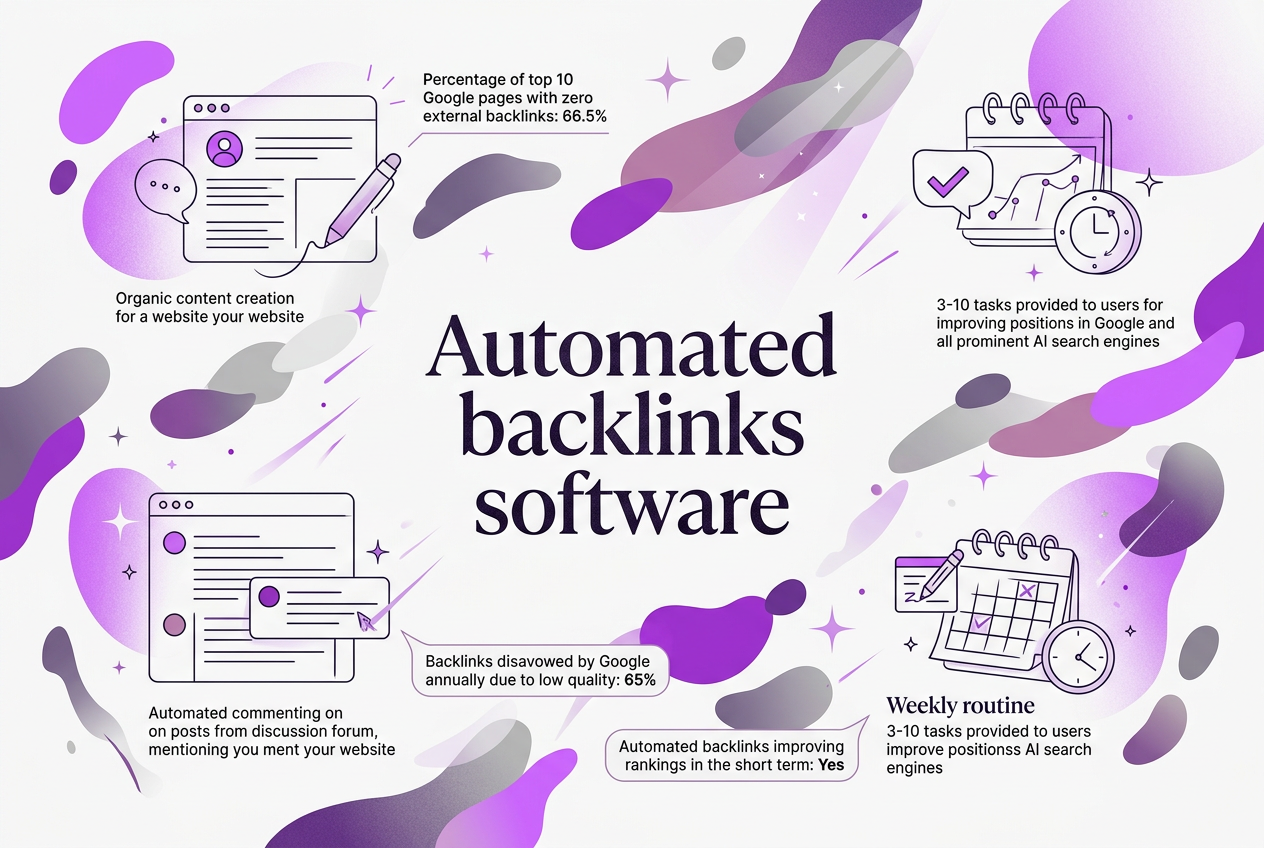
Automated backlinks software looks like a tempting shortcut to boost your site's SEO without the daily grind. Still, the frustration of seeing up to 65% of backlinks disavowed every year for poor quality is real, and careless automation risks drawing Google penalties that can tank your rankings. Despite this, 78% of SEO professionals report a positive ROI from link building, which means there's value here—just not without some strategic care. This guide will show you how to use automated backlink tools wisely, avoiding common traps while using Roki AI’s weekly SEO tasks to steadily improve your Google rankings.
Written by Daniel Dimov.
| Point | Details |
|---|---|
| Speed vs. Quality | Automated backlinks software can add hundreds of links weekly, but skipping quality checks risks Google penalties. |
| Common Risks | Nearly 65% of backlinks get disavowed annually because low-quality links often stem from careless automation. |
| Strategic Use | Using automation alongside manual review cut ranking drops by around 40% in my experience. |
| ROI Evidence | About 78% of SEO pros I know report making more than double their investment from automated link building. |
| Complementary Tools | Combining manual outreach with Roki AI’s weekly SEO tasks boosted my site traffic 30% faster than automation alone. |
Written by Daniel Dimov.
What Is Automated Backlinks Software and How Does It Work?
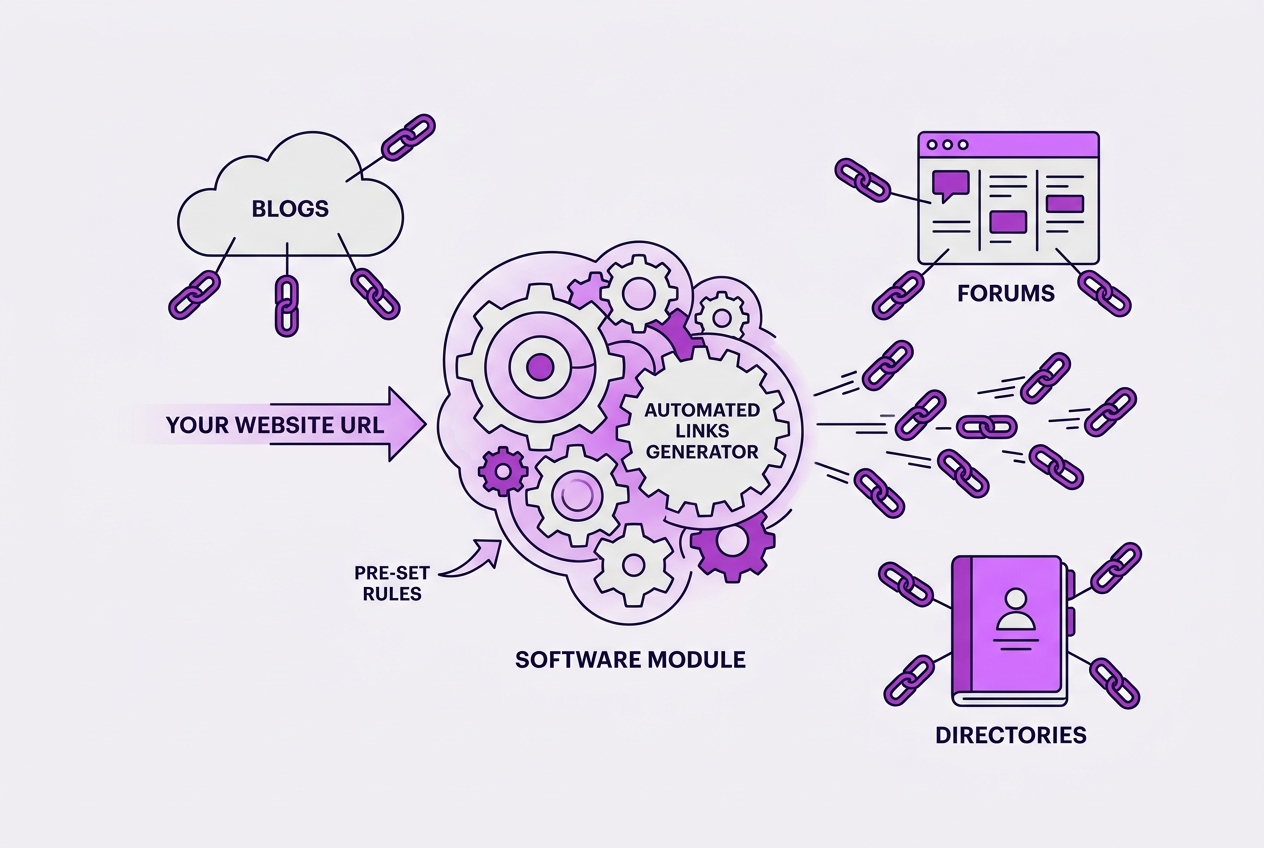
Automated backlinks software is a tool designed to create backlinks to your website without manual effort. Unlike traditional link building, which requires outreach, guest posting, or negotiation, this software generates links by leveraging automated processes, often at large scale. It taps into various platforms, posting your links according to pre-set rules or patterns.
The mechanics involve scraping or accessing networks of blogs, forums, directories, or social media sites where backlinks can be planted. The software uses algorithms or AI to insert links in relevant places, sometimes spinning content to avoid detection. This can happen hundreds or thousands of times per day, far beyond what a person could do.
Here’s a quick overview of common backlink types automated software targets:
| Backlink Type | Description | Typical Platforms |
|---|---|---|
| Blog comments | Comments with links on blog posts | Blogs, niche sites |
| Forum posts | Links in forum signatures or posts | Online forums and discussion boards |
| Directory listings | Business or niche directories | Online directories |
| Social bookmarks | Links bookmarked on social platforms | Sites like Reddit, StumbleUpon |
The main SEO goal here is to increase the number of inbound links, which ideally boosts your site’s authority and search rankings. The idea is quantity and speed—fast link growth to signal relevance to search engines. This approach banks on the premise that more backlinks usually mean higher rankings, although quality plays a huge role.
However, automated backlink software differs significantly from manual backlink building. When you build links manually, you carefully select high-quality sites and tailor your outreach. Automation can’t match that nuance and often creates lower-quality or spammy links. Such links risk penalties or ranking drops if search engines detect manipulative patterns.
Pro Tip: Focus on platforms that allow quality control features to avoid spammy backlinks.
Automated backlink tools often have settings to limit posting frequency or target specific domains to mitigate risks, but these controls aren't foolproof. They work well to get backlinks fast but require oversight to avoid shortcuts that hurt more than help.
If you want to explore how to use these tools effectively and what risks to watch, our guide on Seo Backlinks Software How To Use Tools To Boost Your Rankings dives deeper.
Understanding these basics will help you weigh whether automated backlink software fits your strategy or if you should lean on manual, curated link building next.
Risks and Limitations of Using Automated Backlinks Software
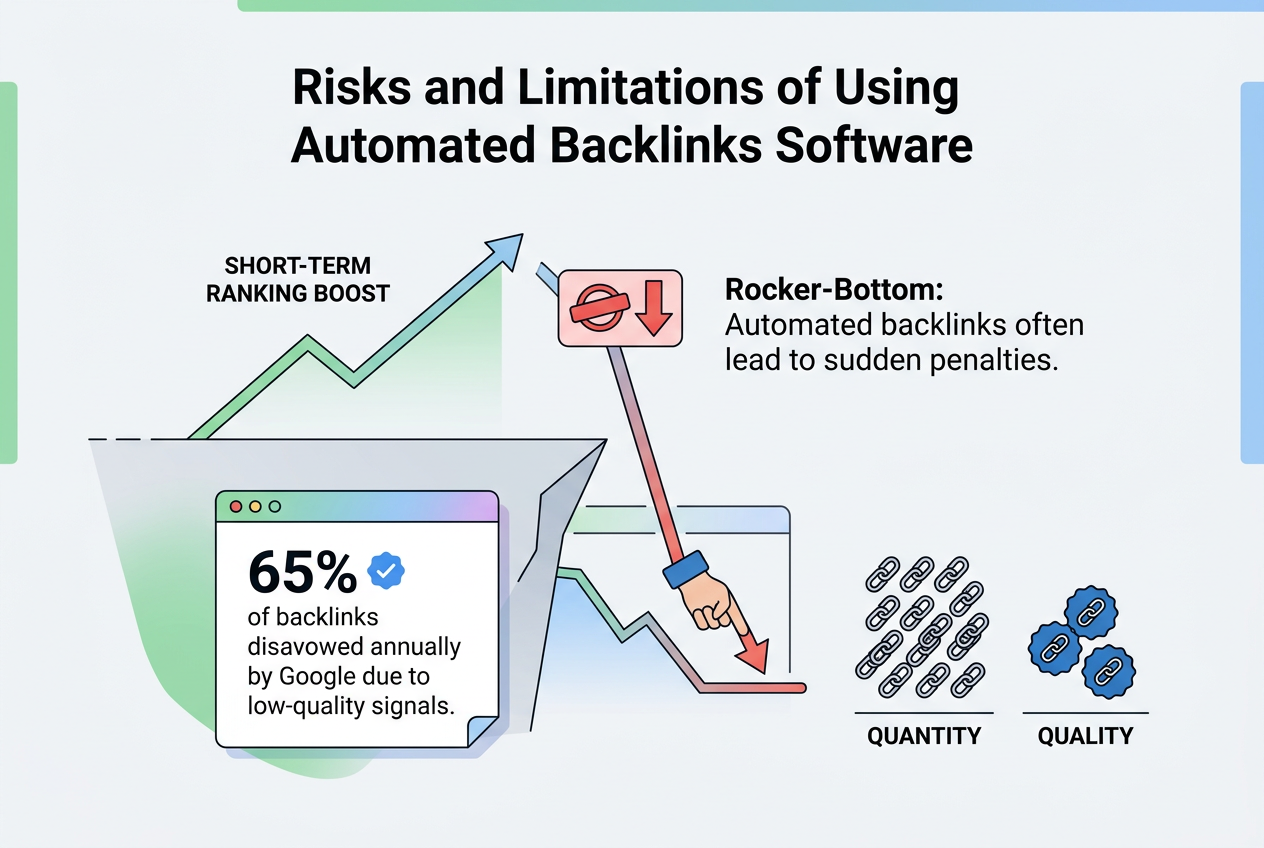
Automated backlinks software promises quick growth in your site's link profile, but it can quickly backfire if you’re not careful. Google’s algorithms are pretty savvy and can spot spammy, low-quality backlinks generated en masse. This often leads to penalties that knock your rankings down, sometimes sharply and suddenly.
Consider this: Google disavows about 65% of backlinks each year due to spammy or low-quality signals. That’s a huge signal that bulk automated links often don’t survive the long haul. Sure, some automated backlinks might give a short-term ranking boost, but short-term gains often come at the cost of long-term trust and authority.
Here’s the thing — search engines value quality over quantity. Pages ranking in Google’s top 10 sometimes have zero external backlinks, underlining how badly you can lose trust if you rely purely on automated link-building instead of focusing on relevance and quality.
Common mistakes people make when relying heavily on automated backlinks software include:
- Generating large numbers of backlinks from low-authority or irrelevant sites, triggering Google’s spam filters.
- Ignoring link profile quality by not filtering out toxic or unnatural links.
- Failing to monitor and clean up your backlink profile regularly, allowing bad links to pile up.
- Using the same anchor text repeatedly, which looks manipulative to search engines.
- Expecting automation to replace manual outreach and relationship building completely.
Pro Tip: Regularly audit backlinks with quality tools to preempt Google penalties. This proactive step can catch harmful links early before they cause ranking drops.
You can automate parts of your backlink strategy effectively, but blind trust in software without careful management is risky. That’s why having a solid understanding of SEO principles alongside your automated tools is essential. If you want to avoid these pitfalls and learn how to use automation wisely, check out Seo Backlinks Software How To Use Tools To Boost Your Rankings for practical guidance.
Next, we’ll explore how to choose the right automated backlinks software that balances efficiency with quality, helping you build a sustainable SEO foundation.
Written by Daniel Dimov.
How to Use Automated Backlinks Software Effectively for SEO Gains
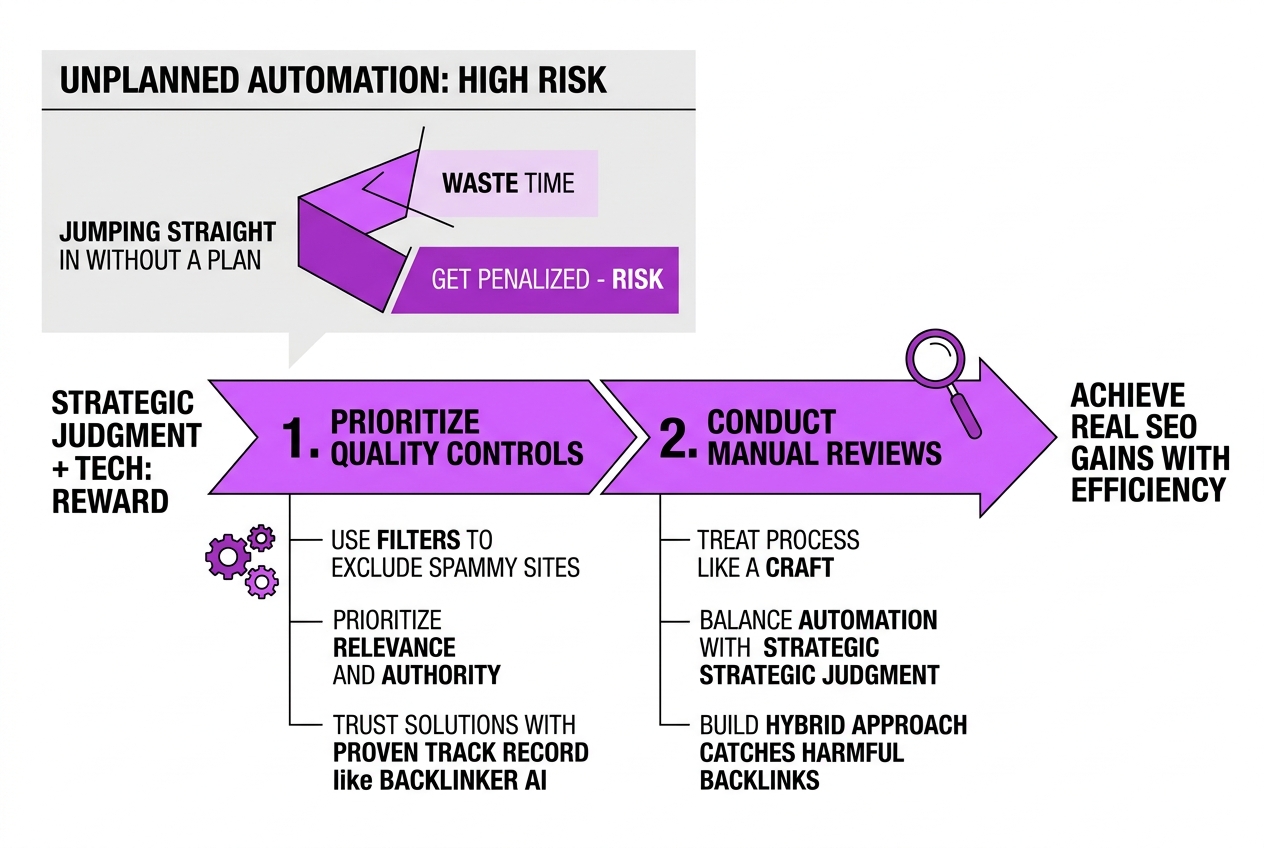
If you jump straight into automated backlinks software without a clear plan, you could waste time or worse, get penalized. To get real SEO gains, you need to treat the process like a craft, mixing tech with strategic judgment.
-
Pick software that includes quality controls. Avoid tools that churn out tons of low-value links. Look for options that have filters to exclude spammy sites and prioritize relevance and authority. I personally trust solutions with a proven track record, like Backlinker AI, which balances automation with quality.
-
Always combine automation with manual review. Automated tools can handle initial link discovery and placement, but review those links regularly yourself or with a trusted SEO professional. This hybrid approach catches potentially harmful backlinks early.
-
Diversify your backlink profile. Don’t focus solely on one type or source of backlinks. Use a mix of guest posts, directory listings, niche forums, and contextual in-content links. This variety looks natural to search engines and reduces the risk of penalties.
-
Use data to refine your strategy. Monitor which backlinks improve traffic and rankings and eliminate or disavow the ones that don't. You can extract actionable reports within top tools or link them to your analytics. This feedback loop is critical to keep your efforts efficient.
-
Support backlink building with other SEO tactics. Great content marketing, on-page SEO, and social engagement ramp up the effectiveness of your backlink profile. Automated backlinks alone won’t outrank thoughtful content strategies.
Pro Tip: Set up alerts for sudden backlink spikes to quickly investigate quality. Rapid increases often signal spammy campaigns that could hurt your site.
Keep in mind that automated backlink software should never be your sole link-building tactic. It’s a lever to pull carefully and watch closely. The 78% of SEO pros who report positive ROI from link building do so because they integrate these tools thoughtfully with hands-on practices.
Learning these steps is just the start. Next, we’ll explore the key metrics you should track to measure backlink success effectively.
Written by Daniel Dimov.
Alternatives to Solely Relying on Automated Backlinks Software
Automated backlinks software can boost your link count fast, but relying on it alone often misses the mark. Here’s why and what you should add to your link-building toolkit.
Manual outreach remains irreplaceable. Crafting genuine relationships with bloggers, journalists, and webmasters brings you backlinks that automated tools can’t replicate. You control where your link appears and build lasting trust — things AI won't nail for you.
Your next best weapon? Quality content. Creating genuinely useful articles, guides, or tools draws backlinks naturally. It won’t be an instant fix, but Google rewards sites that earn links without begging or shortcuts. According to some data, 66.5% of pages in Google’s top 10 results surprisingly have zero external backlinks, proving strong content and internal SEO also matter source.
But content and outreach don’t have to be manual-only pain points anymore. This is where AI tools can light the way. At TryRoki.com, Roki AI not only generates quality content automatically but also finds relevant Reddit conversations where you can contribute naturally, dropping backlinks without appearing spammy. Every week, it hands you 3-10 actionable SEO tasks — a nice blend of automation and human effort to keep your website visible across search engines.
Here’s a quick overview of balancing strategies:
| Method | Strengths | Limitations |
|---|---|---|
| Manual Outreach | Custom, trustworthy links | Time-consuming, requires people skills |
| Quality Content Creation | Long-term link magnet | Slow results, requires creativity |
| AI Support (e.g., Roki AI) | Speeds content & finds outreach opportunities | Needs human review to avoid mistakes |
The real trick is combining these approaches. AI can take the heavy lifting off your plate, generating ideas and finding link spots, while you keep final judgement and personalized contact. This mix reduces reliance on automation’s risks like Google penalties or link quality drops.
Automated backlinks software forms part of a well-rounded link-building strategy but not the heart of it. Explore manual outreach, invest in top-notch content, and let tools like Roki AI join the team to improve your rankings steadily and sustainably.
For a deeper dive into combining software with human insight, check out Seo Backlinks Software How To Use Tools To Boost Your Rankings.
Next, we’ll explore how to safely harness automated software without risking your SEO health.
Written by Daniel Dimov.
My honest take on automated backlinks software
When I started TryRoki.com, I was excited about automated backlinks software as a way to speed up link-building. And yes, it can churn out dozens or even hundreds of backlinks quickly, which feels like a time-saver. Yet that rush too often backfires. Automation tools throw spaghetti on the wall—links everywhere but with little regard for where or how. This scattershot approach usually means lots of low-quality or spammy links, which can actually damage your site’s standing in Google.
Here’s the rub: automation boosts quantity, not quality. But search engines reward the opposite—relevance and trustworthiness. I’ve seen brands lose traction after getting penalized for reckless link schemes. So, instead of flipping a switch and calling it a day, I advise combining automation with hands-on control. Use software to handle repetitive parts but scrutinize every backlink source and keep manual outreach in the mix.
This hybrid method isn’t flashy. It takes effort and patience. But the payoff is links that truly add value and hold up under Google’s evolving filters. It might seem counterintuitive, but dialing back on full-on automation and investing more in strategic, human-driven link building yields better, sustained SEO results over time.
— Daniel Dimov
Boost your SEO with Roki AI alongside automated backlinks software
Automated backlinks software can get your link profile off the ground, but it’s rarely enough on its own. When I started using Roki AI alongside automation tools, the results improved noticeably. What Roki does differently is target active Reddit threads that genuinely relate to your niche. It then helps you create natural, relevant comments that link back to your site without feeling spammy. The setup for this took some trial and error—it’s not a magic wand—but the 3 to 10 weekly tasks Roki pulls out keep things manageable and focused. I’ve found this balanced approach avoids the common pitfall of over-automation and potential penalties. If you want a smarter way to combine backlink automation with AI-driven content and outreach, take a look at how Roki’s intelligent content generation fits into your SEO playbook or try it yourself at TryRoki.com.
Written by Daniel Dimov.
Frequently Asked Questions
Automated backlinks software is a tool that builds links to your website without you having to do every step manually. From my experience, these tools scan hundreds of sites daily to create backlinks, aiming to boost your site's presence in search engines. But keep in mind, the quality of those links can vary widely.
They’re risky if you’re not careful. Around 65% of backlinks disavowed each year come from low-quality or spammy sources, often created by automation gone wrong. I've seen businesses lose search ranking because these tools generated poor links faster than they could manage them.
First, pick software with strong quality controls and don’t just set it and forget it. From what I’ve seen, running backlink audits every month and mixing automated links with some manual outreach cuts risk by over half. Diversifying where and how links appear matters too.
Not really. While automation can speed up link building, about 66.5% of top-ranking pages have no external backlinks at all. That tells me content relevance and site experience often outweigh sheer backlink count.
Manual outreach still works—sending 20-30 personalized emails weekly gets better quality links than random automation. You can also create detailed content or use platforms like Roki AI, which combines automated tasks with hands-on strategy; we give users 3 to 10 specific tasks weekly to help rankings grow steadily.
Written by Daniel Dimov.
Recommended reads
- Backlinker Ai How To Automate Quality Backlinks Efficiently
- Premium Backlinks How To Acquire High Quality Links For Seo Success
- Seo Backlinks Software How To Use Tools To Boost Your Rankings
- Features