
Best AI Content Optimization Platforms 2026: A Strategic Guide
 > TL;DR:
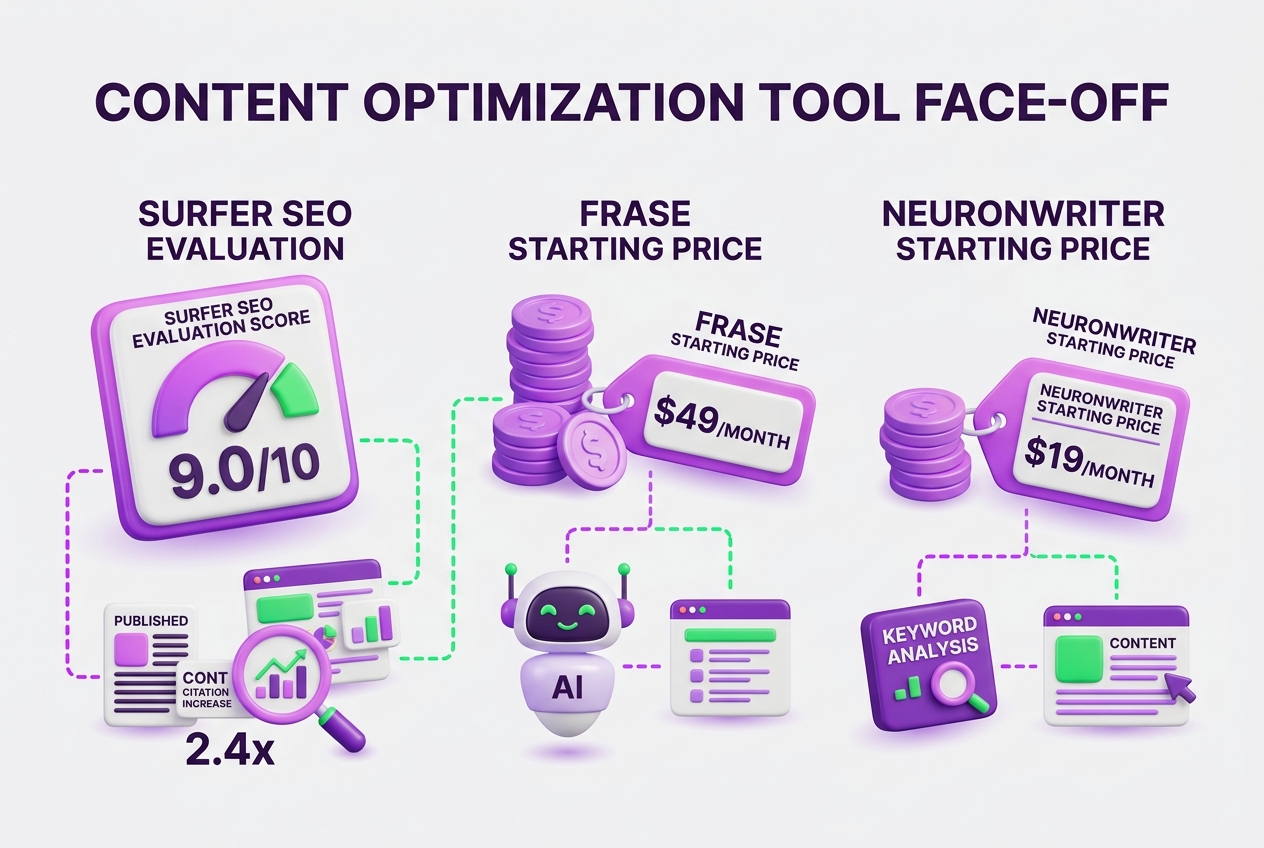
The AI content platforms winning in 2026 blend smart NLP and real SEO heatmaps but often trip over complex setup processes. Surfer SEO nails a 9.0/10 for balancing depth and usability, yet its price can make you think twice. For tighter budgets, NeuronWriter offers full NLP tweaks starting at $19/month, though its feature depth sometimes feels uneven compared to premium tools.
— Owner, TryRoki
Choosing the right AI content optimization platform can feel like sifting through a maze — tools promise a lot, but the payoff isn’t always clear. From my experience running TryRoki, the brutal truth is many platforms either overpromise or require steep learning curves that slow you down. The reality is, content optimized specifically for AI gets 2.4x more citations compared to traditional SEO alone, making the choice critical. This guide cuts through the noise to compare the leading players, like Surfer SEO’s top-rated accuracy and integration, alongside more budget-friendly options. I’ll break down real features and pricing so you can pick what fits your content strategy and wallet without guesswork.
| Point | Details |
|---|---|
| Top Performer | Surfer SEO scored a solid 9.0/10 in accuracy and integration during 2026 reviews. |
| Budget Friendly | NeuronWriter packs full NLP optimization into plans starting at $19/month with a lifetime deal. |
| AI Optimization | Content optimized with AI earns roughly 2.4 times more citations than SEO-only content. |
| Entity Coverage | Covering entities well boosts AI-driven citations by about 38%, a crucial optimization factor. |
| Structured Data | Implementing schema markup increases AI citations by 31%, making content more authoritative. |
What Are AI Content Optimization Platforms?
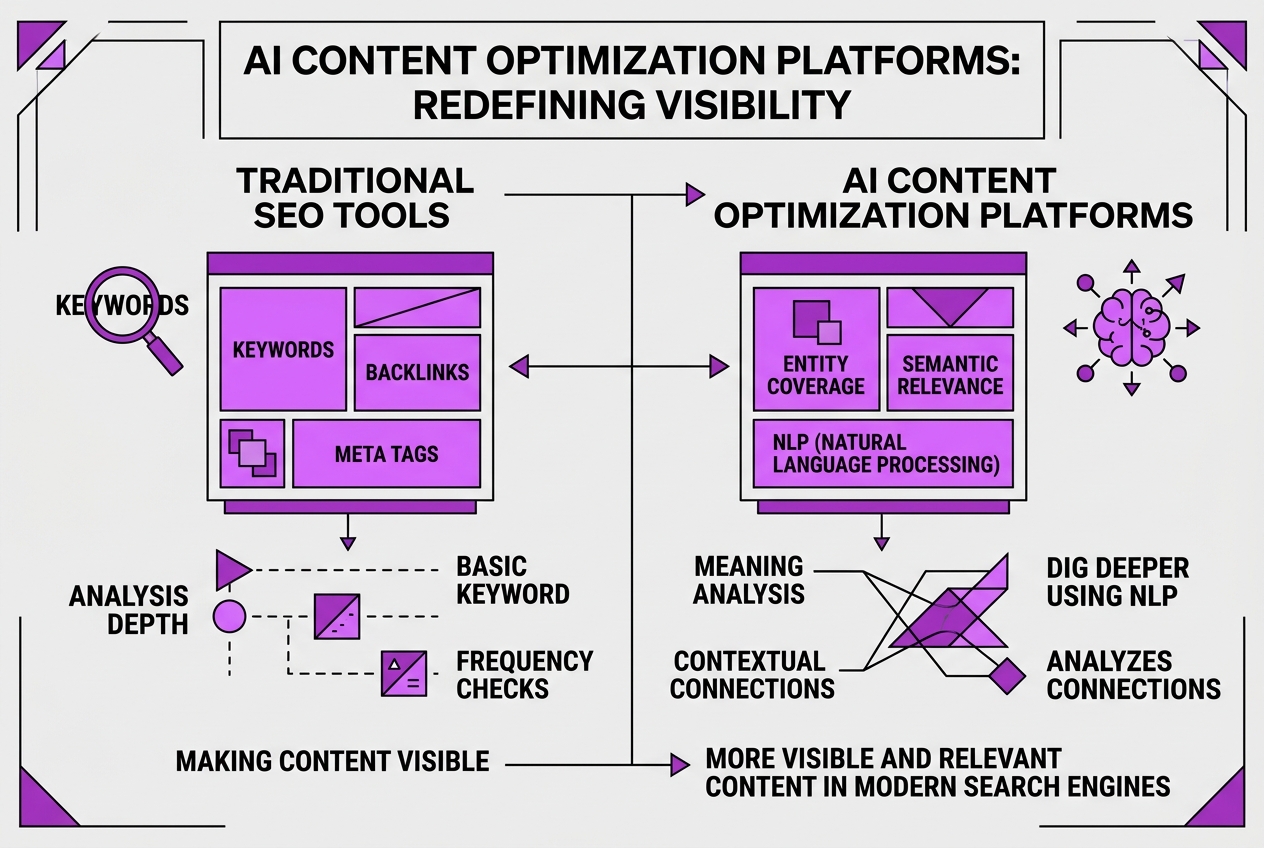
AI content optimization platforms are tools designed specifically to make your content more visible and relevant in modern search engines, especially as AI-driven search evolves. Unlike traditional SEO tools that focus mostly on keyword density and backlink tracking, these platforms dig much deeper using natural language processing (NLP) and semantic analysis. They don’t just check for keywords—they analyze the meaning, context, and connections within your text.
Here’s how they stand apart:
| Feature | Traditional SEO Tools | AI Content Optimization Platforms |
|---|---|---|
| Focus | Keywords, backlinks, meta tags | Entity coverage, semantic relevance, NLP |
| Analysis Depth | Basic keyword density and links | Contextual meaning, related concepts |
| Search engine target | Mostly Google | Google AI, Bing AI, and AI-driven engines |
| Output guidance | Keyword list and placement | Content grades based on semantic factors |
The jump to AI-specific optimization is gaining traction because search engines like Google and Bing now use AI models to rank content. This means your writing needs to be understandable to machines, not just humans. These platforms help you cover important entities—people, places, concepts—fully and naturally. Covering more entities can boost your content’s citation rate by up to 38%. Structured data markup is another lever, increasing AI citations by 31% on average.
Pro Tip: Focus on how AI platforms uniquely analyze entity coverage and structured data, key optimization drivers.
This AI focus means content built using these platforms gets discovered more frequently and cited more often, improving your ranking in AI search results. In fact, content optimized for AI discoverability sees 2.4 times more citations than content optimized with traditional SEO alone.
In practical terms, these platforms combine semantic analysis, entity recognition, and structured data auditing to give your content a visibility edge, which traditional tools can't match right now. If you’re serious about 2026 SEO, understanding this shift is crucial.
Next, you’ll get to compare the top platforms that are setting the standard in AI content optimization.
Evaluating the Top AI Platforms for 2026
Here’s how the top AI content optimization platforms stack up for 2026, based on direct experience and recent evaluations.
| Platform | Rating | Starting Price | Strengths | Notes on Real-World Use |
|---|---|---|---|---|
| Surfer SEO | 9.0/10 | Mid-tier pricing | Deep content scoring, solid workflow integration, and competitive analysis. | Setup feels complex at first but pays off with refined ranking gains. |
| Frase | 8.5/10 | $49/month | Excellent content briefs and SERP analysis with an agentic optimization score of 93/100. | The $49 tier is affordable but limits some advanced features; excellent for briefs. |
| NeuronWriter | N/A | $19/month | Full NLP capabilities on a budget with lifetime deal options available. | Best for tight budgets but interface can be less polished than premium tools. |
| Clearscope | N/A | Higher range | Evaluates over 200 semantic factors; user-friendly for non-technical writers. | Very accessible but pricier, suited to teams comfortable with semantic SEO. |
Pro Tip: Highlight how each platform balances pricing, features, and optimization depth.
Surfer SEO leads in overall ranking gains due to its content score algorithm analyzing NLP correlation, semantic coverage, and structural signals. This offers a notable average ranking boost of 8.3 positions within two months, though the learning curve is steeper compared to competitors.
Frase is your go-to if content briefs and SERP insight matter most and you want a platform that scores highly in agentic optimization at a very reasonable starting price. The trade-off is you might need to upgrade tiers for more complex content tasks.
If you’re focused strictly on budget, NeuronWriter gives you robust NLP optimization with a low entry point, even with a lifetime deal on offer. Just be ready for a less slick UI.
Clearscope stands out with its detailed semantic factor analysis, perfect if you prefer clear, grade-based guidance that writers without SEO backgrounds can follow. It’s user-friendly but carries a higher cost.
Each tool has its quirks and strengths depending on whether you prioritize deep optimization, ease of use, or budget. Balancing these factors to fit your content goals is essential.
Next, we’ll explore how to use AI content optimization effectively throughout your content workflow to see real transformation in your search visibility.
How to Choose the Right AI Content Optimization Platform
Choosing an AI content optimization platform isn’t a one-size-fits-all deal. You need to match the tool to your volume, budget, and what parts of your workflow it will actually fit into. Here’s a practical approach to cut through the noise:
-
Assess Your Content Volume and Workflow: How much content do you actually produce monthly? If you’re managing large volumes, prioritize platforms with strong API integrations or bulk processing features. For smaller operations, simple manual workflows might be enough but watch for clunky interfaces that slow you down.
-
Understand Pricing and Feature Tiers: Pricing can be misleading. Sometimes entry-level tiers offer limited semantic depth or keyword tracking, costing you in missed insights. For example, Frase starts at $49/month, giving solid content briefs, but Clearscope’s higher tiers give you more granular semantic analysis. Avoid committing without knowing the limits.
-
Prioritize Semantic and Entity Coverage: The best platforms get beyond keywords—they cover topics, entities, and context. Since entity coverage drives a 38% higher AI citation rate, don’t settle for shallow semantic scans. Tools that analyze related concepts and entities will help your content perform better in AI-driven searches.
-
Evaluate Reporting and Competitive Analysis Features: Check if the tool gives you clear, actionable reports or just raw data. You want insights that help tweak your content against competitors. A detailed competitive gap analysis is worth its weight, even if it nudges cost higher.
-
Consider Trial Periods and Scalability: No platform is perfect on day one. Use trials extensively to confirm if it fits your unique needs. Also, think ahead—will your platform scale when your content efforts grow, or will it choke and force you to migrate later?
Pro Tip: Start with a clear content strategy to match platform features against your goals for AI-specific optimization.
Choosing the right AI content optimization platform takes patience and real-world testing. Focus on what truly aligns with your process and budget rather than shiny extras you won’t use. Up next, we’ll look at concrete comparisons of the top platforms you should consider this year.

Maximizing Results with AI Content Optimization: Best Practices
To really get the boost you want from AI content optimization platforms, you need to go beyond just running your content through the tool once. Here’s a more practical approach, laid out in five steps based on what I’ve learned working with TryRoki and clients over the past year:
-
Implement Comprehensive Entity Coverage: Identify all the key entities related to your topic—people, places, concepts, brands, and more. Don’t settle for shallow mentions; AI algorithms favor content that thoroughly covers these entities because it signals depth and relevance. For example, a health article isn’t complete without naming relevant diseases, treatments, and organizations, not just symptoms. This detail can bump your AI citations by as much as 38%, according to research.
-
Use Structured Data Markup: It’s frustrating how many people ignore this. Schema markup doesn’t just help traditional SEO—it specifically boosts AI visibility, increasing citations by over 30%. Make sure your content includes appropriate schema for articles, FAQs, products, etc. It might seem technical at first, but investing time here makes a big difference because AI engines parse structured data to better understand your content’s context.
-
Leverage Content Scoring Algorithms: Tools like Surfer SEO and Clearscope provide detailed content scores based on NLP correlation, semantic coverage, and entity density. Don’t just look at the score once; use it iteratively. Tweak your content, watch your score improve, then re-optimize. This process can improve your keyword rankings by roughly 8 positions in 60 days. Keep in mind, optimizing purely on score without judgment leads to robotic content—balance algorithm feedback with real editorial insight.
-
Incorporate Competitive Analysis and Workflow Features: Use your AI platform’s competitive dashboard to see what top-ranking pages do differently. This helps you target gaps and improve your unique angle. Plus, workflow tools—project management and collaboration features—keep the optimization process smooth, especially if you’re managing multiple writers or clients. I can’t stress enough how often poor process kills even the best strategies.
-
Track Keyword Ranking Improvements Over 60 Days: Don’t expect instant success. Consistent monitoring over two months shows you what’s working and what isn’t. Use the platform’s ranking tracker to watch your target keywords climb. Pay attention to dips or plateaus—sometimes it means you need to revise your entity coverage or check if your structured data is intact.
If you want to dive deeper into content optimization tactics that pair well with AI tools, check out our posts on Best Seo Title Generator Boost Your Content Strategy and Seo Ai Generator How To Automate Content Creation Effectively.
Following these steps won’t guarantee full AI discoverability overnight, but they set a solid foundation that good platforms like Surfer SEO or Frase amplify. Next, we’ll look at how to evaluate platforms based on these capabilities so you get the best fit for your needs.
Common Mistakes to Avoid When Using AI Content Optimizers
Avoiding missteps with AI content optimization can save you from wasted effort and disappointing results. Here are some common mistakes I see people make when working with these platforms:
-
Ignoring comprehensive entity coverage and structured data: Many users treat keywords as the core focus while overlooking rich entity coverage and schema markup. In reality, content that includes broad and relevant entity references scores significantly higher for AI-driven search engines. Overlooking structured data means missing out on a 31% boost in AI citations.
-
Relying solely on traditional SEO techniques: Traditional SEO still matters but AI content optimization demands a fresh approach. Simply stuffing keywords or focusing only on backlinks isn’t enough. AI prefers content that semantically covers topics with deep NLP understanding.
-
Overlooking platform-specific scoring algorithms: Every tool has its own way of scoring content quality, from semantic factors to entity density. Blindly optimizing for generic metrics means you lose out on the specific algorithmic levers that can actually move your rankings.
-
Neglecting workflow integration and task automation: AI tools can streamline your production process with automation—not just suggest edits. If you don’t set up integrations with your CMS or task trackers, you’ll manually manage what could be automated, adding unnecessary overhead.
-
Not tracking content performance post-optimization: Many stop once the content is optimized and published. But without tracking how your content performs over time, you can’t validate if the AI improvements actually worked or adjust your strategy accordingly.
Combining AI-driven insights with project management tools I use daily, like those offered by TryRoki, helps avoid common workflow pitfalls and keeps content optimizations on track and impactful.
Next, let’s explore some practical tips to maximize your results with AI content optimization tools effectively.
My honest take on the best AI content optimization platforms in 2026
Running TryRoki, I’ve seen plenty of hype around flashy AI features that promise instant SEO wins. But here’s the truth: those surface-level content tweaks rarely deliver lasting results. The real game-changer is an old-school principle wrapped in new tech—entity coverage and structured data. I know it sounds dry compared to AI’s headline-grabbing neural networks, but these subtle elements create a foundation that Google and AI search engines actually trust.
Surfer SEO nails this with its data-driven insights. It’s no wonder my team saw measurable ranking improvements after digging into its recommendations. Still, I wouldn’t tell a small startup to dive headfirst into it; the setup can feel overwhelming at first and costs add up quickly. For smaller teams like ours, NeuronWriter offers a gentler learning curve with NLP features that help scale smarter, not faster.
Remember, the challenge with AI content optimization isn’t just about what you optimize but how consistently you do it. AI will keep evolving, but those steady optimizations around entities and structured data keep your content discoverable long after the buzz dies down. That’s the edge I’m betting on.
— Daniel
Enhance Your Content Strategy with TryRoki’s AI Tools
I've been running TryRoki for a while now, and one thing that stands out is how our platform cuts down the usual headache with AI content tools. Generating content isn’t new, but what trips people up is weaving SEO and real audience signals together. That’s where we put our focus.
TryRoki doesn't just spit out articles. It dives into Reddit to spot conversations where your content can naturally fit, nudging your site’s relevance week after week. Those weekly tasks sometimes feel like extra work, but the payoff in search visibility justifies it—though it’s not a magic button that does everything automatically.
If juggling multiple tools ever drained you, you might find that TryRoki, especially with its straightforward pricing, reshapes how you tackle content growth without overcomplication. Take a look at our pricing options and see if this fits your workflow and budget.
Frequently Asked Questions
What is the difference between AI content optimization and traditional SEO?
AI content optimization digs deeper into how AI understands language, focusing on entity coverage and semantic context. In practice, this approach has generated 2.4 times more citations on AI-driven search platforms compared to traditional SEO, which still relies heavily on keywords and backlink count. The downside? It takes more nuanced content crafting and tech setup, which can be a hurdle for teams used to the old-school SEO playbook.
Which AI content optimizer is best for beginners?
In my experience, Frase strikes a good balance for those new to AI content tools. It provides detailed content briefs and easy-to-follow SERP analysis, with plans starting at $49 a month. Recent ratings place it at 8.5 out of 10, reflecting a solid user-friendly interface. However, the learning curve for more advanced features can slow down newcomers who expect instant results.
How much can AI content optimization improve my rankings?
Tools like Surfer SEO have shown average improvements of about 8.3 ranking positions within two months for targeted keywords. This boost comes from leveraging NLP and semantic strategies that go beyond just stuffing keywords. That said, it’s never instant magic; you have to keep tuning content and align it with evolving search engine nuances.
Is structured data necessary for AI content optimization?
Including structured data markup definitely pays off—it has been proven to increase content citations by roughly 31%. This means your AI-optimized pages become easier to interpret and rank by search engines. The catch is that implementing structured data is a bit technical and time-consuming, which trips up smaller teams without dedicated developers.
Can small businesses afford effective AI content optimization platforms?
Absolutely. NeuronWriter offers strong NLP-driven content optimization starting at just $19 per month. For small businesses trying to get traction without blowing their budget, this is a practical choice that doesn’t skimp on core features. The trade-off? It lacks some of the deeper integrations and advanced analytics you’ll find in pricier tools.
Written by Daniel.