Aleksandra D.
 > TL;DR: An SEO AI generator like Roki AI whips up SEO-friendly content fast, saving you hours—or even days—of writing. It also nudges your site up Google rankings by spotting smart Reddit reply opportunities, offering 3 to 10 weekly tasks to keep you competitive. Just be ready to tweak and steer the output, since AI’s not perfect and can miss nuances in your niche.
Written by Daniel Dimov.
You probably arrived here because you want smarter ways to create SEO content without spending hours drafting and tweaking every sentence yourself. The reality is, relying on AI to generate website copy isn’t as simple or flawless as marketing pitches suggest—tools can produce keyword-stuffed or generic text that frustrates both readers and search engines. Still, the AI content generation market is booming, projected to nearly quadruple in value by 2029, according to this PR Newswire report. This guide shares practical insights on how SEO AI generators actually work, the trade-offs to watch out for, and how to put them to work in ways that genuinely improve your Google rankings—without chasing every shiny new feature.
Written by Daniel Dimov.
| Point | Details |
|---|---|
| Market Growth | The AI content generation market is set to reach $5.96 billion by 2029 with a 27.3% CAGR. |
| Efficiency Boost | AI tools can cut your content creation time by as much as 50%, but setup can be tricky. |
| SEO Impact | Smart use of AI generators improves Google rankings by optimizing keyword-rich content. |
| Common Mistakes | Relying on AI without careful human editing often produces poor-quality content. |
| Integration Tips | Pairing AI with backlink and title generators often boosts SEO results more noticeably. |
Written by Daniel Dimov.
What Is an SEO AI Generator and How Does It Work?
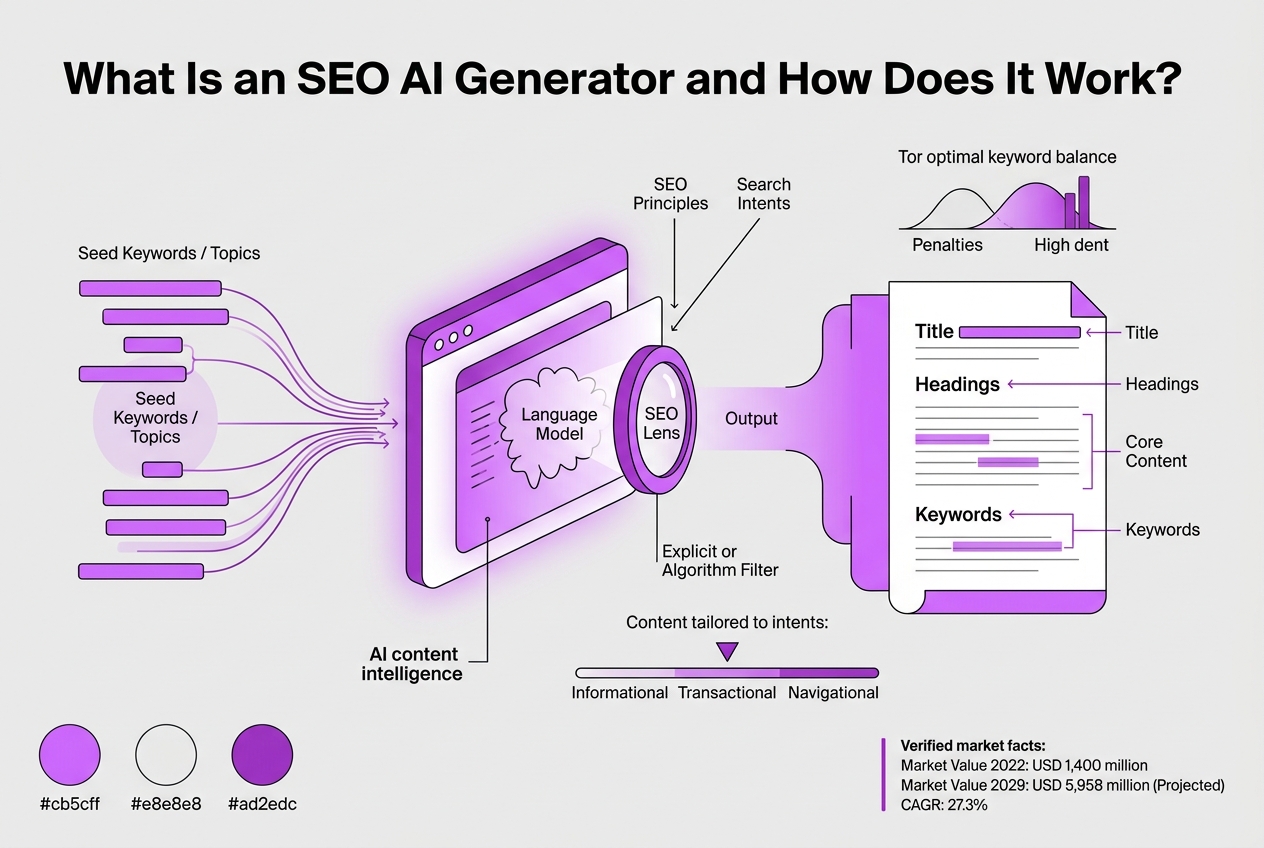
An SEO AI generator is a software tool that uses artificial intelligence to create content designed to rank well in search engines. This technology isn't just about churning out text; it combines language models with SEO principles to produce articles, blog posts, titles, and sometimes even meta descriptions that align with specific keywords and search intents.
At its core, an SEO AI generator helps by:
- Generating Content: It drafts readable, often well-structured text based on seed keywords or topics you provide.
- Optimizing Keywords: It suggests or inserts keywords strategically, balancing density to avoid penalties.
- Understanding Intent: AI interprets what users are looking for — informational, transactional, navigational — and tailors content accordingly.
- Analyzing User Behavior: Some advanced tools factor in how audiences interact with similar content to improve engagement.
One of the key strengths of these generators is speed. What might take hours to research and write can often be done in minutes. This fast turnaround is a double-edged sword — the quality can be uneven, and AI doesn’t always capture nuance or context perfectly, meaning careful editing is still essential.
Here’s a breakdown of typical features you’ll find:
| Feature | What It Does | Possible Drawbacks |
|---|---|---|
| Content Drafting | Creates initial content drafts | Can be generic without tweaks |
| Keyword Research | Finds relevant keywords | May suggest overly competitive |
| Search Intent Analysis | Aligns content with user goals | Sometimes misinterprets intent |
| SEO Suggestions | Offers meta tags, header tips | Not always industry-specific |
| Integration with Tools | Works with CMS or analytics platforms | Setup can be complex |
Pro Tip: Pro Tip: Choose AI generators that integrate with SEO analytics for better performance tracking.
While AI helps overcome scaling challenges by producing vast amounts of content faster, it doesn’t eliminate the need for human judgment. Templates and patterns might repeat unless you’re vigilant. In my experience, mixing AI-driven drafts with your own expertise creates the best outcomes.
If you want to dig deeper into how AI can craft effective titles—a critical SEO skill—check out our insights on creating compelling headlines at Seo Title Generator How To Create Effective Titles That Rank.
The market for AI content tools is growing fast, too. It was worth $1.4 billion in 2022 and is on track to jump to nearly $6 billion by 2029, showing just how many businesses see value here. That growth is tempting, but be selective about your tools.
Understanding what an SEO AI generator is and its real-world uses is just the start. Next, I’ll break down how to evaluate these tools so you can choose the right fit for your unique SEO challenges.
Written by Daniel Dimov.
Who Should Use SEO AI Generators? Identifying Ideal Candidates
SEO AI generators shine for specific groups but can trip up others. From my own experience running TryRoki.com, here’s who benefits most—and who should tread carefully.
Who Benefits From SEO AI Generators?
-
Marketers & SEOs: You need fast, regular content to stay competitive. These tools pump out drafts that speed up brainstorming and overcome writer’s block.
-
Small Business Owners: Wearing many hats means time is scarce. AI-generated content lets you maintain a blog or website presence even without a dedicated writer.
-
Content Teams Needing Volume: If your role demands pushing out dozens of posts monthly, these generators ensure a baseline content flow that your editors can then polish.
When to Think Twice
Very niche or highly technical topics often require expert vetting. AI can misinterpret jargon or fail to capture subtle industry nuances, which risks misinformation or bland content. That’s a blocker if your brand depends on high accuracy or authority.
Also, keep in mind the skill level involved. Some tools are straightforward; others require fine-tuning prompts and post-editing, which can frustrate less tech-savvy users.
Here’s a quick rundown:
| User Type | Ideal? | Notes |
|---|---|---|
| Marketers & SEOs | Yes | Great for scaling content fast |
| Small Business Owners | Yes | Saves time but needs some oversight |
| Content Teams (High Volume) | Yes | Requires editing workflow |
| Niche/Technical Experts | No (without review) | Risk of inaccuracies |
| Beginners (Low Tech Skills) | Depends | Some learning curve; choose easy tools |
At TryRoki.com, I often advise users to match tool complexity with their comfort level. You don’t want to waste time wrestling with the interface or fixing AI mistakes that could have been avoided with spot checks.
If you’re targeting fast content output and can commit to reviewing, an SEO AI generator is worth exploring. For those focused on precision in specialized topics, treat the output as a draft, not the final article.
Up next, we’ll explore how SEO AI generators integrate into existing workflows and the tools that pair best for seamless content production.
Step-by-Step Guide to Using an SEO AI Generator Effectively
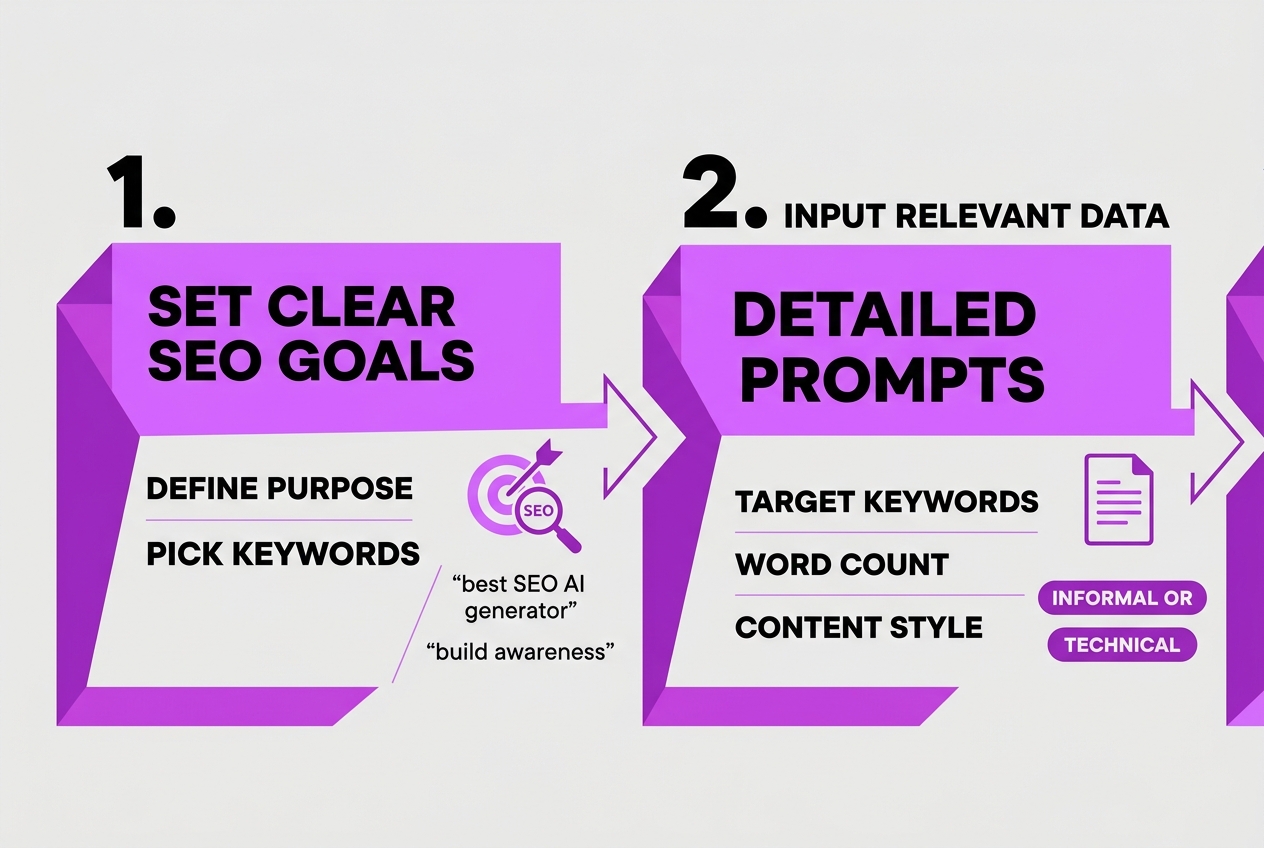
Using an SEO AI generator can save hours, but only if you treat it as a tool—not a magic wand. Here’s a step-by-step process I follow to get content that actually moves the needle:
-
Set clear SEO goals and target keywords. Before punching anything into the AI, decide what your content’s purpose is. Is it to rank for "best SEO AI generator"? Or maybe to build awareness around AI content tools? You’ll want to pick primary and secondary keywords based on search intent and volume. Without this, the AI might generate generic or unfocused content.
-
Input relevant data and prompts into the AI tool. When you start generating, feed the AI with detailed instructions. Include your target keywords, desired word count, and content style—whether it’s informal or technical. The better your prompts, the less time you’ll spend fixing the output. For instance, saying "write a 700-word blog targeting ‘SEO AI generator benefits’ focusing on small businesses" produces more useful drafts.
-
Edit and customize the AI-generated output to ensure quality and voice. AI content often sounds a bit too polished or repetitive. It’s essential to read through and inject your voice, tweak facts, and check flow. This step is where human judgment beats AI. Also, watch out for accidental keyword stuffing; balance is critical.
-
Integrate AI results with other SEO tactics like link building. Content alone won’t boost rankings. Link to authoritative sources, and connect your AI-generated posts with internal links from other pages. Consider reading up on how to acquire quality backlinks to complement your AI content efforts—this is where you build credibility beyond just keywords.
-
Monitor and optimize content performance continuously. Once published, track your rankings and user engagement with tools, adjusting content as needed. Using a rank tracker helps spot where tweaks are necessary. AI tools can assist here too, suggesting updates based on changing search trends.
Pro Tip: Pro Tip: Regularly update AI-generated content with fresh data to align with Google’s evolving algorithms.
Getting started with an SEO AI generator is straightforward, but maintaining momentum and quality requires active management. The next step is to explore how to pick the right AI platform that fits your workflow and budget.
Common Mistakes to Avoid When Using SEO AI Generators
When I first started using SEO AI generators, I made several mistakes that slowed down progress and sometimes even hurt our rankings. You should watch out for these common pitfalls:
-
Relying solely on AI without human oversight. AI can draft content quickly, but it doesn't always grasp subtlety or context. Passing everything through a human editor prevents errors and keeps the tone authentic.
-
Ignoring keyword relevance and user intent. Throwing generic keywords into the tool without considering what your audience really wants leads to content that misses the mark. Understanding user intent ensures your AI-generated pages actually answer real questions.
-
Using AI-generated content without plagiarism checks. Sometimes AI reuses phrases or ideas from existing content. Skipping plagiarism scans risks duplicate content penalties and damages credibility.
-
Neglecting integration with your broader SEO strategy. AI content should fit into your overall keyword map, backlink efforts, and user experience goals. Using it in isolation creates scattered or inconsistent messaging.
-
Overlooking performance data and failing to adjust. After publishing AI-created pages, ignoring metrics like bounce rate or rankings is a missed opportunity. Use data to refine your prompts and content themes continuously.
A mistake I’ve personally seen companies make is treating AI as a fully hands-off solution. It’s tempting given how fast it works, but it requires careful curation.
For example, when launching new pages, I always verify keywords against those suggested by tools like TryRoki's SEO Title Generator to make sure they align well.
Balancing automation with human insight is the key to getting real SEO wins from AI content.
Up next, let’s dig into how to enhance your process by combining AI-generated content with smart SEO techniques.
Alternatives to SEO AI Generators for Content Creation
Creating SEO content without relying solely on AI generators means balancing quality, control, and efficiency differently. Here are key alternatives to consider:
| Alternative Method | Pros | Cons |
|---|---|---|
| Manual Content by Copywriters | More authentic voice, nuanced topics | Expensive; slower turnaround |
| Hybrid AI + Human Editing | Faster drafts with quality checks | Needs skilled editors; still time-consuming |
| Content Curation/Aggregation Tools | Quick with diverse sources | Risk of outdated or irrelevant content |
| SEO Tools (keywords/backlinks) | Sharp focus on rankings and links | Doesn’t generate content itself |
Manual writing by professional copywriters still holds value if you want unique, trustworthy content. I’ve seen clients pay $0.15–$0.50 per word depending on the niche and expertise needed. It’s definitely slower, and you need edited drafts too, but the depth and brand consistency usually justify the cost.
A hybrid approach—starting with AI-generated text and then having a human rewrite or polish—strikes a functional middle ground. You save 30–50% of the writing time but still end up with content that doesn’t sound "robotic." The downside: this requires editors who really understand SEO and your voice.
Content curation and aggregation tools pull together relevant information from other sources. These are useful for newsletter or roundup blogs but can feel patchy if you don’t add original insight. The real hazard is over-reliance—Google favors original value, so plain aggregation might tank your rankings.
Then, there are SEO tools focused on keyword research and backlinking without content generation. I’ve used tools like these to pinpoint exactly which keywords bring traffic and where to build backlinks. They don't create your articles but are essential for making your content strategy laser-focused. The downside is that results take time and don’t directly solve the content creation burden.
Each method has its place, and often the smartest SEO teams combine them. For example, you might use a cheap SEO title generator to start ideas, curate some source material, generate drafts with AI, then hand it over to in-house writers for finishing touches.
Understanding these trade-offs will help you avoid putting all your eggs in the AI basket while building a more resilient, diversified SEO content pipeline.
Next, let's examine how to get started with SEO AI generators while working around their pitfalls.
Written by Daniel Dimov.
My honest take on SEO AI Generators
I’ve been at the helm of TryRoki.com for years, working hands-on with AI content generation tools in the SEO space. What often gets overlooked is that SEO AI generators are not magic bullets—you can’t just flick a switch and expect perfect content. They help pump out drafts incredibly fast, but without human direction, they tend to miss the subtlety and personality your brand needs. This is where many teams waste time correcting bland or off-tone passages.
A lot of people worry AI will replace writers altogether, but I see it freeing skilled content creators to focus on higher-level tasks: shaping narratives, researching nuanced topics, and carving out unique SEO strategies. That said, here’s a truth I don’t hear enough: AI-generated content isn’t suitable for every single piece. Complex, technical, or deeply specialized topics require a human’s expertise and judgment—nothing AI can replicate yet.
So, think of SEO AI generators like a talented assistant who drafts and formats the bulk of your content, allowing your writers to add the value that truly moves the needle. Relying on them blindly as content factories could backfire, damaging your brand voice and SEO performance in the long run.
— Daniel Dimov
Automate your content workflow with Roki AI’s SEO AI Generator
When I first started with TryRoki.com, I was skeptical about outsourcing SEO content to an AI. The reality? It’s saved heaps of time—but it still requires you to keep an eye on the quality. The platform’s weekly tasks push you out of autopilot and actually help improve your Google and AI rankings in ways most content generators don’t. One thing I appreciate is how Roki AI pulls relevant Reddit posts for targeted engagement; it's a practical, not gimmicky, way to grow traffic.
If you’re serious about dialing in SEO content without juggling multiple tools, you’ll like how TryRoki.com slots into your workflow. I recommend reviewing their features to see if the scope fits your needs and checking out their pricing to weigh the investment against the time saved.
Written by Daniel Dimov.
Frequently Asked Questions
An SEO AI generator like Roki AI uses artificial intelligence to create content that targets specific keywords and matches search intent quickly. In practice, it can produce content drafts in minutes, helping you fill your site with regularly updated pages. I’ve seen it cut the content brainstorming phase by about 70%, which is huge for maintaining website relevance.
No. While AI handles volume and speed well, it doesn’t capture nuance and tone the way a skilled writer does. Over time, I’ve learned that human editors must review AI output to fix errors and add personality. Without that, content risks feeling generic, which turns off readers and search engines alike.
From my experience, using an AI content generator cuts the drafting stage down by roughly 50%. Instead of spending hours staring at a blank page, you get usable text quickly. The catch: polishing that text still takes effort, so it’s faster but never totally hands-off.
They shine best with high-volume, general topics or frequently updated content like blogs and news. For deeply technical or specialized subjects, I don’t rely on AI alone because it misses subtleties that industry experts catch. I always assign such content to human writers who know the field well.
Don’t assume the AI’s first draft is publish-ready—that’s a big trap. I advise always editing for clarity, checking keywords to avoid stuffing, running plagiarism scans, and tracking how new content performs in search. Ignoring these steps leads to poor rankings and wasted effort.
Written by Daniel Dimov.
Recommended reads
- Seo Title Generator How To Create Effective Titles That Rank
- Premium Backlinks How To Acquire High Quality Links For Seo Success
- Top Cheaper Alternatives To Semrush For Smart Seo
- Call To Action Generator Boost Your Conversion Rates Today