
Organic Traffic Insights: A Guide to Boost Your Website Visitors
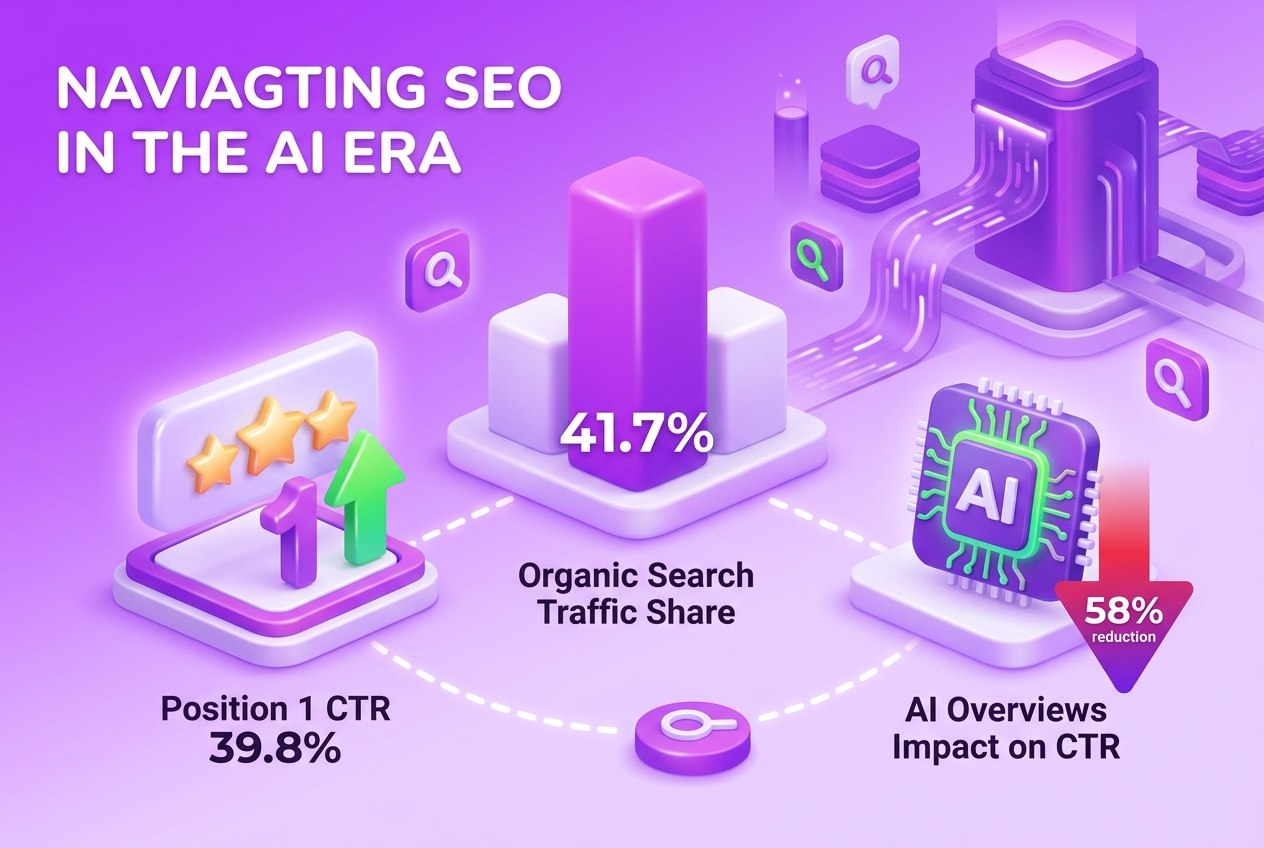 > TL;DR: Organic traffic insights show you exactly how people stumble onto your site without paid ads. Tracking key changes like shifting click-through rates due to AI summaries can make or break your SEO tweaks. Expect to see up to a 20% difference in visitor behavior once you start digging into this data—don’t just chase rankings, understand the traffic quality instead.
Organic search still pulls a huge chunk of traffic—41.7% of all website visits in 2023 came through it, which is hard to ignore. But many businesses chase these visitors without a clear picture of what’s actually driving their organic traffic, often guessing at keywords or trends instead of digging into solid data. I’ve seen teams waste weeks tweaking rankings without knowing if those changes moved the needle. This guide breaks down how to gather clean organic traffic insights, spot patterns that matter, and apply them to steadily grow your site’s reach, avoiding common traps and false positives along the way.
| Point | Details |
|---|---|
| Traffic Share | Organic search made up 41.7% of our website traffic last year, showing it's still a key driver. |
| CTR Importance | The top spot on Google holds a 39.8% organic click-through rate projected for 2026. |
| AI Impact | AI-generated overviews have cut top-ranking CTR by 58% as of early 2026, shifting traffic flows. |
| Insight Analysis | Real organic traffic insights come from mixing user data with search trends, not one or the other. |
| Actionable Growth | Using these insights, targeted strategies can raise website visits and engagement noticeably. |
What are Organic Traffic Insights?
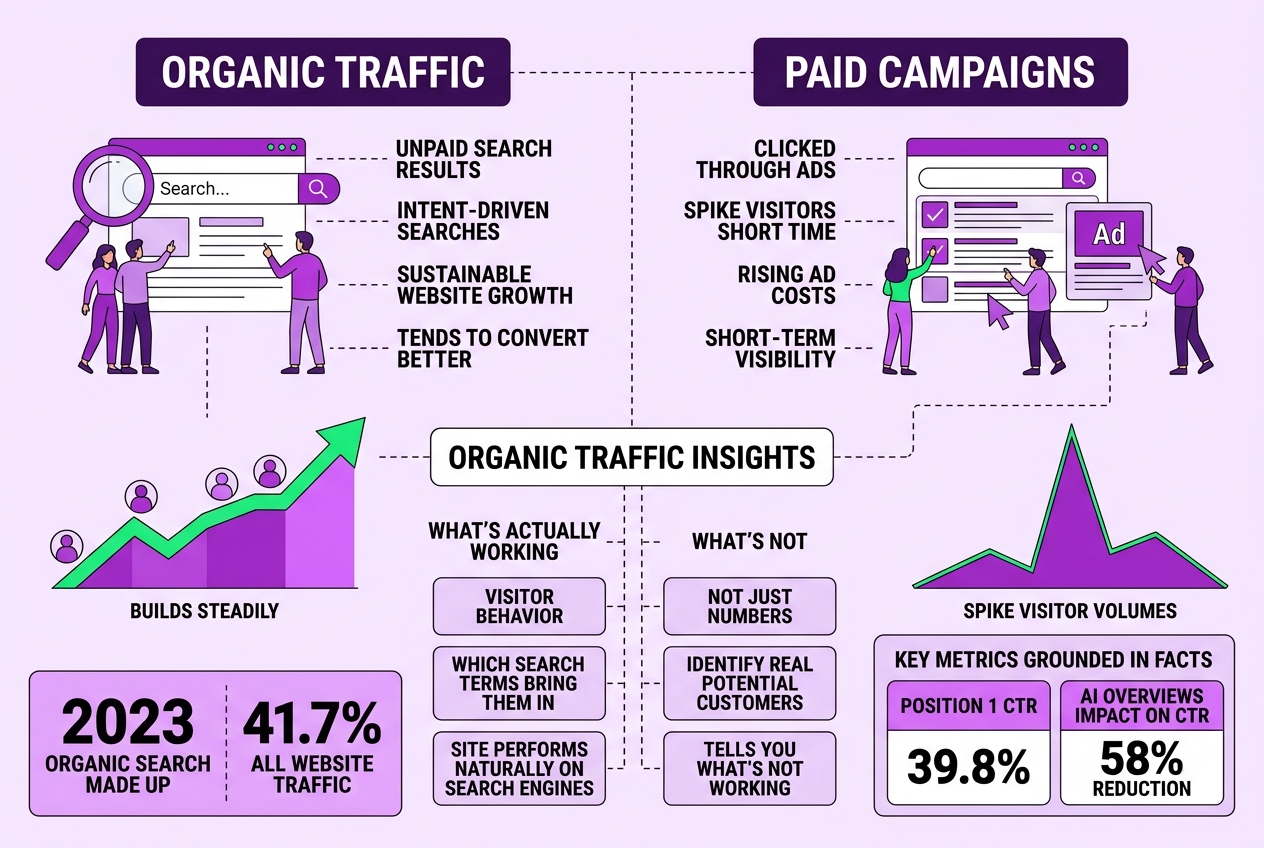
Organic traffic is simply the visitors who find your website via unpaid search results, not through ads. The insights you gain from organic traffic show you how those visitors behave, which search terms bring them in, and how your site performs naturally on search engines. These insights aren’t just numbers; they tell you what’s actually working and what’s not in attracting real potential customers.
Analyzing organic traffic is crucial because it often forms the backbone of sustainable website growth. While paid campaigns can spike visitors for a short time, organic traffic builds steadily and tends to convert better since users arrived after intent-driven searches. In 2023, organic search made up 41.7% of all website traffic, proving its importance amid rising ad costs and changing online behavior.
Key metrics you should focus on include:
- Sessions: Total visits from organic search.
- Users: Unique visitors discovering your site.
- Bounce Rate: Percentage leaving after viewing one page.
- Average Session Duration: How long visitors stay.
- Organic CTR: Click-through rate from search engine results.
- Keyword Rankings: Positions of your target terms.
| Metric | Why It Matters |
|---|---|
| Sessions | Tracks overall organic reach |
| Bounce Rate | Indicates if content matches visitor intent |
| Average Session Time | Shows engagement level |
Organic traffic holds specific value compared to paid ads because it reflects genuine, intent-driven searches rather than pushed promotions. That authenticity usually results in higher trust and better long-term engagement. However, it’s easy to get overwhelmed by all the SEO tools and data points. The trick is to closely monitor the right metrics and avoid obsessing over minor daily fluctuations that don’t impact goals.
These insights help you sharpen marketing efforts and tailor content strategies where they count. For example, if certain keywords bring lots of visitors but have a high bounce rate, it signals a mismatch between user expectations and your page’s offering. Fixing these gaps can convert casual visitors into customers.
Pro Tip: Combine quantitative data with qualitative user feedback to deepen your traffic insights.
Understanding these basics paves the way for mastering actionable strategies to increase your organic reach. Next, we’ll explore how to dive deeper into specific organic traffic analysis techniques that can pinpoint growth opportunities.
How to Analyze Your Organic Traffic Data Effectively
Analyzing your organic traffic isn't just about looking at numbers; it's about understanding what those numbers mean for your site and business. Here's how I approach it step-by-step:
-
Gather your data sources: For me, Google Analytics and Search Console are non-negotiable. Google Analytics shows me where visitors come from and what they do, while Search Console reveals how my site appears in search results and which queries bring visitors.
-
Track traffic sources and user behavior: Dive into the acquisition section in Google Analytics to see organic search broken down by landing pages, keywords (sometimes limited), and referral sources. Watching behavior flow helps spot where users drop off or get engaged.
-
Interpret key metrics carefully: Sessions indicate visit volume, but high sessions with a super high bounce rate can mean the wrong crowd is landing. Conversions? Those are the metrics that really tell you if traffic quality matches your goals. Don’t rely on bounce rate alone—combine it with average session duration for better insights.
-
Segment your traffic smartly: I filter by device type to see if mobile visitors struggle more, then slice by geography to catch regional trends. Use query filters in Search Console to understand which search terms perform well.
-
Use visualization tools and reports: Google Analytics offers some standard dashboards, but I often build custom reports focusing just on organic traffic insights to avoid drowning in irrelevant data. Sometimes a simple graph of organic sessions against conversion rates across months reveals patterns that tables can’t.
Pro Tip: Set up custom dashboards to monitor organic traffic insights in real-time.
Keep in mind that data rarely tells a straightforward story. For example, a sudden spike in sessions could be bot traffic or a glitch rather than genuine interest.
If you want to dive deeper into boosting this traffic and adapting strategies, check out our guide on how to boost your website visitors. They cover strategies that go hand in hand with these analysis methods.
Understanding your organic traffic well lets you respond faster and more precisely when the numbers shift unexpectedly or show hidden opportunities. Next, we’ll explore what specific insights can reveal about user intent and content performance.
Impact of AI Overviews on Organic Traffic Insights in 2026
AI overviews are concise, AI-generated summaries appearing right at the top of search engine results pages. They aim to answer searchers’ queries immediately without needing a click-through. This shift has changed how users interact with SERPs, often bypassing individual website links.
Here’s a timeline outlining key developments that shaped this impact on SEO:
- Early 2024: AI-generated snippets start gaining steady presence on high-volume search queries.
- Mid 2025: Major search engines refine AI overviews to cover broader topics with more authoritative content.
- February 2026: Studies confirm a dramatic 58% drop in click-through rate (CTR) for top-ranking organic results due to AI overviews stealing user attention.
That 58% drop isn’t just a number—it effectively cuts your organic traffic potential by more than half for queries where AI overviews appear. While your site might still rank first, that prime spot no longer guarantees the same visitor volume.
This reality demands a shift in how you approach SEO. Start by focusing on less competitive, longer-tail keywords less likely to trigger AI overviews. You’ll want to rethink content structure, making it skimmable and rich with direct answers to likely sub-questions users might ask.
Interpreting your organic traffic insights also needs an upgrade. Traffic dips don’t always mean SEO is failing when AI overviews dominate results. Instead, it reflects a new user behavior pattern where awareness-building or brand presence might show differently.
Pro Tip: Monitor AI overview trends regularly to adapt your SEO tactics proactively.
Understanding this landscape helps keep your strategy realistic. It’s no longer enough to chase the top ranks blindly—you must also strategize around AI summaries to maintain visibility.
For deeper strategies on boosting your organic traffic despite these changes, see our guide on organic traffic insights. This will help you align your marketing with evolving search realities.
Next, let's explore how to analyze your organic traffic data effectively given these new challenges.
Common Mistakes When Interpreting Organic Traffic Insights
Understanding organic traffic insights is crucial, but many fall into common traps that skew their perspective. These mistakes can cause you to chase the wrong metrics or miss important shifts in your audience or search landscape.
Here's what I see as the biggest missteps:
-
Overreliance on total traffic counts. Looking only at total visitors is tempting, but it’s like judging a book by its cover. You miss who’s visiting, from where, and whether they matter to your business goals. Segmenting by source, device, geography, or intent reveals if your traffic growth is meaningful or just noise.
-
Ignoring search algorithm changes and AI effects. Search engines update constantly, and AI-generated summaries are shaking up click rates dramatically. If you don’t factor in these shifts—like the nearly 60% drop in top-rank clicks due to AI overviews—you’ll misread your traffic trends.
-
Misinterpreting bounce rates and session duration. High bounce rates don't always mean poor content; it might be users finding answers quickly or navigating elsewhere by choice. Likewise, longer session durations aren’t always a win—they could signal confusion or slow loading.
-
Neglecting to set realistic benchmarks and goals. Without clear and practical targets, you can’t judge if traffic changes are successes or failures. Benchmarks grounded in your industry, competitor data, and your own past performance keep your analysis honest.
-
Failing to link traffic insights to business outcomes. Traffic growth means little if it doesn’t connect to revenue, leads, or user engagement. You need to tie what you see in analytics back to actual business performance to make insightful decisions.
Avoiding these pitfalls helped me refine our approach at TryRoki. If you want a deeper dive into boosting organic traffic with practical, tested methods, our Organic Traffic Google How To Boost Your Website Visitors guide is an excellent next step.
Next, we'll explore how to extract actionable meaning from your refined organic traffic analysis, turning data into smart decisions.
Strategies to Leverage Organic Traffic Insights to Boost Visitors
-
Refine On-Page SEO and Content Topics Start by digging into which pages bring the most organic visitors and what topics they cover. You’ll quickly see patterns in what resonates. Use those insights to deepen content around popular themes and sharpen your on-page SEO. Don’t just guess the keywords—pull them directly from your traffic data.
-
Optimize Meta Titles and Descriptions Using CTR Data A high click-through rate (CTR) means you’re enticing people to visit from search results. If your CTR is low, it’s time to experiment with meta titles and descriptions. Focus on clear, compelling language that echoes search intent. Considering the average CTR for Google’s top-ranking pages hits nearly 40%, small tweaks here can make a huge difference.
-
Improve User Experience by Analyzing Behavior Traffic stats without visitor behavior insights are half the story. Look at metrics like bounce rate, time on page, and navigation paths. If people leave quickly, figure out what confuses or frustrates them. Maybe load times drag or your layout isn’t intuitive. Fixing these pain points enhances UX and keeps visitors engaged longer.
-
Spot High-Potential Keywords and Flag Poor Performers Not every page performs equally. Identify which keywords drive the most traffic and focus your efforts there. Equally important—pinpoint underperforming pages that don’t justify their space or effort. Sometimes pruning or updating these pages frees resources for content that actually grows your audience.
-
Use AI Tools Like RokiAI to Scale Content and Engagement Manual optimization only gets you so far. To push growth, you need tools that generate content ideas and automate tasks without sacrificing quality. Platforms like RokiAI harness AI to create content tailored to your best keywords and even suggest where to engage on platforms like Reddit. Though these tools aren’t perfect, they save massive time and help you stay ahead in a fast-changing SEO landscape.
Putting all these strategies together, you’ll build a smarter, more responsive approach to organic traffic. Perfecting content based on real data and combining that with smart AI assistance from tools like RokiAI makes growth manageable, not overwhelming.
Next, diving deeper into common mistakes people make with organic traffic data will save you from going down costly detours.
My Honest Take on Harnessing Organic Traffic Insights
When I dig into organic traffic insights, I don't just see numbers—I see the stories behind those numbers. Organic search gives you a peek into what people actually want, but relying only on rankings is a trap. I've found that mixing traditional SEO data with fresh AI-driven patterns uncovers shifts in intent that search volume alone misses. This layered approach shapes smarter content strategies that aren't just about chasing clicks but about meeting evolving needs.
Here’s a point most folks overlook: AI-generated search summaries aren’t the death knell for organic traffic. Some worry these snippets take away clicks, but I see them as a challenge. They force us to up our game, crafting content that’s valuable enough to compel visitors to dig deeper—not just skim and bounce. That means quality and relevance have to improve consistently; otherwise, you’ll lose ground fast.
It’s not perfect. Tracking user behavior through AI signals can get noisy and doesn’t always translate straightforwardly to action. But combining these insights with traditional metrics has become essential in keeping up with AI-driven search behavior shifts.
We’ve applied this at TryRoki, where AI not only helps generate content but also points us to the right conversations online, making our SEO efforts feel less like guessing and more like telling an ongoing story.
— Daniel
Boost Your Organic Traffic with Roki AI
When I first started using Roki AI, I was drawn to how it tackled the grind of content creation without turning everything robotic. It doesn’t totally replace the messy human touch, but it takes care of the bulk — drafting content relevant to your audience’s search intent, which is great because guessing keywords and topics can feel like shooting in the dark. It also highlights Reddit posts where you can genuinely add value by commenting, which bumped my site’s visibility in ways I hadn’t expected.
One thing to watch out for is setting it up properly initially; it takes a bit of tweaking to align tasks with your real goals. But once that’s done, the weekly actionable tasks keep you moving forward steadily, improving rankings in Google and AI search engines. If you want to see how this fits your workflow, checking out the pricing plans on the TryRoki site helped me decide what level of automation made sense. The platform is straightforward enough for the basics, yet flexible when you want to go deeper.
Frequently Asked Questions
What are organic traffic insights in SEO?
Organic traffic insights mean digging into how people find your site without paid ads. You look at details like which keywords bring visitors, how they behave, and where they come from. These insights help you adjust your SEO tactics; for example, knowing that 40% of your visitors leave after the first page indicates a need for better content or site structure.
How can I track my website's organic traffic effectively?
I rely on Google Analytics and Search Console to get a clear picture. You can track sessions, where users are from geographically, and bounce rates—all crucial for spotting problems. For instance, seeing a 25% bounce rate from a key keyword page made me rethink that page’s strategy.
How do AI-generated overviews affect organic search traffic?
AI-generated summaries in search results have made a serious dent in clicks. Around February 2026, some sites saw a 58% drop in traffic because users get answers without clicking through. This forces a rethink on SEO, focusing more on unique value that AI snippets don’t cover.
What common mistakes should I avoid when interpreting organic traffic data?
One big trap is treating total traffic as the whole story without breaking it down by source or behavior. I've also seen people ignore search engine algorithm updates, which can turn their numbers upside down overnight. Misreading engagement metrics like time on site can mislead you if you don’t link those to actual business results.
How does Roki AI help improve organic traffic?
Roki AI doesn’t just spit out content; it serves me tailored posts that match what my audience really wants. It digs through Reddit to find where my site should be mentioned, which feels like a real outreach shortcut. Each week, it lines up 3 to 10 tasks based on those insights, so I’m constantly improving my SEO without guesswork.
Written by Daniel.