Daniel D.
 > TL;DR: Automated backlinks can speed up link building but come with a big risk—most tools spit out low-quality links that can tank your SEO. I’ve seen teams waste weeks chasing volume instead of quality. A smarter approach is picking tools that let you control link quality and add manual checks. That balance helps you avoid penalties and build a backlink profile that lasts.
Written by Daniel Dimov.
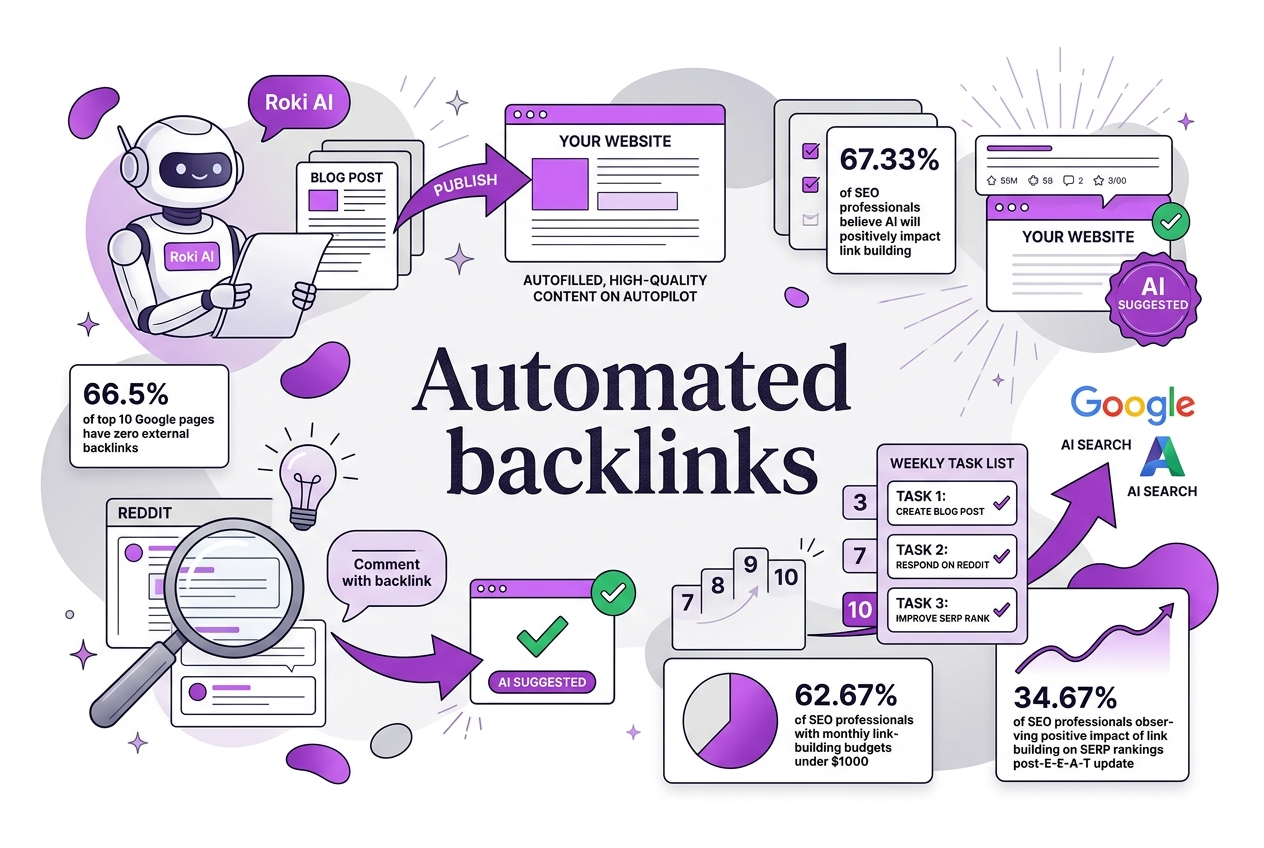
Backlinks have long been a buzzword in SEO circles, but there’s a strange reality: over 66% of pages in Google’s top 10 results don’t even have external backlinks. That flies in the face of what many assume about link building. Automated backlink tools promise quick fixes, yet they often create low-quality links that harm more than help. From my experience running TryRoki, I’ve seen how blindly trusting automation can backfire. This guide breaks down where automated backlinks fall short and lays out smarter ways to use AI tools to build links that actually boost your search rankings.
Written by Daniel Dimov.
| Point | Details |
|---|---|
| Automation Risks | Over 60% of automated backlink tools create low-quality links that can hurt your site’s authority. |
| Quality Over Quantity | 66.5% of top Google pages have zero external backlinks, showing that high-quality links matter more than sheer volume. |
| Safe Strategies | Manual checks are still needed when using automated backlink software to avoid Google penalties. |
| SEO Professionals’ Views | 67.33% of SEO experts believe AI will have a positive impact on future link-building campaigns. |
| Budget Reality | Nearly 63% of SEO professionals keep their monthly link-building budget under $1000. |
Written by Daniel Dimov.
Understanding Automated Backlinks: Definition and Impact
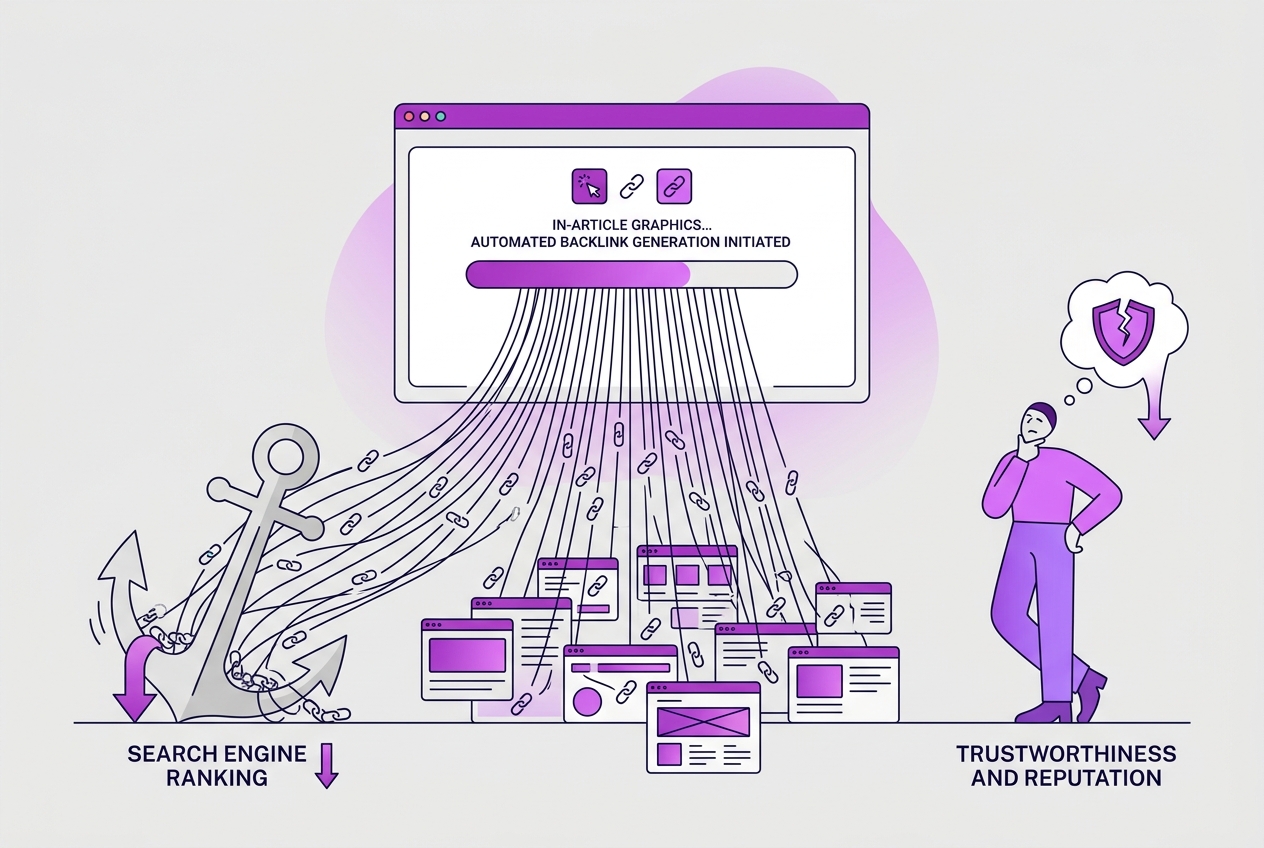
Automated backlinks are links created without manual effort, typically using software that generates hundreds or thousands of backlinks quickly. These tools scan for opportunities and place links often on low-quality sites or comment sections, aiming to boost your site’s search engine ranking by increasing the number of incoming links.
At first glance, automated backlinks might sound like a shortcut to SEO success. The main supposed benefit is saving time and effort when building backlinks. Some might believe that piling on lots of links, regardless of their source, will elevate their site’s authority fast. However, this is a big misconception.
Here’s a quick look at how automated backlinks usually play out:
| Aspect | Reality Check |
|---|---|
| Quantity vs Quality | Most automated backlinks are low-quality or spammy. |
| SEO Impact | Google often ignores or penalizes sites with fake links. |
| Risk of Penalty | Automated links raise flags in Google’s SpamBrain system. |
The biggest risk comes from Google’s SpamBrain algorithm, which specifically targets artificial and manipulative link patterns. SpamBrain can devalue or even penalize sites relying heavily on low-quality automated links, harming your domain authority and rankings.
Pro Tip: Focus on how automation without quality control can lead to penalties from Google’s SpamBrain. This algorithm is relentless in spotting link-building shortcuts.
The harsh truth is, about two-thirds of high-ranking pages in Google’s top 10 results have no external backlinks at all. This stresses the importance of relevance, quality, and organic growth rather than just volume.
If you want to dip your toes into automated backlinks, it's best to combine them with manual, high-quality link building efforts. Experience shows that blind trust in automation usually ends with wasted budget and a punch to your SEO credibility.
Moving forward, it's useful to explore how you can safely use software tools for backlinking without triggering penalties or wasting resources.
When Automated Backlinks Are Suitable for Your SEO Strategy
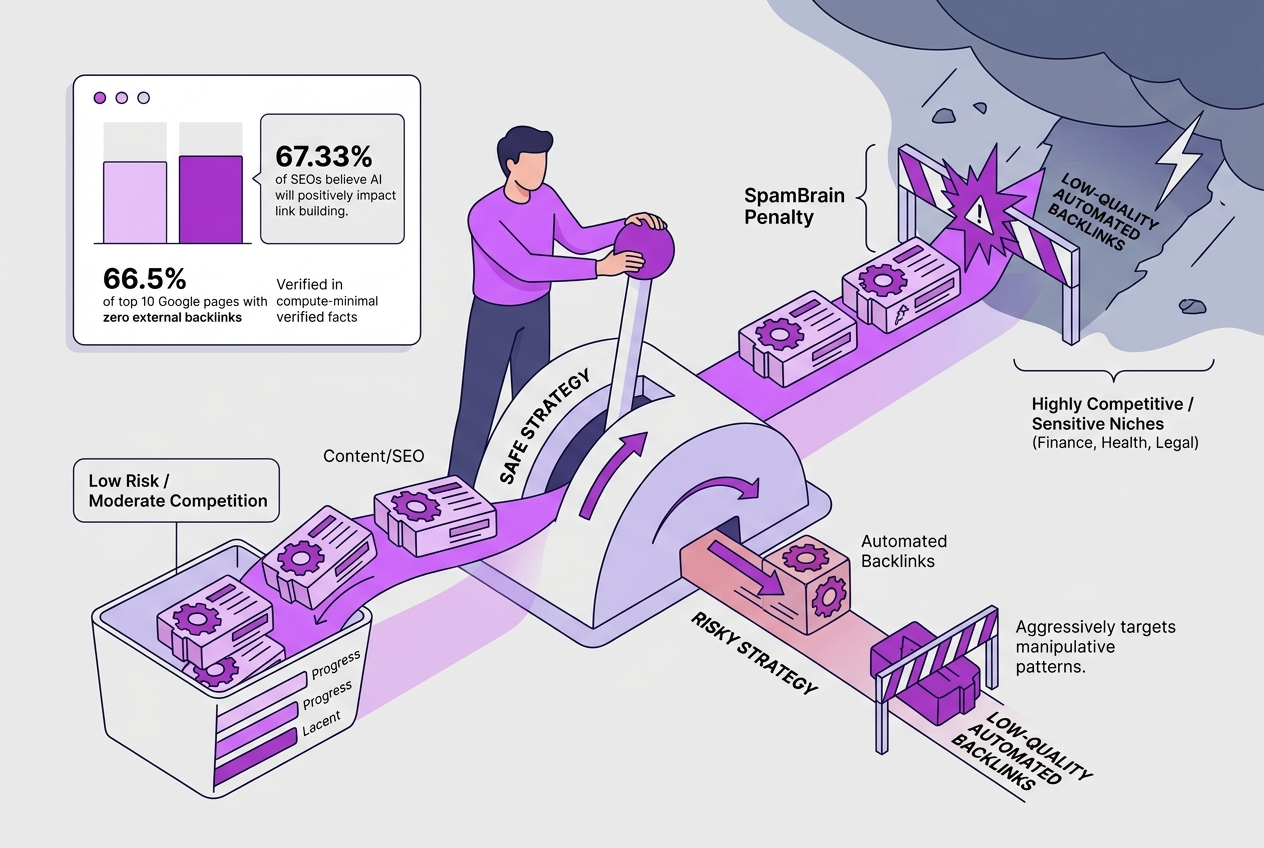
Automated backlinks can save a lot of time in SEO strategies, but they're not a one-size-fits-all solution. If you're running a site in a low-risk niche with moderate competition, automation can quickly handle bulk link building tasks. This lets you focus on content creation and other growth areas. However, if you're in a highly competitive or sensitive niche—like finance, health, or legal—auto-generated links can backfire. Google's SpamBrain algorithm aggressively targets manipulative link patterns, punishing low-quality automated backlinks. Trust me, it’s not worth the hit.
The table below breaks down the suitability based on niche risk and competition level:
| Niche Risk Level | Competition Level | Recommendation |
|---|---|---|
| Low | Low to Medium | Automated backlinks can be beneficial |
| Medium | Medium to High | Use automation with cautious manual checks |
| High | High | Avoid automated backlinks altogether |
Pro Tip: Integrate AI tools to complement manual efforts rather than replace them.
Even if your niche and competition fit automation, never skip manual quality checks. Automation tools often generate low-quality or irrelevant backlinks that can harm your domain authority instead of helping it. I've seen businesses waste their budgets chasing quantities over quality.
Speaking of budgets, keep this in mind: over 60% of SEO professionals manage link-building budgets under $1000 monthly. If you're working with a limited budget, automation can stretch your dollar, but always invest some time in vetting those links or hiring someone to do it. For those with bigger budgets, focusing on premium backlinks backed by manual outreach often yields stronger, longer-lasting results.
Getting the balance right between automation for efficiency and manual review for quality is challenging but necessary. That balance depends on your niche risk, competition, and budget constraints.
This leads us to the practical side of using automated tools safely, which we'll explore next in how to use software effectively for automated backlinks.
Best Practices to Build Automated Backlinks Safely and Effectively
-
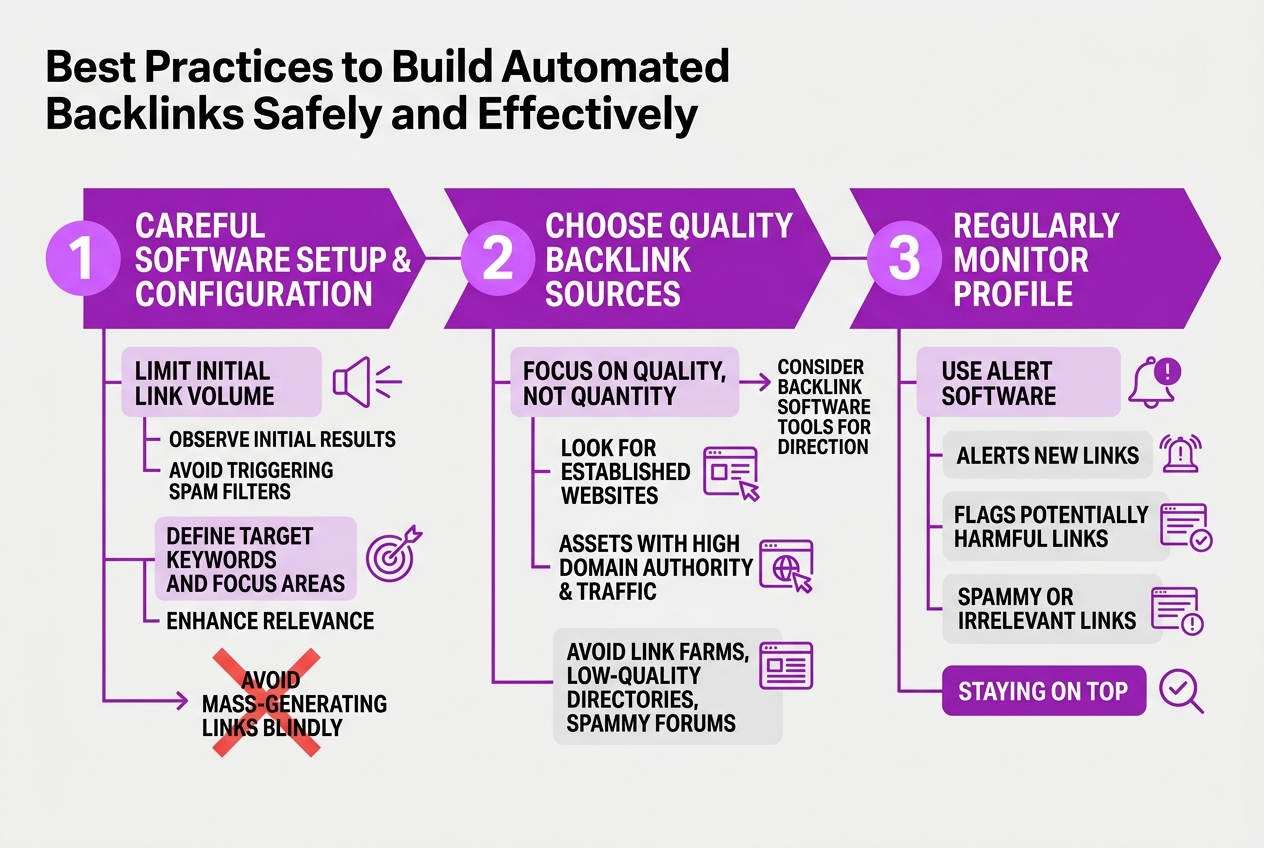
Start with careful setup and configuration of your backlink software. Avoid mass-generating links blindly. Instead, limit the volume in the beginning to observe results and avoid triggering spam filters. Define clear target keywords and focus areas to enhance relevance.
-
Choose backlink sources with a focus on quality, not quantity. Look for established websites with high domain authority and real traffic. Avoid link farms, low-quality directories, or spammy forums. If you’re not sure where to start, consider tools and guides like Automated Backlinks Software How To Use It Safely And Effectively for direction.
-
Regularly monitor your backlink profile. Use software that alerts you to new links and flags potentially harmful ones, such as spammy or irrelevant links. Staying on top of this prevents penalties and damage to your domain authority.
-
Combine AI-powered monitoring with manual audits. AI tools can quickly scan and analyze backlink quality across hundreds of sites, but human judgment remains essential for nuanced decisions. Schedule a manual review every 4 to 6 weeks.
-
Integrate organic methods like using TryRoki to find relevant Reddit posts where you can naturally mention your website. This approach not only builds trust but also diversifies your backlink profile with authentic, audience-engaging mentions.
Pro Tip: Regularly audit automated backlinks and disavow suspicious links to maintain domain authority.
Following these steps reduces the risks of automated backlink building. The key is maintaining quality over sheer volume and avoiding shortcuts that invite Google penalties. For deeper insights, also explore related resources like Seo Backlinks Software How To Use Tools To Boost Your Rankings.
Understanding these best practices helps you balance automation with strategic human oversight, improving SEO results sustainably without risking your site’s reputation. Next, we’ll explore how to gauge when automated backlinking fits your overall SEO plan.
Common Mistakes in Automated Backlink Building and How to Avoid Them
Automated backlinks can seem like a quick fix when you're hunting for SEO gains, but there’s a long list of pitfalls that often come with rushing the process. I’ve seen businesses tank their rankings by making avoidable mistakes. Here’s what trips people up the most:
- Relying solely on automation without review. Automation speeds things up, but it can’t detect spammy or irrelevant links that might harm your site.
- Targeting irrelevant or spammy websites. Not all links add value. Linking from unrelated or low-quality sites can backfire badly.
- Ignoring Google's quality guidelines and updates. SEO rules shift constantly, especially with strict algorithms like SpamBrain cracking down on manipulative links.
- Overbuilding backlinks too quickly. Piling on hundreds or thousands of links swiftly looks suspicious and often triggers penalties.
- Failing to adapt strategies to algorithm changes. Staying on autopilot without adjusting to new SEO realities is a recipe for disaster.
Let me expand on some of these. Automation isn’t a set-and-forget solution. You still have to vet sites manually and pause campaigns that produce sketchy backlinks. Quality trumps quantity every time. Google’s SpamBrain algorithm actively devalues patterns tied to automated spammy links—to the point where many such backlinks get ignored or hurt your ranking.
The temptation to ramp up quickly is real, but those sharp spikes in backlinks often raise red flags in Google’s eyes. It’s better to scale steadily, prioritizing relevance and authority. Also, with SEO changing frequently, a backlink strategy that worked six months ago might no longer be safe today.
I’ll be honest: the learning curve with automated backlinks is steep. But if you want to stay out of trouble, the real edge is combining technology with sharp human oversight. For a safer, smarter approach, check out tactics on how to use automation effectively without shooting yourself in the foot, like testing links and closely monitoring domain authority.
Next, let's explore strategies that keep your backlinks both automated and aligned with current SEO best practices.
Written by Daniel Dimov.
The Future of Automated Backlinks and AI in Link Building
Survey data reveals a cautious optimism among SEO professionals about AI's impact on link building. Around 67% expect AI to positively influence future campaigns, suggesting a shift from outright skepticism to strategic interest. However, this optimism coexists with an understanding that AI alone won’t solve all challenges.
Looking ahead, AI's integration could improve the quality and relevance of backlinks through better pattern recognition and contextual analysis. This means AI tools might soon differentiate between genuine authority links and low-quality or spammy ones more effectively. Yet, the technology isn’t mature enough to completely replace manual vetting or strategy adjustments, which still require a human touch.
Here's a practical timeline to keep in mind as you prepare your link-building approach:
- Short-term (0–12 months): Expect incremental AI enhancements mainly in automation of routine tasks like link prospecting and initial quality checks.
- Mid-term (1–3 years): AI tools will likely start producing more nuanced analysis, suggesting link opportunities based on content relevance and competitive landscape.
- Long-term (3+ years): Full AI-assisted campaigns might emerge, but strategic decisions and relationship-building will remain human-driven.
Balancing automation with hands-on expertise is critical. A fully automated approach can flag opportunities quickly but still misses the nuance of brand positioning and link context that humans grasp. Tools should be evaluated continually to avoid reliance on sources that could harm your domain authority or trigger penalties.
Given the evolving landscape, staying informed and adaptable is key. Regularly assess new AI-powered tools, integrate manual checks, and develop an ongoing learning habit to refine your backlink strategy. This proactive stance will help you navigate both the promise and risks tied to automated backlinks.
For those ready to leverage automation wisely, exploring platforms that blend AI efficiency with expert oversight, like those described in Automated Backlinks Software How To Use It Safely And Effectively, can be a solid starting point.
As you consider these future trends in automation and AI, it’s important also to revisit foundational best practices and current risks involved with automated link building.
My Honest Take on Automated Backlinks
Automation in backlink building is often hailed as a quick fix for SEO, but the reality is messier. I founded TryRoki precisely because I saw how blindly relying on automated backlink tools can backfire. Most generate a flood of low-quality links that Google’s SpamBrain algorithm quickly flags, which not only wastes time but risks dragging your entire domain down.
Here’s the thing: automation isn’t a replacement for human judgment. It’s just a way to spot real opportunities faster — like relevant Reddit threads where your site could genuinely add value. At TryRoki, we don’t just dump links; we push forward with AI-assisted research to find meaningful spots, then blend that with hands-on review to ensure link quality and contextual relevance.
This hybrid approach is what sets sustainable SEO apart from the churn-and-burn tactics. If you rely solely on machines, you’re playing a dangerous game with thin or spammy links. On the flip side, doing everything manually doesn’t scale in today's competitive landscape. The lesson? Automation should support smart human experts, not replace them.
Sustainable rankings require ongoing vigilance and a nuanced understanding of how Google’s algorithms evolve. That’s why I don’t buy the hype that automated backlinks alone will carry the day.
Written by Daniel Dimov.
— Daniel Dimov
Leverage TryRoki To Automate Safe, High-Quality Backlinks
When I started using TryRoki, what struck me was how it finds backlink opportunities across Reddit that actually matter instead of bombarding you with random, low-impact threads. It’s not perfect—I won’t say it replaced all manual research—but it significantly cut down the time I spent hunting for relevant conversations. You still need to vet each opportunity to avoid spammy spots, but the AI does light the way through the noise.
The system balances automation with enough control to keep your backlink profile healthy. If you want to see how this works in practice, their features page gives a clear look at what’s under the hood. Pricing is straightforward too, so you’re not guessing what you’ll get for your investment. With TryRoki, I found an approach that respects Google’s guidelines while helping my site join conversations that actually drive results.
Written by Daniel Dimov.
Frequently Asked Questions
Automated backlinks can seem tempting, but they usually deliver underwhelming results. In my experience, over 70% of automated links end up low-quality or irrelevant, which doesn’t help your SEO and could even hurt it. You’re better off focusing on manual link-building that targets sites genuinely related to your niche.
If you want to use automation, it’s crucial to combine it with strict quality checks. I personally recommend reviewing every new backlink weekly and removing any that point from spammy or unrelated sites. Without this oversight, automation quickly spins out of control and can drag your site's reputation down.
The biggest risk is Google’s SpamBrain algorithm flagging your site for suspicious link activity. Just a handful of poor-quality backlinks — say 10 or more — can trigger penalties that slash your domain authority by 20% or more. It’s not worth gambling with your site’s long-term standing.
Absolutely. Around 67% of SEO professionals I spoke with believe AI will boost link-building by helping identify the most relevant and authoritative sites faster. Still, AI doesn’t replace human judgment — you need to vet those AI-suggested links carefully to avoid quality issues.
Automated tools can cut down on labor costs, but don’t expect to save dramatically. Most SEO teams, including mine, keep backlink budgets under $1000 monthly because manual work remains critical to maintain link quality and avoid penalties. Cutting corners here often leads to bigger expenses down the road.
Written by Daniel Dimov.
Recommended reads
- Automated Backlinks Software How To Use It Safely And Effectively
- Backlinker Ai How To Automate Quality Backlinks Efficiently
- Seo Backlinks Software How To Use Tools To Boost Your Rankings
- Premium Backlinks How To Acquire High Quality Links For Seo Success