Aleksandra D.
“Webguru” can refer to Webguru Infosystems, WebGuru Spain, or WebGuRU, an AI-focused technology company. Confirm the exact business before comparing services or requesting a proposal. This guide shows you how to check fit, evidence, ownership, and alternatives, while explaining how TryRoki supports ongoing SEO work with 3 to 10 weekly tasks for Google and AI search visibility.
Searching for “webguru” is frustrating because the name points to several companies, not one clearly defined provider. As a business owner, you need the right identity before comparing services, pricing, reviews, or case studies. Otherwise, a polished proposal can send you toward the wrong partner. Webguru Infosystems reports delivering more than 2,000 projects over 20 years, but that figure does not show whether its expertise matches your situation. The checks below help you distinguish the main Webguru entities, match each to a business need, verify evidence, compare proposals, and avoid common agency-selection mistakes.
| Point | Details |
|---|---|
| Confirm The Entity | Check the country, website domain, and service category before evaluating any company called Webguru. |
| Match Relevant Experience | Give more weight to at least 3 comparable projects than to headline client counts or years in business. |
| Score Proposals Consistently | Use the same 6 criteria for every provider: scope, deliverables, ownership, timeline, reporting, and ongoing cost. |
| Verify Current Capability | Review case studies from the past 12 to 18 months, technical skills, communication process, and measurable results before signing. |
| Organize Ongoing Execution | After choosing an agency, use recurring workflows such as Roki AI’s 3 to 10 weekly tasks to keep content and SEO work moving. |
What does “Webguru” refer to?
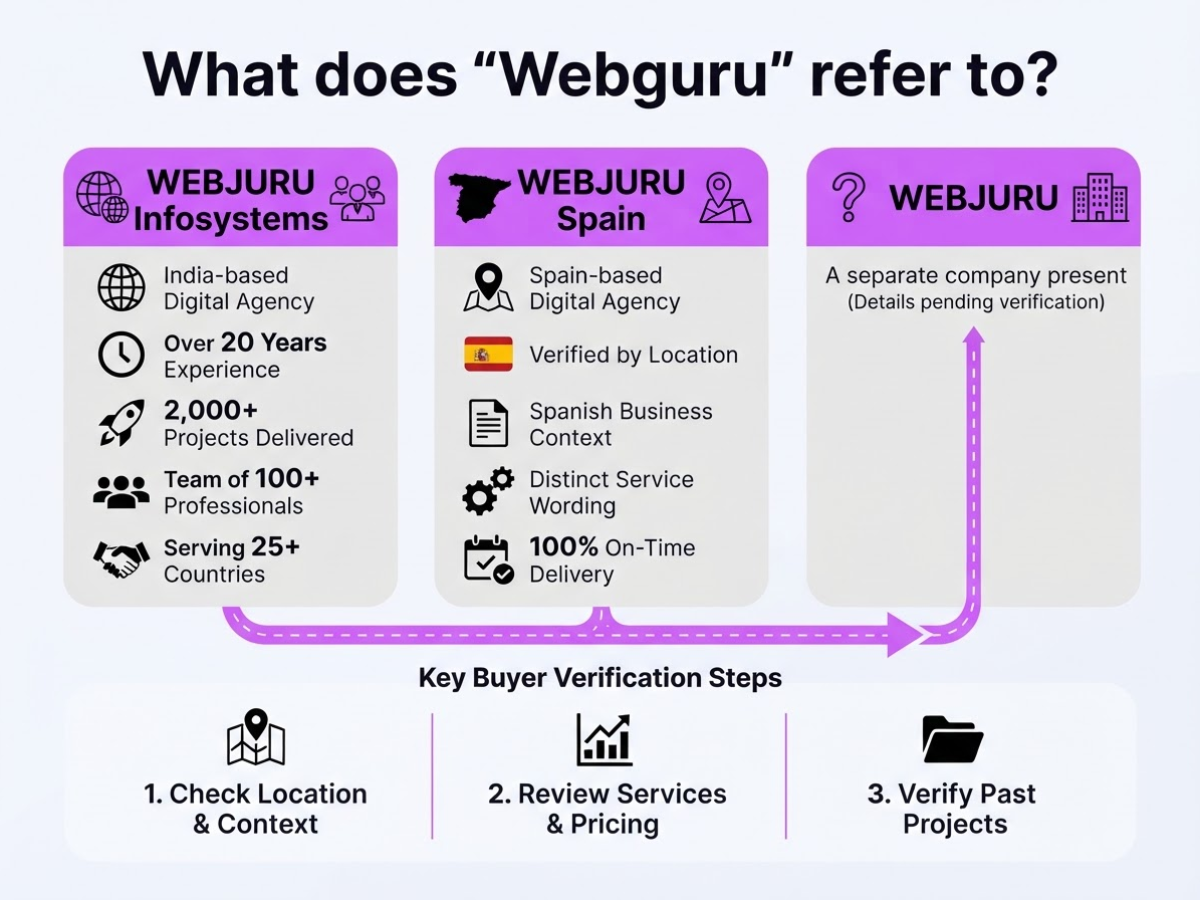
The first trap is assuming “Webguru” identifies one company. It does not. I have seen vendor searches go wrong because a buyer reads one company’s reviews, another company’s service page, and a third company’s pricing as if they belonged to the same provider.
Here are the main entities you may encounter:
| Name | What it appears to refer to | Detail to verify |
|---|---|---|
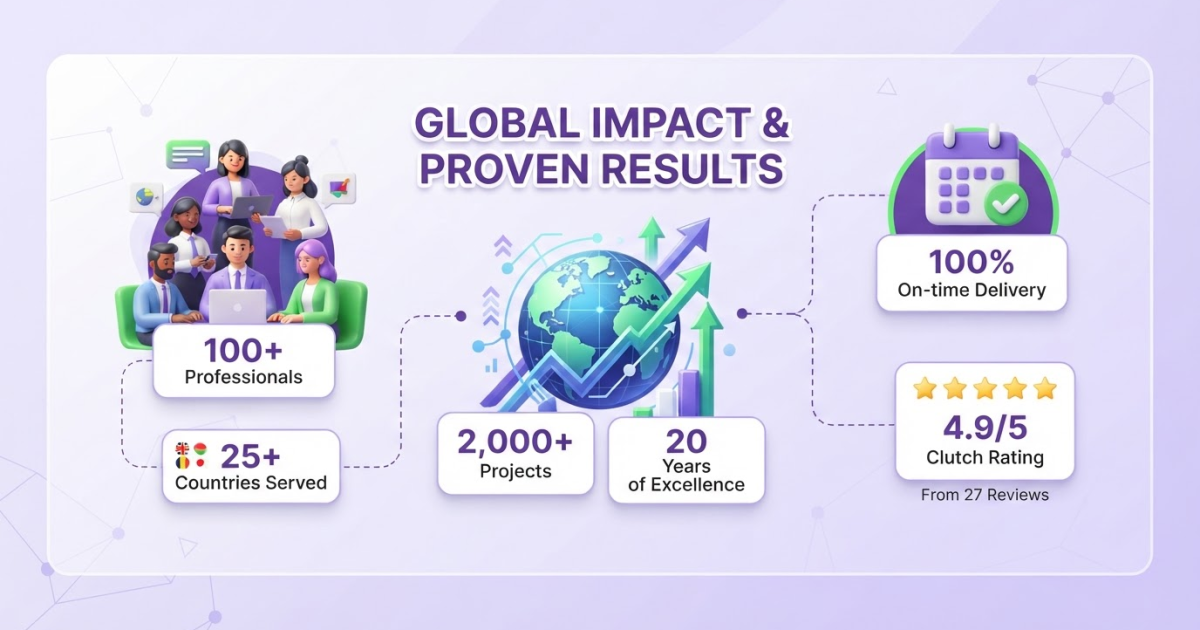
| Webguru Infosystems | An India-based web development and digital marketing company | Its site reports more than 2,000 projects delivered over 20 years and describes a team of more than 100 professionals serving 25+ countries. |
| WebGuru Spain | A Spain-based digital agency | Its location, Spanish business context, and service wording distinguish it from the Indian company. |
| WebGuRU | A separate company presenting an AI and LLM focus | Its timeline says it was founded in 2019 and moved into AI development and LLM applications from 2023 onward. |
The scale claim from Webguru Infosystems’ homepage may help, but it remains a claim from that specific entity. It does not support the reputation, staffing, project count, or pricing of WebGuru Spain or WebGuRU. That distinction sounds obvious until directory profiles merge names and review pages rank for the shorter keyword.
Pro Tip: Search the exact company domain and legal name together before trusting review pages, directory listings, or AI-generated summaries.
Before comparing providers, check four details:
- Domain: Is the contact using
webguru-india.com,webguru.es,webguru.live, or another address? - Location: Does the office address match India, Spain, or another jurisdiction?
- Legal name: Does the proposal identify the registered business, not just “Webguru”?
- Service wording: Are you buying Magento development, Spanish agency services, or AI and LLM work?
Similar names are not interchangeable. Confusing them can produce a badly matched shortlist, inaccurate price expectations, and reviews for work nobody on your proposal team delivered. Settle the identity first, then compare services and reputation on the right basis.
Which Webguru is suitable for your project?
“Webguru” only becomes useful after you match the provider to the work, not the name. Start with the outcome, then test the team’s location, technical depth, working hours, and ownership terms.
| If your project is… | Shortlist this type of provider | Check before signing |
|---|---|---|
| A WordPress site or lead-generation website | Webguru Infosystems or a local web agency | Who writes the content, manages hosting, and fixes issues after launch? |
| A Magento migration or multi-store shop | A Magento specialist with migration experience | Request a redirect map, integration plan, rollback process, and data-migration rehearsal |
| SEO or paid campaigns | A specialist SEO or digital marketing consultancy | Ask for target pages, reporting metrics, testing cadence, and realistic timeframes |
| An AI assistant, LLM workflow, or voice application | An AI-focused firm such as WebGuRU, or an agency that can build and maintain AI agents and automations | Confirm model costs, data retention, evaluation tests, human review, and who owns the prompts and code |
The platform matters more than the badge. WordPress suits a marketing team that publishes weekly, while Magento makes more sense when catalog rules, multiple stores, or complex checkout logic justify its maintenance burden. List every integration, expected traffic, security or privacy obligation, analytics system, and support response time before comparing proposals. A vendor that ignores those details is selling a brochure, not solving your project.
Webguru Infosystems provides relevant evidence: it migrated Rene India from Magento 1.x to Magento 2.x, and it built a WordPress site with digital marketing planning for HipHipHerray Studios. Those examples show useful experience, not a guaranteed result for your business. Its reported team size and pricing may suit an offshore engagement, but confirm time-zone overlap and who makes decisions each day. A local agency can be better for workshops, on-site meetings, or regional compliance. A small specialist consultancy can win when one senior expert matters more than a large delivery roster.
Separate discovery from delivery. Ask who owns the repository, domains, ad accounts, credentials, and documentation. Ask whether your team must supply a copywriter, product owner, developer, or subject expert. If you need to monitor SEO output internally, tools such as integration planning resources can expose gaps early, but they do not replace technical review.
Pro Tip: Ask each provider to explain what they would not recommend for your project; the answer often reveals more than a standard capability list.
Settle ownership and support answers before comparing the commercial model against delivery risk.
Webguru versus other agencies: what should you compare?
A fair comparison starts with the work you need, not the cheapest hourly rate. When I review agency proposals, the biggest mismatch is hidden scope: one provider includes technical implementation, while another supplies only recommendations.
| Area | Questions to ask about Webguru or an alternative |
|---|---|
| Service scope | Does the package cover SEO, paid media, content, design, development, and maintenance, or only one specialist task? |
| Strategic depth | Do you receive research, priorities, forecasts, and a 90-day plan, or a list of generic activities? |
| Implementation | Who changes the website, campaigns, tracking, or feeds? What platforms can they work in? |
| Communication | Will you have a named lead, weekly calls, shared tickets, or occasional email updates? |
| Reporting | Does the report connect traffic to qualified leads, revenue, or another agreed outcome? |
Normalize every quote. Separate one-time setup from recurring retainers, media spend, software subscriptions, and maintenance. A $2,000 monthly proposal can cost more than a $3,000 proposal once tracking, content production, ad budget, and platform fees sit outside the headline price. Check the provider’s pricing page, but do not treat a published price as a project-specific estimate.
Proof only matters when the comparison is fair. Look for work in your industry, on your platform, at a similar traffic level, and in the same target markets. Ask what “success” meant: more sessions, form fills, qualified pipeline, ecommerce revenue, or a ranking report. Those are different outcomes.
Reviews need the same scrutiny. Check sample size, publication date, detail, and whether the reviewer had needs like yours. For example, Webguru Infosystems has a 4.9 rating from 27 Clutch reviews and an average hourly rate below $25, but inspect individual reviews for scope, team size, platforms, and results. A strong rating can still hide a poor fit for a complex migration or an in-house team that needs daily collaboration.
Pro Tip: Request the same three deliverables from every shortlisted provider: a first-90-day plan, a sample report, and a clearly itemized estimate.
With those answers on one page, you can judge operating fit instead of rewarding the lowest quote.

How to evaluate a Webguru proposal step by step
A proposal is useful only when you can test its claims against your risks, deadlines, and internal capacity. I use these checks before a vendor discussion becomes a signed commitment.
-
Record the provider’s identity. Write down the exact legal entity, website, office location, and primary contact. Check that they match the contract and invoices. “Webguru” can refer to more than one business, so skipping this step creates trouble when support, payments, or disputes arise.
-
Define the result before discussing tactics. List the business outcome, baseline metrics, technical constraints, budget range, and decision deadline. Record current organic leads, conversion rate, CMS, integrations, and approval date. A vendor that jumps straight to rankings or traffic without asking for baselines is guessing.
-
Demand an auditable proposal. The document should name each deliverable, owner, milestone date, client responsibility, assumption, and exclusion. Ask whether “SEO setup” means an audit, implementation, testing, reporting, or recommendations. Vague labels cause extra charges and missed expectations.
-
Verify two relevant references or case studies. Choose examples with a similar platform, market, budget, or problem. Ask what changed, which measures improved, what failed, and how long the result took. A case study such as Webguru’s Magento 1.x to Magento 2.x migration for Rene India is more useful when you ask about defects, downtime, and post-launch ownership, not just the finished site (case study).
-
Inspect access and exit terms. Confirm that your company owns analytics, ad accounts, domains, code, content, and tracking data. Put content approval, personal-data handling, security responsibilities, notice periods, cancellation fees, and handover requirements in writing. Losing access to your own accounts is an expensive problem.
-
Score the shortlist with weighted criteria. Assign 25% to relevant experience, 20% to deliverable clarity, 15% to technical fit, 15% to communication, 15% to commercial terms, and 10% to references. Give each candidate a score from 1 to 5, record evidence beside every score, and save the decision.
-
Use a pilot when uncertainty is high. For a complex rebuild or unfamiliar team, start with a defined phase lasting 30 to 60 days. Specify outputs, access, review point, fixed fee, and continuation terms. A paid test exposes slow communication and weak ownership before they spread across the full project.
After these checks, compare commercial terms and delivery risks before signing the statement of work.
Common mistakes when hiring a Webguru provider
The name creates a false sense of certainty. “Webguru” can refer to separate businesses, including Webguru Infosystems, WebGuru Spain, and WebGuRU. Check the legal entity, domain, contract party, delivery location, and assigned team before comparing proposals.
Common hiring mistakes include:
- Using project volume or star ratings as a shortcut. A provider may report 2,000 projects or hold a 4.9 rating, yet lack experience in your sector, CMS, sales cycle, or compliance environment. Ask for two relevant examples and speak with a recent client if possible.
- Accepting undefined growth promises. “More traffic,” “better rankings,” and “visibility in AI search” are not deliverables. Require baselines, target queries, qualified-visit definitions, conversion events, reporting tools, and a review date.
- Approving a blended scope. Separate strategy, content production, technical fixes, link building, and reporting. If one fee hides all five, you cannot tell whether the team missed a task or changed priorities.
- Handing over ownership. Keep the domain, Google Analytics, Search Console, ad accounts, content library, source code, and social profiles in your company’s name. Grant access rather than transferring control.
- Expecting the agency to supply your expertise. Your subject-matter experts still need to answer questions, approve claims, and flag regulatory risks. A provider cannot invent safe medical, legal, financial, or technical guidance from a keyword list.
- Publishing volume instead of useful work. Hundreds of lightly edited pages can dilute your site and waste review time. Use SEO tools for initial checks, then require original evidence, clear search intent, human editing, and a named approver. AI can speed drafting, but it cannot replace editorial judgment.
A low quote often excludes revisions, development time, outreach, or measurement setup. Put each assumption in writing, then test the first 30 days against the agreed scope. That operating check matters more than the Webguru label once execution begins.
My honest take on choosing a Webguru provider
I have seen experienced agencies save months of avoidable mistakes. A good team can sharpen positioning, fix a confused technical setup, and turn vague growth goals into measurable work. Here is the contrarian point: the largest or best-known Webguru-branded provider is not automatically right for your project.
Judge fit through comparable case evidence, clear ownership, measurable outcomes, and the working relationship. A long project list sounds impressive, but the useful question is narrower: has this team solved your platform, market, and growth problem? Ask who will do the work, what they will report, and what happens when results stall.
An agency cannot rescue unclear positioning, weak internal expertise, or approvals that take three weeks. Those problems create friction regardless of how polished the proposal looks. I am also skeptical of SEO plans that disappear after the strategy workshop. Content briefs, publishing, rankings, and referral opportunities should remain visible in a regular operating rhythm.
That is where I see a practical role for Roki. It can maintain content workflows and surface three to ten recurring SEO and Reddit tasks each week. Automation does not replace judgment, expertise, or review, and careless comments or thin articles can hurt more than help. Start with a defined phase, inspect the evidence, then expand only when the relationship and results justify it.
— Daniel/Aleksandra
Turn your Webguru strategy into consistent SEO execution
Choosing Webguru, another agency, or your internal team is only the first decision. The harder part is keeping the work moving: publishing useful content, improving weak pages, and finding relevant places to mention your website. Projects stall when nobody owns those small, recurring tasks.
I built Roki AI to support that operating rhythm, not replace your strategy. It creates website content on autopilot, surfaces Reddit posts where a thoughtful website mention may fit, and gives you 3–10 weekly tasks focused on visibility in Google and AI search engines. The setup can feel mechanical at first, and not every suggested opportunity deserves a response. That friction is useful because judgment still matters.
Review the Roki AI features or start with the homepage when you are ready to turn your plan into consistent work.
Frequently Asked Questions
The name “Webguru” refers to more than 1 provider, so services can include web development, e-commerce, SEO, digital marketing, or AI and LLM work. Check the exact domain and legal entity before judging its capabilities, especially if you are comparing it with Roki AI, which focuses on automated content and weekly search tasks.
It can be a good fit if its relevant experience, communication process, scope, and contract terms match your project. Review at least 3 comparable case studies and several independent customer comments, because one high rating rarely shows how a provider handles delays, revisions, or ownership disputes.
There is no single reliable Webguru price because fees depend on the company, location, platform, project scope, and support period. Ask for an itemized proposal with at least 5 separate lines for setup, recurring services, third-party costs, maintenance, and optional work.
Several companies use the Webguru name, including providers associated with India, Spain, and other technology markets. Verify the official domain, registered business details, office location, and contracting entity before signing a contract or transferring money.
Ask who owns the domains, accounts, code, data, and content; how success will be measured; what the provider excludes; who performs the work; and how cancellation or handover operates. Put those answers in writing, and confirm at least 3 practical details: the delivery schedule, payment terms, and person responsible for approvals.
Written by Daniel/Aleksandra.
Recommended reads
- San Diego Seo Agency A Practical Growth Guide
- Off Page Seo Means A Practical Guide
- Boosting Seo With Automated Content Generation Tips
- Features
Sources
- Our Journey, Expertise, and Solutions - Webguru Infosystems
- Website Design and Development Company in India - Webguru Infosystems
- rene case study
- How Webguru Infosystems helped the
- Case study sip abacus
- About Us — WebGuru | Digital Agency Costa del Sol | WebGuru
- About Alex Leeor & WebGuRU | 25+ Years in Tech Development
- WebGuru Infosystems Pvt. Ltd. Reviews (27), Pricing, Services & Verified Ratings
- Tivius