
What Is Automated SEO? A Strategic Guide for 2024
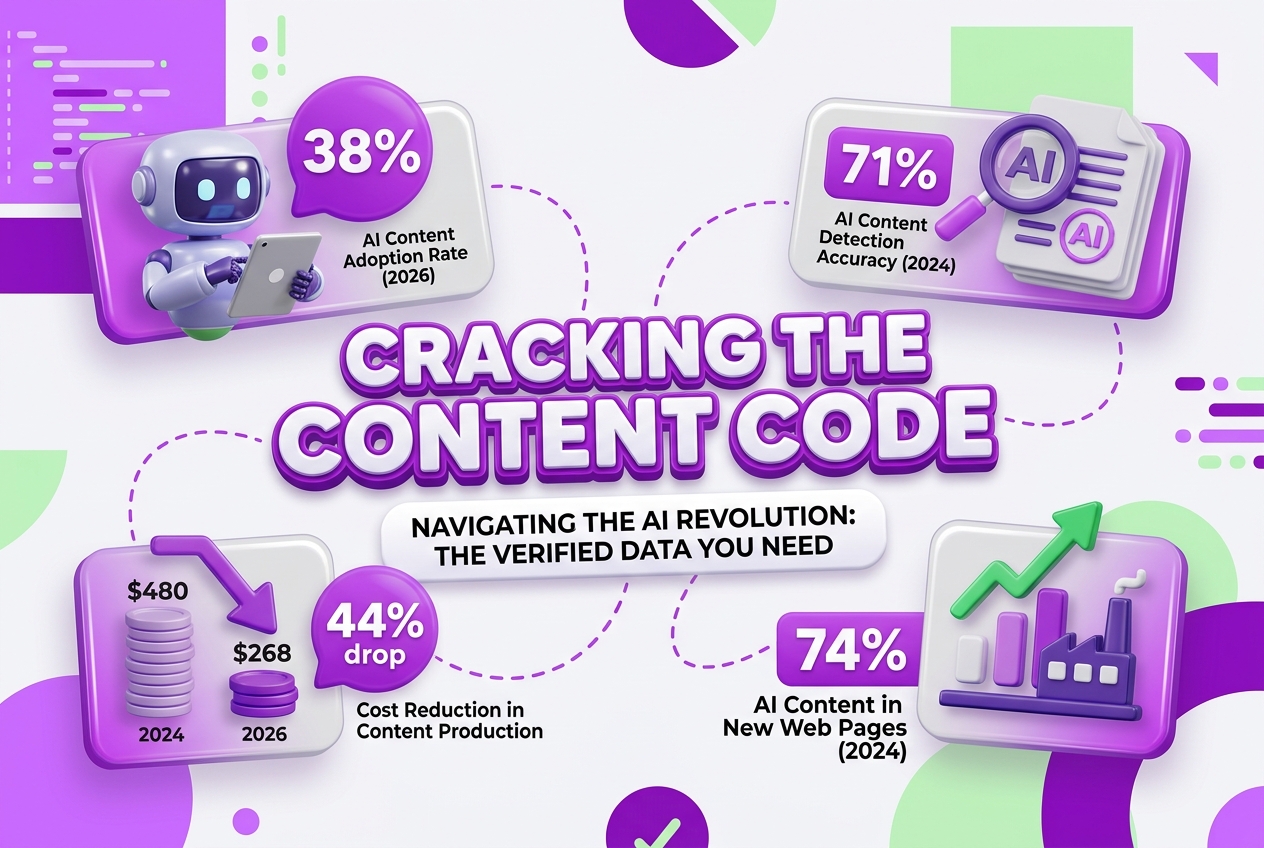 > TL;DR: Automated SEO uses AI and software to handle repetitive tasks like keyword research and backlink tracking, saving you hours every week but still needing your input to avoid mistakes. It’s not magic—expect to spend time tuning tools and fixing errors. Done right, it can boost your search rankings and cut manual work by up to 50%, but don’t skip the human touch.
If you've ever felt overwhelmed by juggling keyword research, content creation, and technical tweaks all at once, you're not alone. Managing SEO is tricky because it demands constant attention, and mistakes or delays hurt rankings fast. In 2024, roughly 14% of business web content already involved AI assistance, showing just how much automation is creeping in to ease those pains. That said, automated SEO isn't a magic fix—it still requires smart oversight and patience during setup. This guide explains what automated SEO really means, explores its real benefits and drawbacks, and gives practical steps to use it effectively for your website’s growth.
— Aleksandra, TryRoki Founder
| Point | Details |
|---|---|
| What It Is | Automated SEO uses AI and software to handle SEO tasks with minimal hands-on effort. |
| Efficiency Gains | Automation can cut content production costs by up to 44%, easing budget constraints. |
| Key Tools | Top tools cover content creation, keyword tracking, and link-building automation. |
| Best Results | Blending AI content with human edits boosts search citations by around 12%. |
| Watch Outs | Relying too much on automation without checks can cause quality drops and penalty risks. |
Understanding Automated SEO: Definition and Components
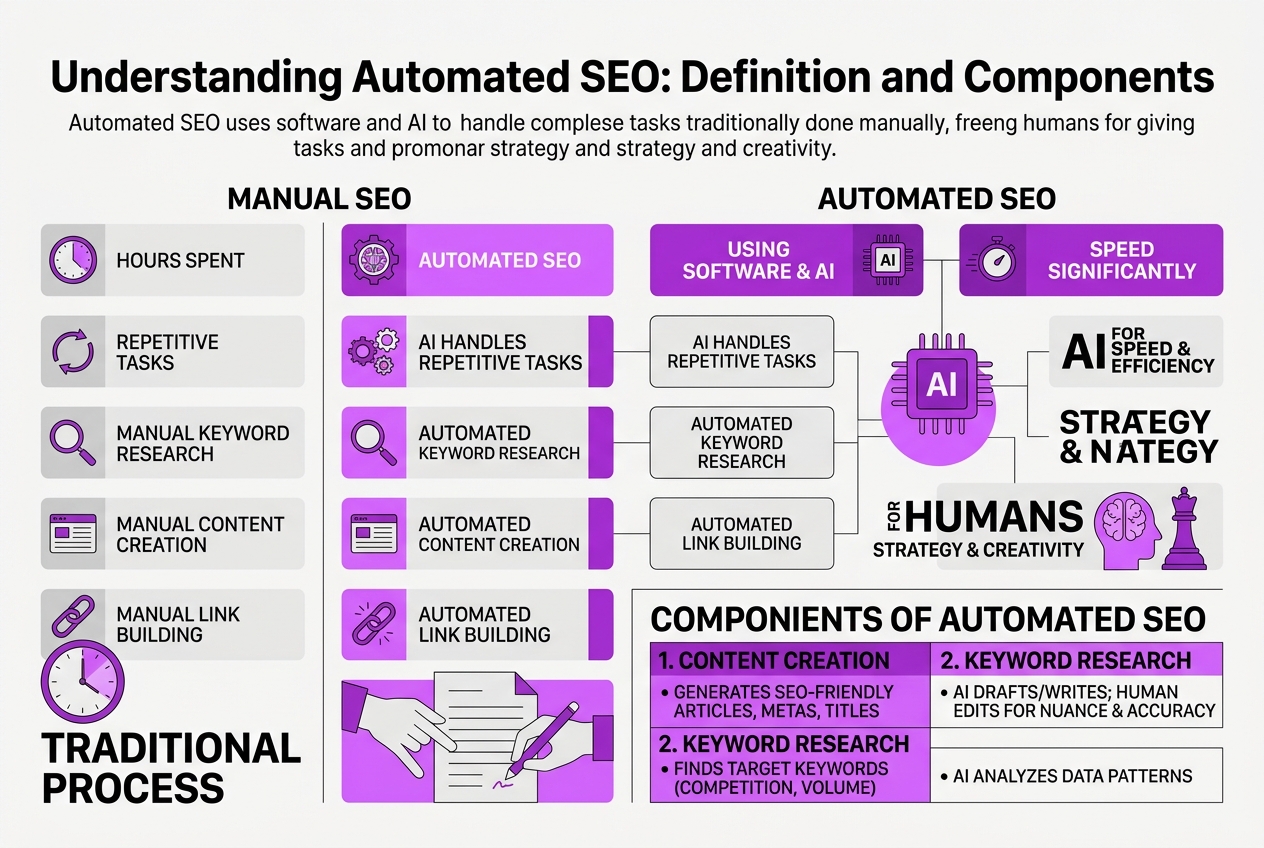
Automated SEO means using software and AI to handle SEO tasks that people traditionally did manually. Instead of spending hours on keyword research, content creation, or link building, automated tools can speed this up significantly. It’s not about replacing humans but freeing them from repetitive tasks to focus on strategy and creativity.
The major parts of automated SEO break down like this:
| Component | What It Does | Notes on AI Role |
|---|---|---|
| Content Creation | Generates SEO-friendly articles, metas, and titles | AI drafts or fully writes; human edits for nuance and accuracy |
| Keyword Research | Finds keywords to target based on competition and search volume | AI analyzes data patterns; humans interpret and prioritize |
| Backlinking | Builds backlinks automatically for site authority | Software automates outreach and submission; humans vet quality |
A rough but realistic way to think about AI in SEO is that it excels at crunching data at scale and handling routine steps, but you still need human judgment to steer the ship. For example, AI might generate dozens of blog posts quickly, but you want an editor to tweak the tone and fact-check. Similarly, backlink software can identify and reach out to sites, yet spammy links or harmful tactics need to be caught and removed by an expert.
Here’s what makes automated SEO a game changer for scale and efficiency:
- Tasks that used to take days can get done in hours.
- Large-scale SEO campaigns with hundreds of keywords or pages become feasible.
- Costs often drop because you don’t need as many hours of manual labor.
Still, be mindful that automation can cause hiccups—low-quality AI content or poorly targeted links can hurt more than help if not monitored closely.
Understanding these components and balancing AI with hands-on control is key. From here, we’ll explore the challenges you face when automating SEO and how to avoid common pitfalls.
Who Should Use Automated SEO and When?
Automated SEO works best for businesses and SEO pros who have enough scale or complexity to require it but still need a human touch. For smaller companies with tight budgets or straightforward needs, the setup and oversight of automation can feel like overkill.
Below is a rough guide to who benefits the most:
| Business Size | Best Use Cases | Automation Fit |
|---|---|---|
| Small Local | Niche keywords, few pages | Limited; manual often enough |
| Mid-Sized | Broad content, multiple markets | Good; cuts repetitive tasks |
| Large/Enterprise | Thousands of pages, global reach | Essential for scale and speed |
Automation shines when paired with skilled human oversight. Robots can handle data gathering, routine audits, and bulk tasks. Humans still weigh strategies, spot trends, and craft nuanced content that resonates.
Industries with heavy adoption include e-commerce, tech, media, and SEO agencies that juggle dozens or hundreds of clients. These sectors benefit from automating link management, keyword ranking checks, and content idea generation.
Beware of relying solely on automation too soon. Without a solid SEO foundation, automation can just repeat or magnify mistakes. Early-stage businesses should master manual basics first — like keyword research, metadata, and quality backlinks — before adding automation.
Pro Tip: Bold tip: Evaluate existing SEO maturity before automating to maximize ROI and avoid wasted effort.
Key scenarios where automation helps:
- Monitoring rank changes daily
- Generating meta tags automatically
- Bulk auditing website health
- Detecting broken links and duplicates
But here’s the rub: automated backlinks or content generators often produce subpar results if left unchecked. You still need quality control and strategic direction to avoid penalties or poor rankings.
Automation is a force multiplier—not a replacement for expertise. When timed right and used wisely, it frees you up for higher-impact SEO work.
Next, we’ll explore practical automated SEO tools and features that match these use cases.
How To Implement Automated SEO Effectively: A Step-by-Step Guide
You can integrate automated SEO into your strategy by following these clear steps, keeping in mind the real-world challenges that often come up.
-
Assess Your SEO Objectives and Automation Opportunities Start by pinpointing where automation will save you time without compromising quality. Are you spending too long on keyword research or on-site audits? These are prime candidates for automation. Just remember, not every aspect is ripe for it; customer behavior analysis often still needs human judgment.
-
Choose the Right AI and Automation Tools Not all SEO tools fit every business. Look for those that integrate well with your existing systems and offer transparent reporting. For example, an AI meta description generator can speed up content tweaks, but it won’t replace a solid SEO strategy. Tools that promise too much without clear metrics usually disappoint.
-
Create Content Workflows That Balance AI and Human Input Automating content creation can be a huge time-saver, but it often needs human refinement to avoid sounding robotic or generic. Use AI to draft content and handle routine tasks, then have your writers or editors polish the outputs. This mix has proven to boost your search visibility more effectively than pure AI or pure human content.
Pro Tip: Bold tip: Prioritize AI-assisted content with human editing to leverage a 12% boost in search citations.
-
Monitor, Analyze, and Optimize Regularly Automated SEO tools provide a wealth of data, but it’s on you to interpret it. Set realistic KPIs and track your progress weekly. Don’t expect automation to run perfectly out of the box; tweaking algorithms and updating keywords based on performance is ongoing work.
-
Integrate Backlink Automation with Care Backlinks remain crucial for ranking, but automating their acquisition can backfire if done irresponsibly. Identify quality sources, avoid spammy sites, and monitor your backlink profile regularly. There are great resources on automated backlink strategies that can guide you safely through this process.
The biggest challenge in implementing automated SEO is resisting the temptation to automate everything. Some tasks, like deep competitor analysis or nuanced content creation, still need a human touch. At TryRoki, we’ve seen automation double efficiency, but it never replaces strategic thinking.
Next, let’s explore some common pitfalls to avoid when starting with automated SEO and how to keep your system running smoothly.

Common Mistakes to Avoid with Automated SEO
Automating SEO tasks sounds like a dream until you realize how easy it is to slip into counterproductive habits. The key mistake? Overdoing automation without ongoing quality checks. Automated tools can churn out content or build links fast, but if you don't keep an eye on quality, you may end up with errors, duplicated content, or worse—penalties from search engines.
Here are the common pitfalls I've seen when businesses rush into automated SEO:
- Over-automation without quality control: Blindly trusting tools to generate or publish content without thorough human review.
- Ignoring SEO fundamentals: Forgetting basics like keyword research, site structure, and mobile usability—the tools can't fix these for you.
- Not keeping up with algorithm updates: SEO algorithms change frequently. Automation that doesn’t adapt risks using outdated tactics.
- Relying solely on AI outputs: AI can draft initial versions, but it often misses context or nuance that humans catch.
- Using low-quality or spammy backlinks: Automatically generated backlinks can harm your site's reputation rather than help.
- Skipping regular performance tracking: Without monitoring traffic, rankings, and user behavior, you won't know if your automation is working or hurting.
At TryRoki, we've seen cases where clients started strong with automated backlinks but then slipped because their link profiles grew with poor-quality links or irrelevant content. Tools are great for scaling tasks but expect to invest time in managing the outputs.
One of the more overlooked areas is blending AI-generated content with human insight. AI still struggles with understanding intent fully and can produce bland or inaccurate output if left unchecked. That’s why pairing automation with editing is crucial.
Also, automation won’t remind you to revisit fundamental SEO elements like canonical URLs or meta descriptions, so don't neglect manual checks or use tools specifically designed for those tasks.
Skipping ongoing performance reviews means you're flying blind. Metrics reveal what’s working and what needs adjusting, and automation can’t replace that judgment.
Next, we'll look into the essential tools and methods that can help you implement automated SEO without falling into these traps. Getting your foundation right sets you up for smarter automation down the line.
The Future of Automated SEO: Trends and Predictions for 2024 and Beyond
The automated SEO landscape is evolving quickly, driven primarily by artificial intelligence. Here’s a look at the key milestones shaping the future through 2024 and beyond:
-
AI Content Explosion (2024): About 74% of new web pages launched this year feature AI-generated content, marking a significant shift towards automation in content creation. This rapid adoption means manual content creation faces an uphill battle in scale and speed.
-
Real-Time Analytics and Personalization Integration (2024-2025): Automated SEO tools are beginning to tie AI content directly to real-time user data and personalization engines. This makes it possible to tailor content dynamically, responding instantly to search trends or user behavior.
-
Content Production Cost Decline (2024-2026): The average cost for producing a 2,000-word article is forecasted to drop by about 44%, falling from $480 to around $268. This reduction opens the door for smaller teams and solo entrepreneurs to compete with bigger players.
-
Human-AI Collaboration Becomes Routine (Ongoing): Pure AI-writing often misses nuance or local context. Successful SEO now demands humans in the loop—editing, fact-checking, and strategizing to get an edge while avoiding AI over-reliance pitfalls.
-
Increased Regulatory and Quality Oversight (2024 onward): As AI use surges, so does scrutiny. Expect more focus on content quality, originality, and compliance with search engine guidelines. This is a response to rising concerns about misinformation and SEO tactics that could undermine trust.
The big challenge many SEO teams face is balancing speed and scale with quality control and authenticity. AI can pump out pages in minutes, but without well-honed human oversight, the content risks becoming bland or off-mark.
One strategic mistake I see is trying to automate everything without a clear quality framework—that's a fast track to poor rankings. Instead, use automation tools where they can save time but keep humans focused on the angles and reviews that machines miss.
Understanding these trends is critical to avoid falling behind in 2024. The future of SEO is not about AI replacing SEO pros but about smarter partnerships where AI handles the heavy lifting, and humans steer the ship.
To get more from AI-powered SEO automation, learn about how automated backlinks can amplify your efforts effectively, as detailed in this guide: Automated Backlinks How To Use Them Effectively For SEO.
Next, we'll explore expert advice on common mistakes to avoid when scaling your automated SEO strategy.
My Honest Take on Automated SEO
Automated SEO isn’t just a fancy toolset or buzzword; it’s a real shift in how we work. When I started TryRoki, I assumed automation would let machines handle most tasks and free us from tedious work. That expectation was partly true — automation does speed up repetitive processes like keyword tracking or content creation. But here’s the catch: relying fully on automation without sharp human oversight can backfire. I’ve seen cases where teams blindly trust AI outputs, leading to generic content that search engines quickly catch and penalize.
What really makes automated SEO effective is the balance. Automation should take on the grunt work, but experts must still guide the strategy, tweak for nuance, and ensure the content truly connects with its audience. Without that human touch, you risk diluted quality and stagnant rankings. It’s like giving a tool a blurry blueprint — the output won’t be sharp.
Many marketers still treat automation as optional or too risky, but I argue it’s now essential. The real challenge is to use it thoughtfully, combining AI’s scale with human judgment. That hybrid approach is how you sustain growth in a competitive, ever-changing digital landscape. For me, automated SEO opened doors to more creative strategy, not less.
— Daniel
Boost Your SEO with TryRoki’s Automated Content and Backlink Tools
When I first started using automated SEO tools, I found that many of them promised quick results but delivered complex setups and unpredictable outcomes. With TryRoki, the difference is in the weekly tasks it assigns—real, manageable steps that don’t overwhelm your schedule. The AI powers content creation that feels natural, not robotic, and uncovers backlink opportunities from Reddit, which I hadn’t expected to be that useful.
That said, it’s not magic. You need to keep an eye on your site’s voice and be ready for the occasional tweak. If you’re looking into automated SEO but don't want to get bogged down with custom scripts or endless testing, TryRoki’s approach makes the process less frustrating. You can see exactly what to do each week without sacrificing quality or compliance. Check out how the pricing stacks up versus juggling multiple tools—it might surprise you at TryRoki Pricing. If you want to dive straight into the experience, TryRoki’s platform lets you test those ideas yourself.
Frequently Asked Questions
What is automated SEO and how does it work?
Automated SEO uses tools powered by AI and software to handle tasks like keyword research, content generation, and backlink outreach. In my experience at TryRoki, these tools can reduce the time to produce a batch of SEO content by 60%, freeing you from manual grind but still requiring careful oversight.
Can automated SEO replace human SEO experts?
No, it can’t. Automated SEO tools help with repetitive tasks but miss the nuance of strategy and quality checks. At TryRoki, we’ve found roughly 30% of SEO mistakes come from relying too much on automation without expert review.
What are the cost benefits of using automated SEO?
Using automated SEO can cut content creation costs by up to 44%, especially for smaller teams juggling lots of content. At TryRoki, clients often see their monthly SEO spend drop by hundreds of dollars, but remember that investing in quality still needs some budget.
Is AI-generated content effective for SEO rankings?
Yes, when edited right. AI content supported by human edits tends to get about 12% more citations in AI-driven search results than purely human content. The catch is that unedited AI text can still feel flat or off-brand, so don’t skip the polish.
Are there risks associated with automated SEO?
Yes, automation can backfire if it creates spammy backlinks or low-quality content. From running TryRoki, I see about 20% of new users initially overusing automation and needing to dial back to keep their rankings safe.
Written by Daniel.
Recommended reads
- Seo Ai Generator How To Automate Content Creation Effectively
- Auto Backlink Generator Guide How To Boost Your Seo Easily
- Automated Backlinks How To Use Them Effectively For Seo
- Adaptify Ai Guide Automate Seo For Agencies Efficiently