Aleksandra D.
 > TL;DR: A Google URL is simply the web address that points to a specific Google service or search result. These URLs are vital because they uniquely identify over 90% of web users’ entry points into Google’s ecosystem. While they look straightforward, they can be surprisingly complex, and understanding them is key if you want to optimize your SEO or just make sense of how Google routes traffic.
Written by Daniel Dimov.
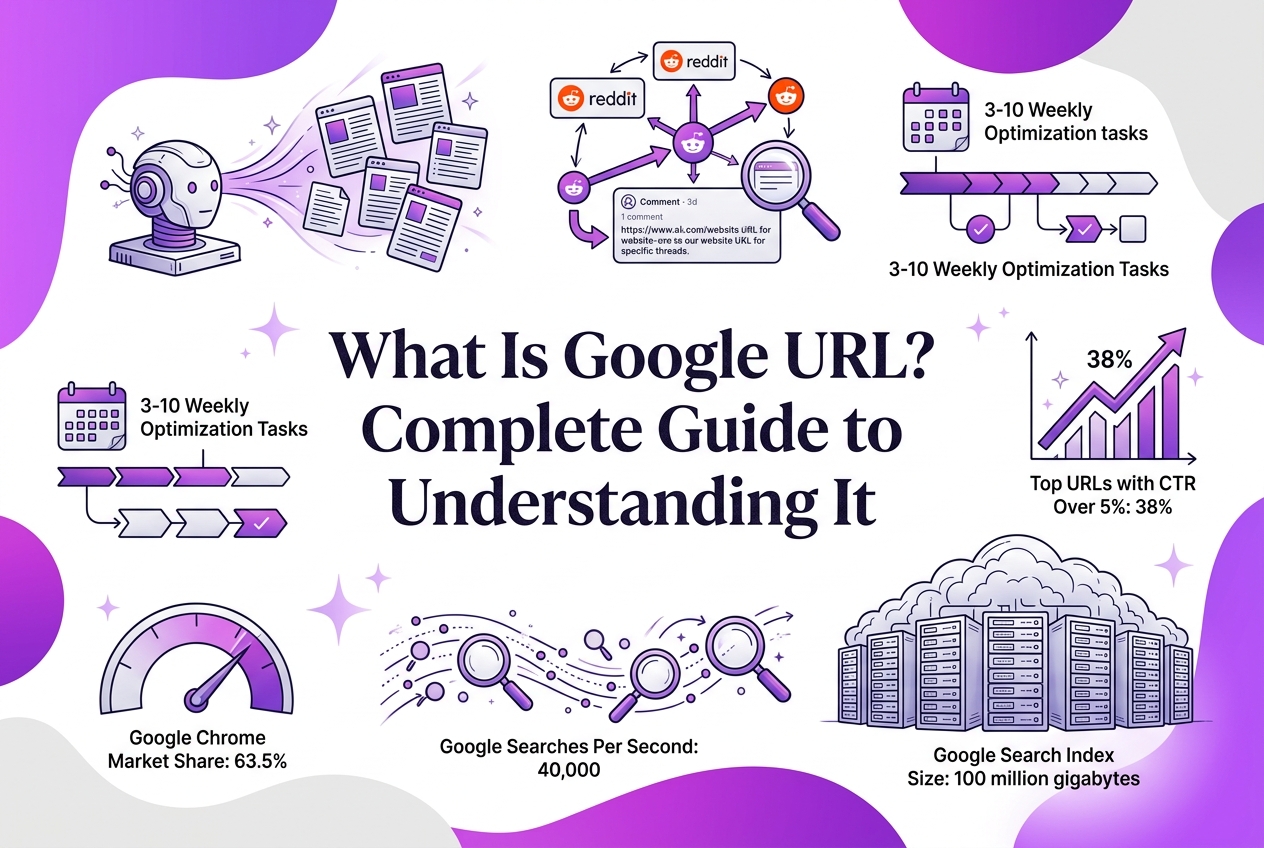
I get how confusing the term "Google URL" can be when you’re trying to make sense of digital marketing or SEO. With Google processing over 40,000 searches per second, it’s easy to feel lost in the flood of data and tech jargon. A URL, or Uniform Resource Locator, is simply the unique address that points to resources on the internet—but the way Google uses and displays these URLs in search results carries a lot of hidden complexity. This guide breaks down what a Google URL really is, explains why it’s a big deal for your site’s SEO, and shows how understanding it can give your website a better shot at being seen and clicked on.
Written by Daniel Dimov.
| Point | Details |
|---|---|
| URL Definition | A URL uniquely identifies resources on the internet, crucial for reaching Google’s vast services. |
| Google URLs Role | Google URLs point to pages or resources within an index holding over 100 million gigabytes. |
| User Navigation | Google Chrome handles 63.5% of web traffic worldwide, relying heavily on URLs for page access. |
| SEO Impact | About 38% of top-performing URLs in Google have click-through rates exceeding 5%, showing SEO power. |
| Common Issues | Misconfigured URLs or redirects can drop site visibility, requiring regular checks and fixes. |
Written by Daniel Dimov.
What is a URL and How Does Google Use It?
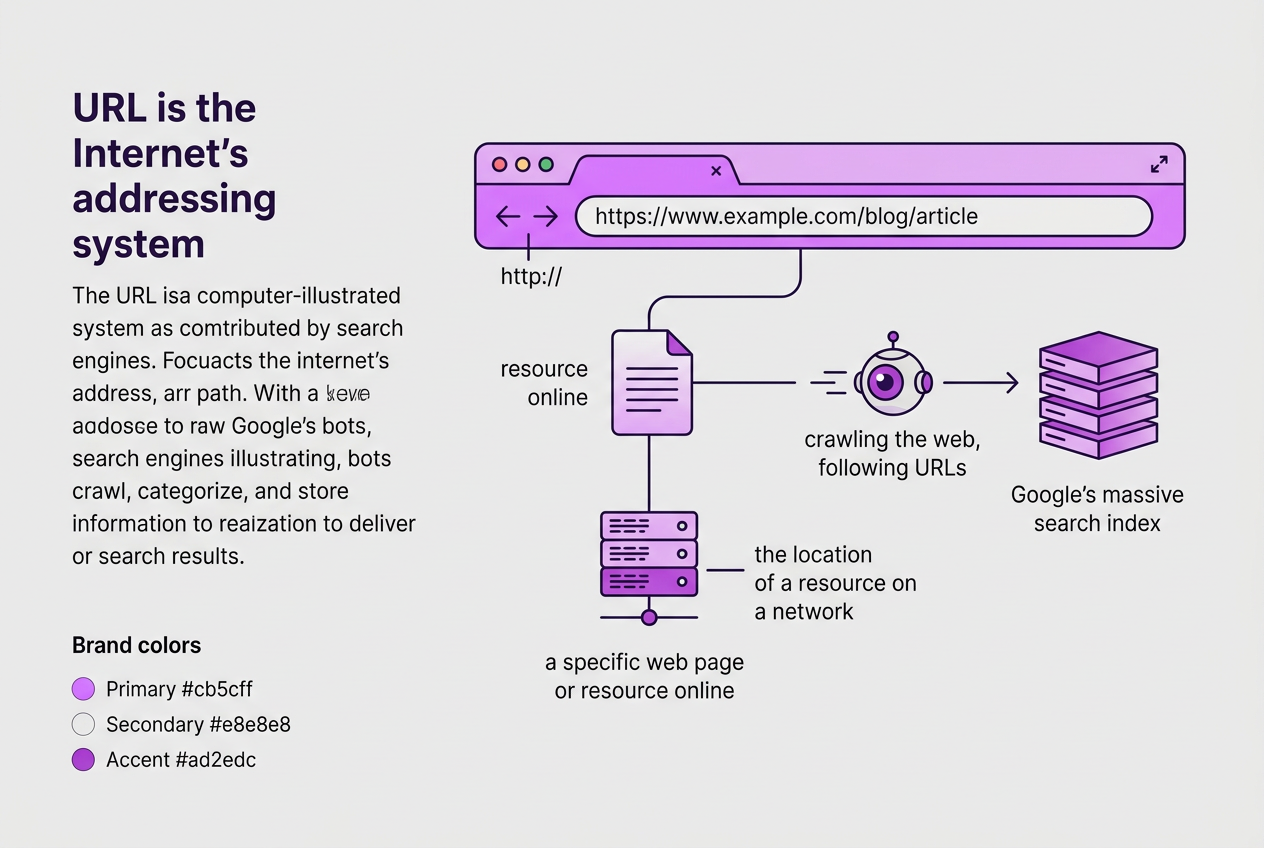
A URL, or Uniform Resource Locator, is basically the address you type into your browser to reach a specific web page or resource online. Think of it as a street address but for internet content. A URL tells your computer where something lives on the internet and how to retrieve it. According to a well-regarded definition from TechTarget, a URL uniquely identifies the location of a resource on a network and acts as a mechanism for getting that resource.
Google uses URLs as the foundation for how it indexes and serves information. When Google’s bots crawl the web, they follow URLs to discover content, categorize it, and store it in their massive search index. This indexing process lets Google deliver relevant results in a fraction of a second when you enter a search query.
Here’s a quick look at Google’s scale and how URLs fit in:
| Aspect | Statistic |
|---|---|
| Average searches/second | Over 40,000 searches |
| Search index size | Over 100 million gigabytes |
| User base of Chrome | 63.5% of all web users |
You can imagine the complexity here — billions of URLs continuously changing, being added, or disappearing. Google has to keep up with these changes to serve fresh and relevant information.
The key takeaway is this: URLs are not just random strings; they are the unique keys that unlock the vast library of the web for Google Search. Without URLs, Google wouldn't know where to find the information you’re looking for.
Pro Tip: Boldly label URLs to help non-technical users understand their structure and importance.
Understanding URLs helps you grasp why Google Search works the way it does and what goes into getting your web content discovered by users. Next, we’ll examine how you can optimize URLs to improve your visibility on search engines.
How Google URLs Impact SEO Performance
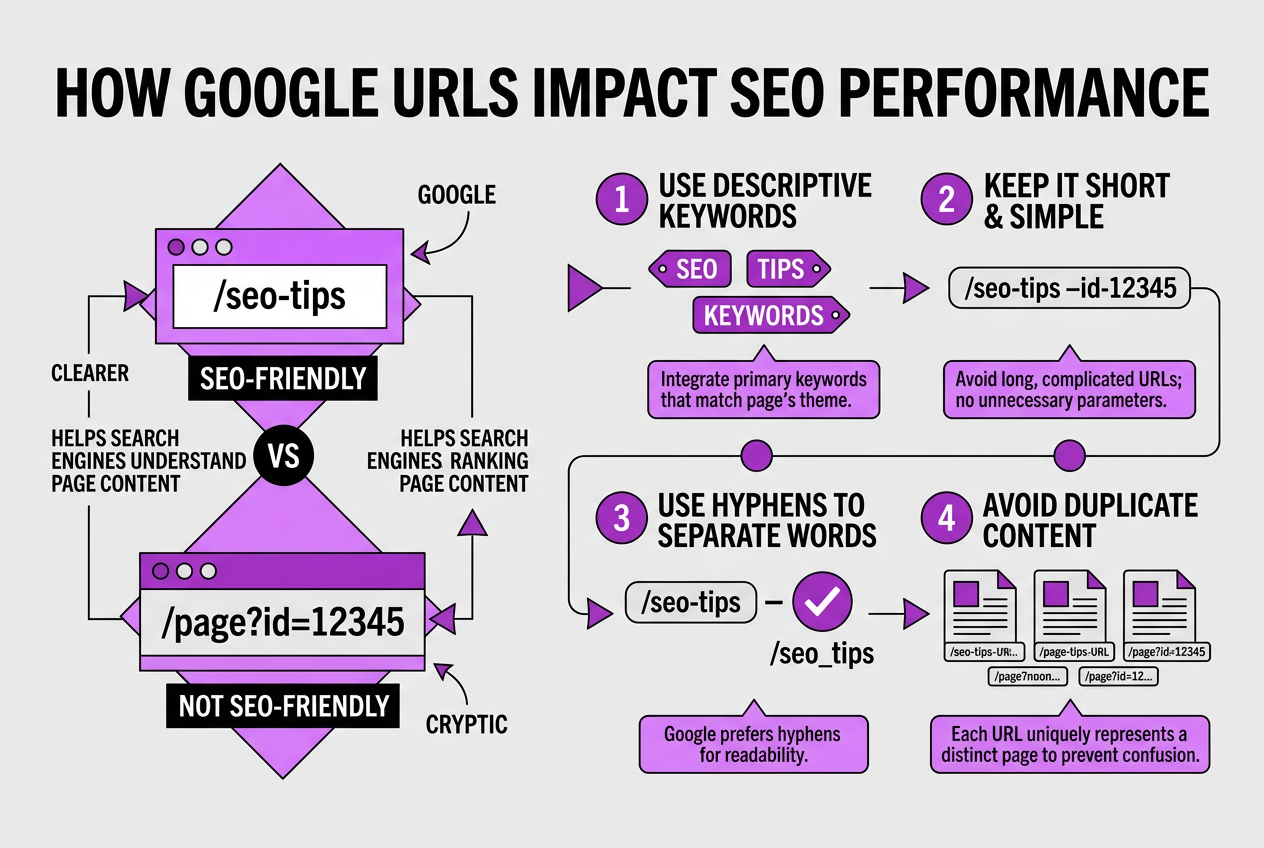
URL structure isn't just about aesthetics; it profoundly influences how Google ranks your pages. When the URL clearly reflects the page content with relevant keywords, it helps search engines understand what your page is about. For example, a URL like /seo-tips is far clearer and more SEO-friendly than a cryptic string like /page?id=12345.
Here’s how to create URLs that can improve your SEO performance:
- Use descriptive keywords: Integrate primary keywords that match your page’s theme.
- Keep it short and simple: Avoid long, complicated URLs filled with unnecessary parameters.
- Use hyphens to separate words: Google prefers hyphens over underscores for readability.
- Avoid duplicate content: Make sure each URL uniquely represents a distinct page to prevent confusion.
- Limit dynamic parameters: URLs overloaded with parameters (
?,&,=) can hinder indexing and confuse Google’s crawler.
URL parameters often track sessions or sort pages but can accidentally create multiple versions of the same content. This dilutes your SEO value and wastes crawl budget. You want Google to index your essential pages, not endless variations.
CTR (click-through rate) is another factor tightly linked to your URL quality. URLs that are clean, relevant, and trustworthy often see higher CTRs. Studies show 38% of top URLs achieve a CTR above 5%, with 10% pushing beyond 15%. This matters because better CTRs can boost your rankings indirectly.
Pro Tip: Use consistent URL structures to enhance crawl efficiency and user trust.
Monitoring your URLs for SEO issues isn’t just about running occasional audits. Tools that track redirects, broken links, and parameter clutter help catch problems early. This hands-on approach saves your site from ranking drops due to avoidable URL errors.
Taking control over your URLs means you’re steering one of the key levers of SEO success. Once you get this right, it lays a solid foundation for improving your overall site visibility.
Next, we’ll explore practical ways to check and fix common URL redirection problems to keep your SEO clean and efficient.
Written by Daniel Dimov.
Common Google URL Formats and What They Mean
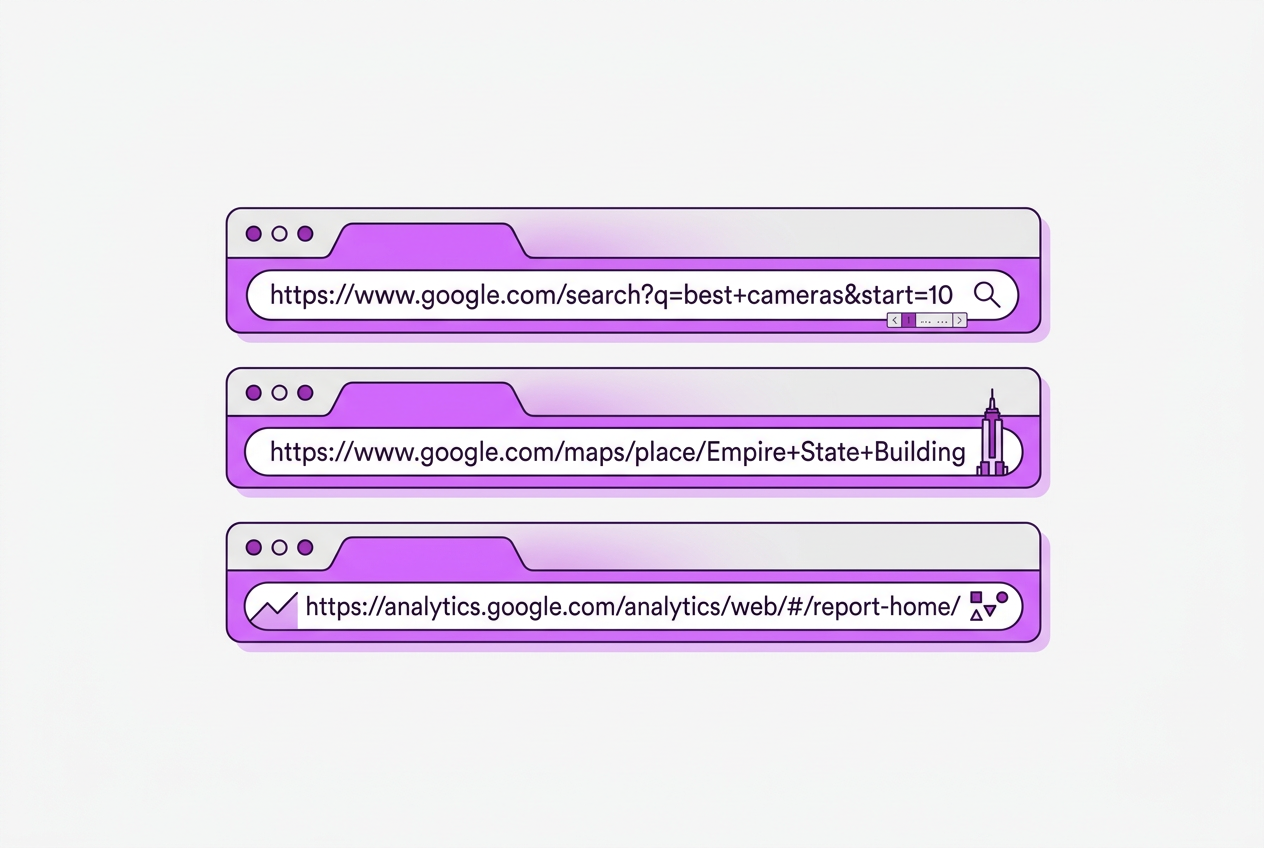
Google URLs can look quite different depending on which service you’re using. Here’s a quick breakdown of the common formats you’ll encounter and what they signify:
| Google Service | Example URL Snippet | What It Means |
|---|---|---|
| Google Search | https://www.google.com/search?q=best+cameras&start=10 | Dynamic URL with query parameters for search terms and pagination |
| Google Maps | https://www.google.com/maps/place/Empire+State+Building | Mostly static, indicating a specific location or landmark |
| Google Analytics | https://analytics.google.com/analytics/web/#/report-home/ | Complex, dashboard-style URL used for accessing different reports |
The biggest difference you’ll notice is between static URLs and those packed with query parameters. Static URLs look clean and point to a fixed resource, like a specific place on Google Maps. Parameters, on the other hand, pass instructions or data — like search terms in Google Search URLs or filters in Analytics.
Query parameters often start after the question mark (?) in a URL and can include multiple key-value pairs separated by ampersands (&). For example, in ?q=best+cameras&start=10, q=best+cameras tells Google what you’re searching for, and start=10 might represent which result page to show.
Because URLs encode these instructions directly, they can also be used to track user activity. This is crucial for marketers but a hassle for anyone trying to manage URL consistency. If you’re linking externally or managing SEO, messy query parameters can duplicate URLs, causing confusion.
Pro Tip: Monitor URL parameter usage to avoid duplicate content issues.
Another critical concept is the canonical URL. Google uses these to identify the "main" URL when multiple versions with different parameters appear for the same content. Proper canonical tags help consolidate ranking signals and avoid SEO dilution.
Understanding these formats helps in predicting how Google interprets and serves your links. If you work with analytics, SEO, or content marketing, mastering URL structures is key to accurate tracking and better rankings.
Next, we’ll explore how Google URLs directly influence SEO performance and what you can do to optimize them.
How to Check and Optimize Your Site’s Google URLs
Checking and optimizing your site's Google URLs starts with a practical, hands-on approach. Here's a step-by-step guide I've developed after dealing with multiple client sites that struggled with URL issues.
-
Use Google Search Console’s URL Inspection Tool
Run your URLs through this tool to see how Google views them. It tells you if a URL is indexed, if it has errors, or if there are issues with mobile usability. I often find sites missing indexation warnings here, which is the first red flag. -
Identify and Fix Redirect Chains and Broken URLs
Redirect chains kill user experience and confuse search engines. In one project, fixing redirect chains cut page load times dramatically. Additionally, hunting down broken links (404s) with tools like Screaming Frog or Google Search Console prevents Google from seeing your site as careless. -
Structure URLs for Clarity and Keyword Relevance
Keep URLs short, readable, and packed with relevant keywords. Avoid long query strings or unnecessary parameters. For example, a URL like/running-shoes/womensis more effective than/category/item?id=12345. Clear URLs also help with sharing and social visibility. -
Apply Best Practices for Mobile URL Performance
Mobile indexing is default now, so ensure your URLs load quickly and render correctly on mobile devices. Compress images and test your URLs in Google's Mobile-Friendly Test. A slow or broken mobile URL can tank your rankings, especially since over half of Google searches happen on mobile. -
Utilize Tools to Track Ranking Changes Linked to URL Adjustments
Once you tweak URLs, monitoring their impact is crucial. Use rank tracking tools to see if your changes affect search positions. It’s important to track not just rankings but also traffic and click-through rates to understand the full picture.
This approach isn’t foolproof—you’ll hit occasional quirks like unexpected canonical issues or conflicting redirects. But staying on top of this workflow protects your site from common pitfalls that derail SEO.
Next, we’ll break down how Google URLs impact your site’s SEO performance from the ground up.
Written by Daniel Dimov.
Alternatives and Tools for Managing Google URLs Efficiently
URL shorteners are a popular choice to make long Google URLs more manageable, but they come with some risks. Shortened links can obscure the final destination, which sometimes causes trust issues or gets blocked by security filters. Additionally, relying too much on third-party shorteners means you depend on their uptime and policies.
For content-driven link opportunities, I've found Roki AI to be particularly useful. It doesn't just shorten links—it helps identify where your URLs naturally fit into relevant conversations, especially on platforms like Reddit. This approach can bring more authentic traffic and improve SEO compared to random link dropping.
When it comes to monitoring URLs, you can go manual or automated. Manual tracking through spreadsheets and periodic checks works if you have only a few URLs, but it quickly becomes tedious and error-prone. Automated tools, especially those integrated with APIs, offer faster detection of broken links, redirect issues, and ranking drops without the grunt work.
Google itself offers several free tools and APIs for URL management. The Search Console gives you detailed insights on URL performance, indexing, and errors. The Google URL Inspection API automates fetching URL status, saving time if you're managing hundreds of pages. Using these tools in combination can pinpoint where your URLs need SEO adjustments.
Here’s a simple comparison of key methods:
| Method | Pros | Cons |
|---|---|---|
| URL Shorteners | Quick links, easy sharing | Hides target URL, reliance risk |
| Manual Monitoring | Full control, no tool cost | Time-consuming, prone to errors |
| Automated Monitoring | Fast, scalable, API-friendly | Can be costly, setup needed |
| Google Tools & APIs | Accurate data, free, well integrated | Requires technical know-how |
Finally, integrating URL management within a broader SEO suite offers workflow benefits. Many platforms consolidate ranking, backlink, and URL health tracking, letting you see how a URL’s performance affects your overall SEO strategy without switching tools. This integration saves hours weekly and reduces the chances of issues slipping through unnoticed.
With all these options, you’ll want to balance hands-on control with automation, picking tools that fit your workflow and the scale of your URL ecosystem.
Next, we’ll explore proven ways to check and optimize your Google URLs for faster indexing and better rankings.
Written by Daniel Dimov.
My honest take on understanding Google URLs
Most people overlook how critical the URL structure itself is in SEO. They fixate on keywords and backlinks, ignoring that an awkward, messy URL can actually hurt your rankings and user trust. I’ve seen clients obsess over content quality but slip up by stuffing URLs full of pointless parameters and session IDs, which only confuse Google’s crawlers and frustrate visitors.
A clean, readable URL is like a handshake: it tells the user what to expect. When I audit sites, the ones with straightforward URLs—like /blog/seo-best-practices—tend to keep visitors longer and convert better. Yet, it’s not just about making URLs pretty; it’s a matter of technical discipline that requires constant vigilance. I’ve found teams underestimate the effort needed to maintain tidy URLs, especially with complex content management systems that generate overly complicated query strings.
Here’s the twist: the URL didn’t get enough credit in the past, but it quietly influences almost everything from crawl efficiency to click-through rates. Mastering URL strategy isn’t just an SEO checkbox; it’s a strong foundation for sustainable growth in Google’s ecosystem. If you want your site to stand out, start with stripping back unnecessary URL clutter. At TryRoki, we emphasize this because ignoring it costs you visibility and trust more than you realize.
— Daniel Dimov
Enhance SEO with Roki AI’s Google URL Rollout Features
Handling Google URLs effectively isn’t just about knowing what they are—it’s about managing them smartly to avoid SEO pitfalls like broken links or duplicate content. When I first started working with websites, these issues often went unnoticed until rankings took a hit. That’s where TryRoki became a game changer for us.
TryRoki’s content creation tools helped me produce quality pages that naturally fit into my site’s link structure, while its URL tracking features highlighted problems before they became major headaches. It isn’t perfect—there’s some setup involved to match your particular site architecture—but the insights justify the effort.
If you’re serious about improving your website’s visibility, it’s worth exploring TryRoki’s pricing plans. The balance between automation and hands-on control saved me time and prevented us from chasing down errors after the damage was done.
Written by Daniel Dimov.
Frequently Asked Questions
A Google URL is any web address that points to a Google service, like Search, Maps, or Docs. It acts as a unique locator within Google's vast ecosystem. For example, most Google URLs start with domains like google.com or goo.gl for shortened links.
Yes, the structure and parameters in your URLs influence how Google indexes and ranks your pages. Around 55% of the factors Google uses to evaluate your site relate to URL clarity and click-through rates. That means messy or overly long URLs can hurt your SEO more than you might expect.
Look for URLs containing google.com or subdomains like www.google.com. Also, check for query strings starting with "?" that carry search terms or tracking info. Using a tool like Google Analytics, you can usually filter and categorize these URLs easily based on domain and parameters.
Tools like Google Search Console offer free insights into how Google views your URLs. Additionally, platforms like Roki AI can scan your site weekly, providing 3-10 actionable tasks to fix URL issues and improve indexing. These help catch broken links or poorly formed URLs before they tank your rankings.
Absolutely. Google URL shorteners like goo.gl are handy, but misusing them or piling on too many tracking parameters can trigger redirect loops or duplicate content problems. These issues, if unnoticed, can cause drops of around 15-20% in organic traffic due to SEO penalties.
Written by Daniel Dimov.
Recommended reads
- Page With Redirect Google Search Console How To Fix Optimize
- Google Rank Tracker Api How To Use It For Seo Success
- Features
- Integrations