Aleksandra D.
 > TL;DR: An AI meta description generator can boost your website’s click-through rates by up to 29% by crafting concise, targeted snippets that grab attention. It’s not foolproof—Google often rewrites these descriptions—but using AI tools consistently helps refine them and attract more clicks over time. Expect some trial and error to get the tone right for your audience.
Written by Daniel Dimov.
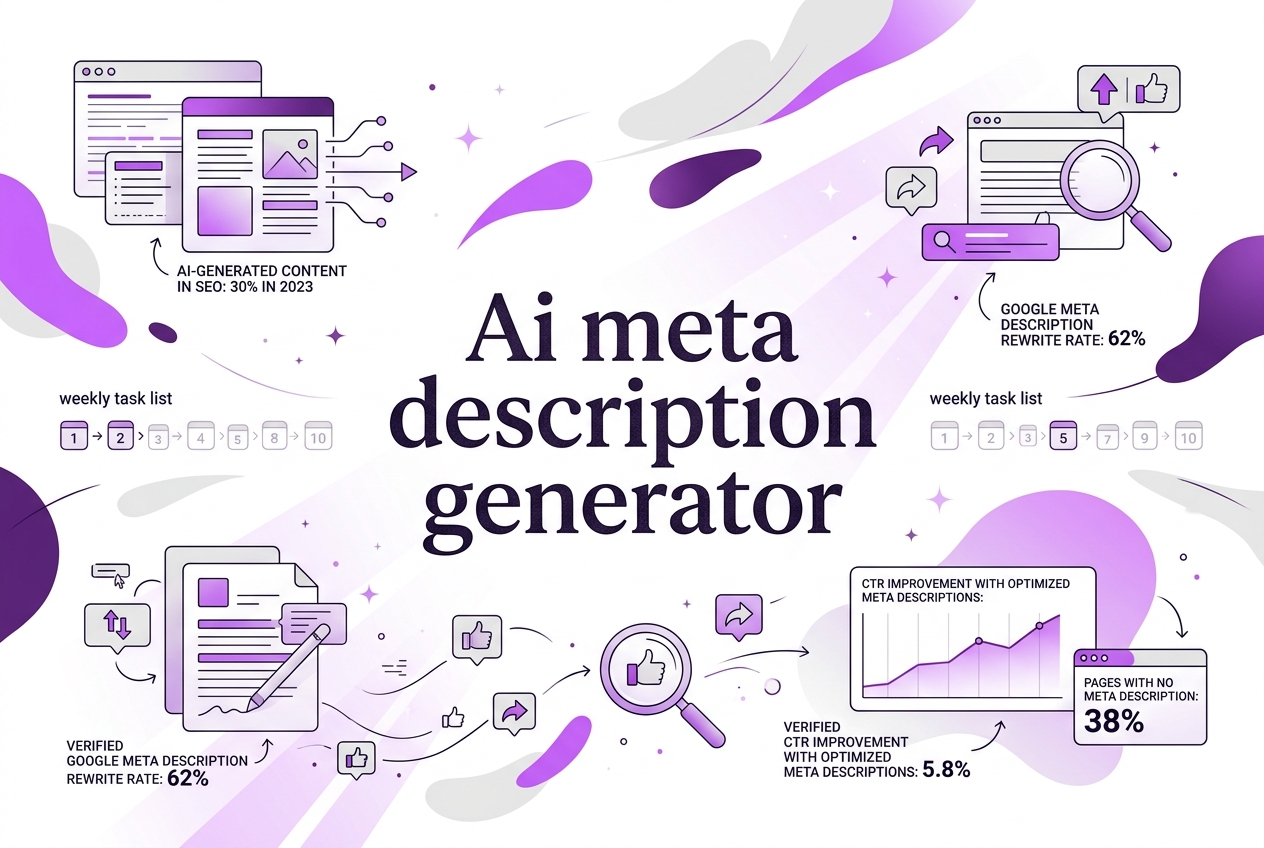
Writing meta descriptions for every single page can drain your time and creativity—especially when Google rewrites them about 62% of the time anyway. I've seen many businesses miss out on clicks because they either skip meta descriptions or rely on sloppy auto-generated snippets. AI step in here in a big way; it accounted for 30% of SEO content output in 2023, making smart automation not just a convenience but almost a necessity. This guide will break down how AI meta description generators work, what actually matters when using them, and how you can avoid common mistakes that turn a potential time-saver into a headache.
Written by Daniel Dimov.
| Point | Details |
|---|---|
| What It Is | An AI meta description generator uses AI to create tailored descriptions for each webpage in seconds. |
| SEO Impact | Using AI-written meta descriptions can boost click-through rates by up to 29% in real campaigns. |
| Google Behavior | Google rewrites meta descriptions around 62% of the time, so your text needs to be precise and relevant. |
| Common Issues | About 38% of WordPress pages don’t have meta descriptions, and 27% suffer from duplicates, which hurts SEO. |
| Implementation Tips | Pairing AI generation with a manual review usually gives the best tradeoff between speed and description quality. |
Written by Daniel Dimov.
Understanding AI Meta Description Generators
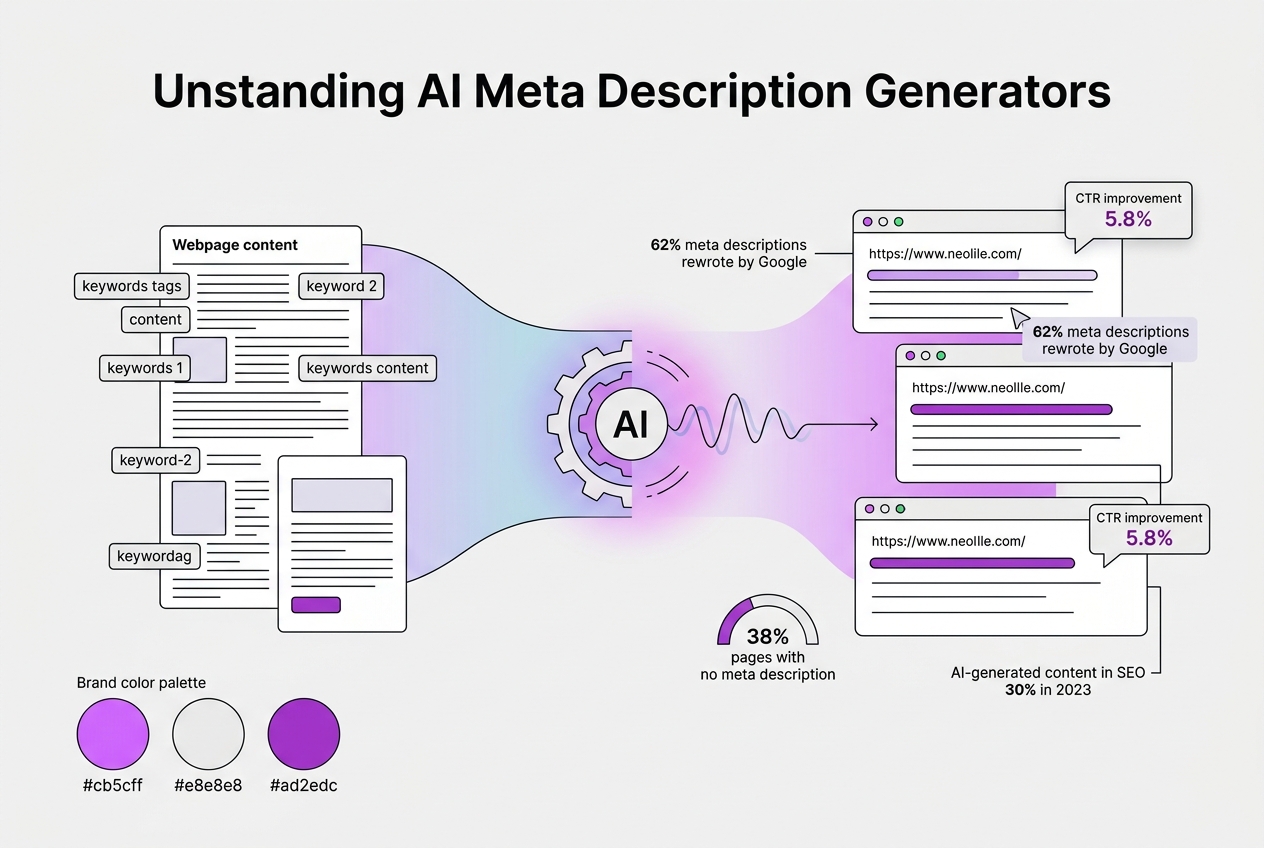
Meta descriptions are short snippets of text that appear under a page’s title in search engine results. Their main purpose is to summarize the page content and entice users to click through. Traditionally, marketers and SEO pros wrote these manually, which was tedious and often inconsistent across large sites.
AI meta description generators change that by automatically creating these snippets. They use natural language processing models trained on vast amounts of web data to produce text that fits the page's topic and tone. This means instead of keyword-stuffing or generic lines, you get descriptions tailored to your content.
Here’s a simplified breakdown of how these AI tools work:
- Content Analysis: The AI scans your page content to understand the main topics, keywords, and intent.
- Language Generation: Using models like GPT, the tool crafts concise, appealing meta descriptions.
- Optimization: AI adjusts the length and phrasing to meet search engine display limits, usually around 160 characters for desktop and 120 for mobile.
| Feature | Traditional Meta Descriptions | AI-Generated Meta Descriptions |
|---|---|---|
| Creation Method | Manual writing by SEO specialists | Automated text generation using AI models |
| Consistency | Varies, prone to human error | Consistent application across pages |
| Scale | Time-consuming for large sites | Fast and efficient for many pages |
| Optimization Precision | Subject to human oversight | Adapted automatically to search engine rules |
Pro Tip: Focus on the evolution from manual to AI-assisted meta description creation to highlight efficiency gains.
The technology behind these AI generators generally involves deep learning models fine-tuned on SEO content. They understand not just vocabulary but what drives clicks. This helps produce meta descriptions that reflect real search behaviors instead of stale marketing phrases.
Meta descriptions still matter because they directly influence click-through rates (CTR). Studies show pages with well-crafted meta descriptions can get up to 5.8% more clicks than those relying on automatic snippets. AI tools help you capitalize on that without the heavy lifting.
Still, there are drawbacks. Google frequently rewrites meta descriptions—around 62% of the time—which means the perfect AI description might be replaced by a system-generated one. Also, AI-generated text isn’t foolproof; sometimes it misses nuances or creates repetitive phrases. That calls for review and adjustment rather than full hands-off reliance.
Understanding these strengths and limitations is key as you integrate AI meta description generators into your SEO strategy. In the next section, we’ll look at how to choose the right tool that fits your content goals and workflow.
Written by Daniel Dimov.
Why Use AI Meta Description Generators?
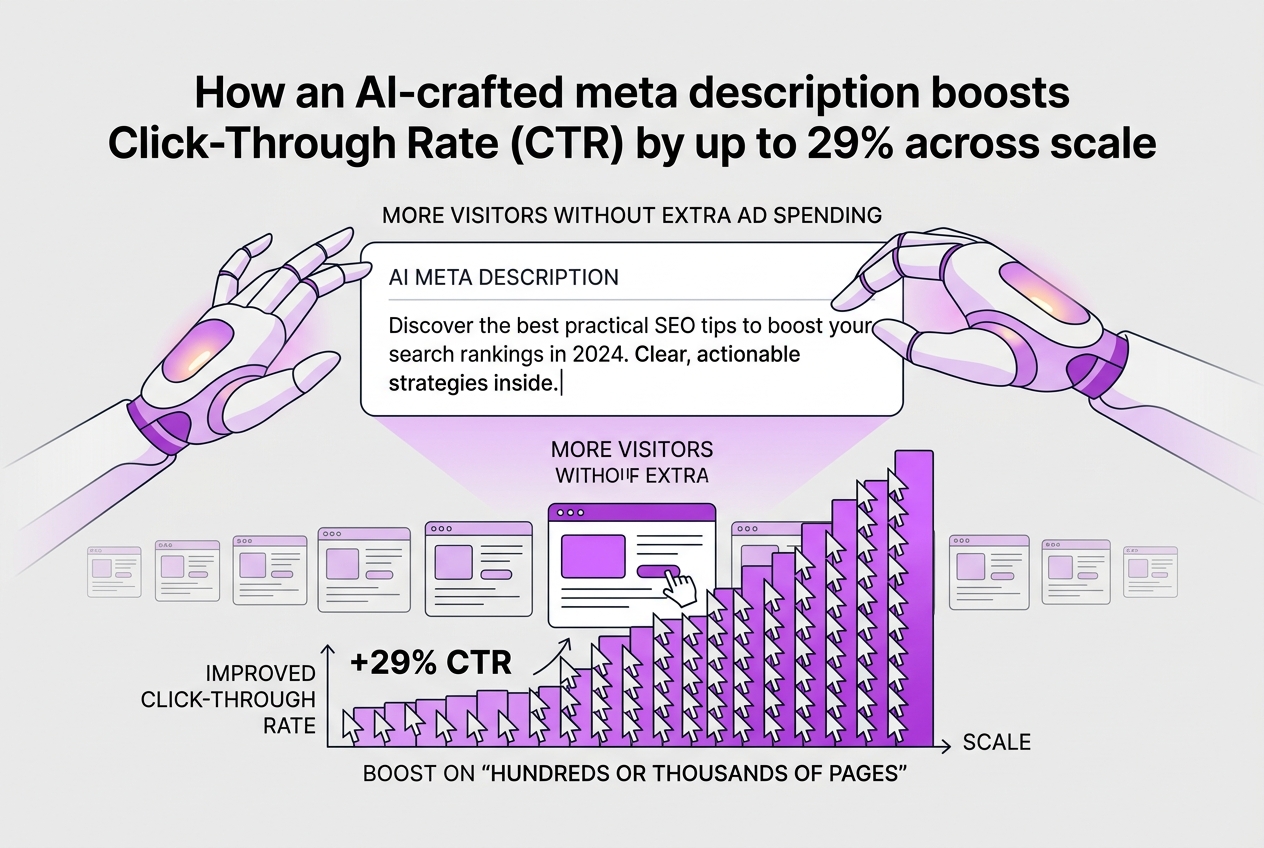
Using AI to generate meta descriptions can change how you handle SEO on a large scale. From my experience running TryRoki, one of the biggest advantages is the noticeable boost in click-through rates. AI-crafted meta descriptions can increase this by up to 29%, which is not trivial when you deal with hundreds or thousands of pages. It means more visitors without spending extra on advertising.
Here's a snapshot of how AI meta description generators stack up in practical SEO use:
| Benefit | Why It Matters |
|---|---|
| Improved Click-Through Rate | AI tailors descriptions to target user intent, drawing more clicks. |
| Time Saving | Automates creation, which is a lifesaver for big sites. |
| Consistency | Avoids random or weak meta descriptions across your pages. |
| Scalability | Handles new pages without extra manual work. |
| Adaptation to Google Changes | Smart enough to adjust phrasing when Google rewrites descriptions (62% of the time). |
Pro Tip: Highlight that AI helps especially for sites with many pages where manual optimization is impractical.
If your site is vast, manually writing meta descriptions for each page might be impossible. You'll likely find many pages missing descriptions or using duplicated or generic content pulled from the page itself, which doesn’t help SEO much. With AI, you can produce unique, relevant snippets faster and maintain some control over the tone and keywords.
One thing to remember is that Google often rewrites meta descriptions. This behavior can feel like your effort is wasted, but AI tools can generate descriptions designed to better align with Google's preferences, reducing unwanted rewrites.
Adopting AI-driven meta description tools doesn't mean you stop paying attention to SEO best practices. It means you offload repetitive work and keep your meta descriptions fresher and more appealing with less manual effort. For a deeper dive into boosting your click-through rates, check out this guide on Seo Description Generator How To Boost Your Click Through Rates.
Next up, we’ll explore the nuts and bolts of using an AI meta description generator effectively in your workflow.
Written by Daniel Dimov.
Step-by-Step Guide to Implementing AI Meta Description Generation
Implementing an AI meta description generator in your content workflow isn't just about plugging in a tool and hoping for the best. You need a clear plan to get consistent, high-quality snippets that drive clicks and fit your brand. Here’s how I approach it:
-
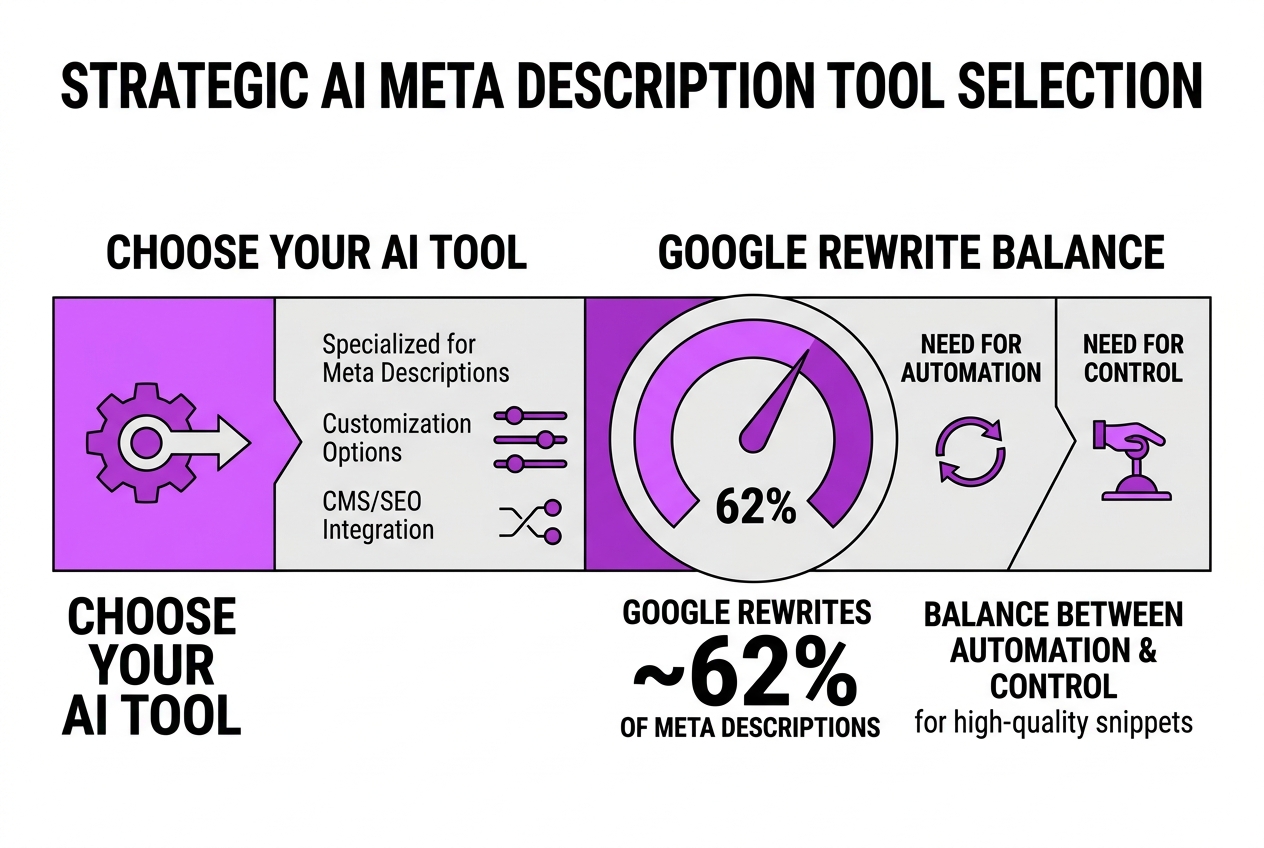
Choose Your AI Meta Description Tool: Start by evaluating AI tools that specialize in meta descriptions rather than general content generation. Look for ones that allow customization and integration with your CMS or SEO platform. Pay attention to reviews and how often Google modifies their outputs — remember, Google rewrites around 62% of meta descriptions, so pick tools known for balance between automation and control.
-
Integrate with Your CMS or SEO Workflow: Connect your chosen tool to the CMS or SEO platform where you create and manage content. This often involves API integration or installing a plugin. Without this step, you’ll waste time manually copying snippets. Streamlining this ensures every new post or landing page automatically generates a suggested meta description.
-
Customize and Review Every Description: Don’t just accept the AI output at face value. The first versions can feel generic or miss your brand’s unique tone. Edit for clarity, keywords, and readability. You’ll find some tools let you set parameters like length (ideally 120-160 characters for best display). This keeps descriptions sharp and relevant.
Pro Tip: Combine AI generation with human editing to maintain brand voice and SEO effectiveness.
-
Measure Impact and Iterate: Use your analytics to track click-through rates (CTR) on pages using AI-generated descriptions. A well-optimized meta description can increase clicks by up to 5.8%, and AI-written snippets have shown improvements in CTR by 29%. If results lag, check whether descriptions are unique, keyword-rich, and compelling.
-
Optimize and Expand: Once comfortable, extend AI meta description generation to older pages, but do it strategically. It’s tempting to bulk-update everything, but consider pages that already perform well or target important keywords. Use what you learn here to improve other automated SEO tasks, like titles or calls to action.
This method isn’t flawless. Some AI outputs may feel formulaic at first, and integration can require technical support. But over time, this setup saves you hours each week and helps keep your SEO copy fresh. For deeper insights on boosting your click-through rates, you might find this seo description generator guide useful.
Next, you'll want to look into how AI can help automate broader content creation, building on these meta description foundations.
Common Mistakes When Using AI Meta Description Generators
Using an AI meta description generator is a great shortcut, but you can easily fall into traps that hurt your SEO instead of helping it. I've seen clients who let AI handle everything and end up with weak meta descriptions that cost them clicks. Here are the most common mistakes you want to avoid when relying on AI for your meta descriptions:
-
Relying solely on AI without manual review: AI tools are fast, but they don't understand context or brand voice the way a human does. You need to review and tweak every description.
-
Ignoring character limits and truncation: Google cuts off meta descriptions around 160 characters on desktop and 120 on mobile. AI might generate longer text that gets clipped, which leaves your message incomplete.
-
Overusing keywords leading to unnatural descriptions: Cramming too many keywords makes descriptions sound robotic and can turn off potential visitors. This also risks penalties for keyword stuffing.
-
Neglecting to vary meta descriptions across pages: Duplicates confuse search engines and reduce click-through rates. Each page needs a unique, relevant description even if AI generates drafts.
A frustrating part is that Google's own algorithm rewrites meta descriptions about 62% of the time, so perfecting your description doesn’t always guarantee what shows in search results. Still, better-optimized meta descriptions can improve your click-through rate by up to 5.8%, which makes the effort worthwhile.
You also want to pair AI meta generation with other smart SEO tools. For example, if you're experimenting with automated content, check out how an SEO AI generator can help automate content creation effectively. And don't forget to use a SEO description generator tool specifically crafted to help maximize your descriptions' impact.
Next, let's break down the key steps to get AI meta descriptions working well within your content workflow without losing control or quality.
Written by Daniel Dimov.
Measuring the Impact of AI-Generated Meta Descriptions
Measuring the impact of AI-generated meta descriptions is tricky but crucial for understanding if the effort pays off.
Here’s a timeline of milestones to track:
-
Initial Benchmarking (Weeks 1-2): Before any AI-generated meta descriptions go live, gather your baseline data. Record your current click-through rates (CTR), rankings, and traffic volumes using your preferred SEO tools.
-
Implementation Phase (Weeks 3-4): Roll out the AI-generated meta descriptions. Make sure they adhere to ideal length limits—Google shows up to about 160 characters on desktop and 120 on mobile.
-
First Review (Weeks 5-6): Check your CTR changes. AI-written meta descriptions sometimes boost CTR by nearly 29%, but results vary, especially if Google rewrites your snippets, which happens approximately 62% of the time.
-
Comparison Analysis (Weeks 7-8): Compare pages with AI-generated meta descriptions against those manually written. Most of the time, optimized descriptions outperform auto-generated snippets by about 5.8% in clicks.
-
Long-term Tracking (Months 2-3): Monitor traffic patterns and rankings continuously. Take note that fluctuations might stem from algorithm updates or Google rewriting the meta descriptions, which can obscure direct cause-and-effect conclusions.
Google’s frequent rewriting is a big frustration in measuring results. It means even perfect AI content might not appear as intended. That’s why you should focus on trends over time rather than one-off stats.
Use SEO tools like Google Search Console, Ahrefs, or SEMrush to evaluate shifts in rankings and organic traffic. These tools give insights into how your meta descriptions influence actual user behavior.
Expect some bumps. AI-generated descriptions help reduce time spent on manual writing, but they’re not a perfect set-and-forget solution. Continuous fine-tuning and A/B testing are necessary to keep improving results.
If you want more hands-on tactics to boost your CTR, check out our detailed guide on Seo Description Generator How To Boost Your Click Through Rates.
Next, we'll address common pitfalls you might run into when relying on AI meta description tools and how to avoid them.
Written by Daniel Dimov.
My honest take on AI meta description generators
AI meta description generators have shaken up how we handle website snippets. At TryRoki, I've seen firsthand how they cut down the tedious task of crafting descriptions from hours to minutes. The immediate relief this brings is real—especially for sites with hundreds of pages. But here’s a reality check: pure AI output isn’t the magic fix some hype it to be.
In fact, I find overtrusting AI to write these snippets can backfire. AI tends to produce bland, cookie-cutter text that Google might easily rewrite or ignore. More than once, I’ve had clients frustrated because their auto-generated meta descriptions either got truncated or, worse, switched out entirely by Google with snippets that don’t highlight their best selling points.
The trick isn’t to hand off everything to the machine. Instead, I push for a hybrid model: use AI to sketch fast drafts, but always bring in a human eye to sharpen the tone, insert brand flair, and handle those tricky nuances no AI picks up yet. This combo keeps the process lean but the results far more clickable and strategic.
The bottom line is this: AI meta description generators save you time but not the brainwork. If you ignore the editorial step, you risk losing control of how your content appears in search results—and that’s when your click-through rates might tank.
— Daniel Dimov
Elevate Your SEO with TryRoki’s AI Meta Description Generator
TryRoki’s AI meta description generator isn’t perfect right out of the box. When I first integrated it, the biggest pain was customizing the AI to truly match my brand’s tone without sounding robotic. It takes a bit of tweaking, but that’s exactly why it’s worth the effort: once set, it churns out optimized meta descriptions that save hours, especially when managing hundreds of pages. The real gain is in seeing which descriptions perform better with smart, real-time insights pushing your SEO forward.
If you’re debating whether to try this kind of automation, check out TryRoki’s AI features to see how it fits specific content goals and brand voice. Also, their pricing plans reflect the practical scalability—you pay for actual value, not fluff. This tool helped me stay ahead in the cluttered SEO space by cutting down manual work and avoiding the usual guesswork about what makes a good meta description.
Written by Daniel Dimov.
Frequently Asked Questions
An AI meta description generator uses machine learning to scan your page's text and pull out key points to create a concise summary. It typically crafts meta descriptions around 150 to 160 characters long, focusing on relevance to boost your page’s appeal in search results. In my experience, it saves hours of manual writing, but sometimes you need to tweak the output for flow.
Yes, I've seen reports and client results showing click-through rates jump by up to 29% when switching from generic or missing meta descriptions to AI-generated ones. This uplift comes from AI's ability to tailor text based on user intent and trending keywords, which generic descriptions miss. However, it's not a magic fix—you still have to monitor and refine descriptions regularly.
Google prefers meta descriptions kept within 160 characters for desktop and about 120 for mobile, so I always keep that limit in mind when using AI tools. Avoid stuffing keywords—AI might overdo this if unchecked, which can trigger penalties. You have to review outputs carefully since Google rewrites nearly 62% of meta descriptions itself.
They're especially valuable for big sites with thousands of pages, where writing descriptions manually isn’t realistic. For smaller sites with under 100 pages, the benefit is more about time saved than scale. I've seen teams with 10,000+ pages cut their description-writing workload by over 80% using AI, but smaller sites might find manual tuning more effective.
No. Google rewrites meta descriptions about 62% of the time when it believes there’s more relevant content in the page or search query. That makes it essential to write clear, context-driven descriptions that can stand alone or complement what Google might generate. You can't control Google’s choice, but quality input raises your chances.
Written by Daniel Dimov.
Recommended reads
- Seo Description Generator How To Boost Your Click Through Rates
- Seo Ai Generator How To Automate Content Creation Effectively
- Seo Title Generator How To Create Effective Titles That Rank
- Faq