Aleksandra D.
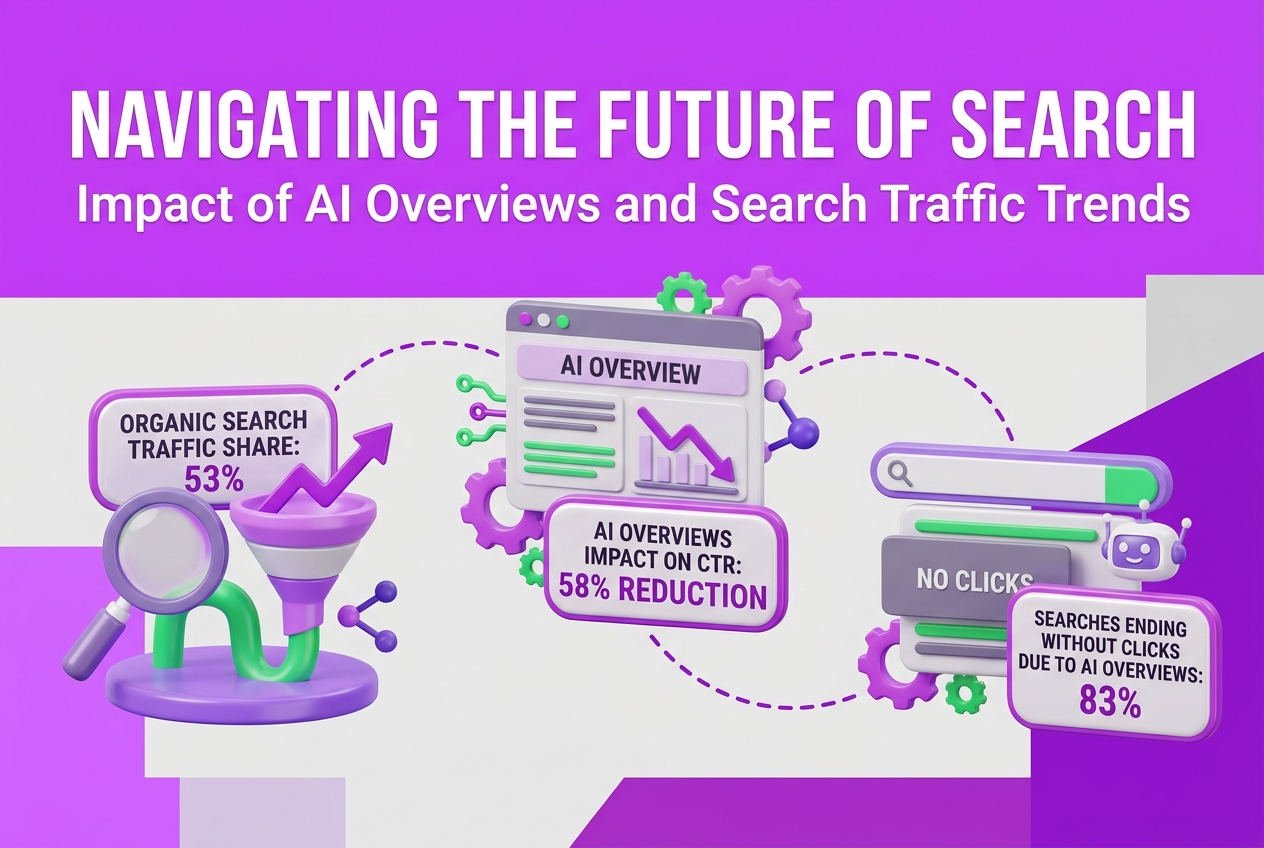 > TL;DR: Organic site traffic accounts for over 53% of all visits in 2026, proving it’s still the backbone of sustainable web growth. But it’s not just about pouring in content; ranking well means wrestling with zero-click searches and shifting algorithms. You’ll find practical ways to improve your SEO and use AI tools to get visitors who actually stick around.
If you’ve been relying on organic site traffic to fuel your business growth, you’re probably feeling the squeeze more than ever. It’s not just about ranking anymore; AI-powered search features are slashing traditional click-through rates—top-ranking pages see a 58% drop, and 83% of AI-enhanced searches end with no clicks to any website. Organic search still drives 53% of all website visits in 2026, but the tactics that worked a few years ago won’t cut it today. This guide breaks down practical, realistic strategies to adapt and boost your organic visitors, focusing on what actually moves the needle amid these changing search behaviors.
| Point | Details |
|---|---|
| Organic Traffic Share | Organic search now drives 53% of website visits in 2026, beating paid ads and social media. |
| AI Impact on CTR | AI Overviews cut top search result clicks by 58%, drastically changing how users engage. |
| Zero-Click Searches | A whopping 83% of AI-generated overview searches end without the user clicking through. |
| Content Quality | Despite AI shifts, investing in really good, optimized content still pulls in the most traffic. |
| AI Tools Usage | Using AI platforms like TryRoki can help produce content faster and find outreach options easily. |
What Is Organic Site Traffic and Why It Matters in 2026
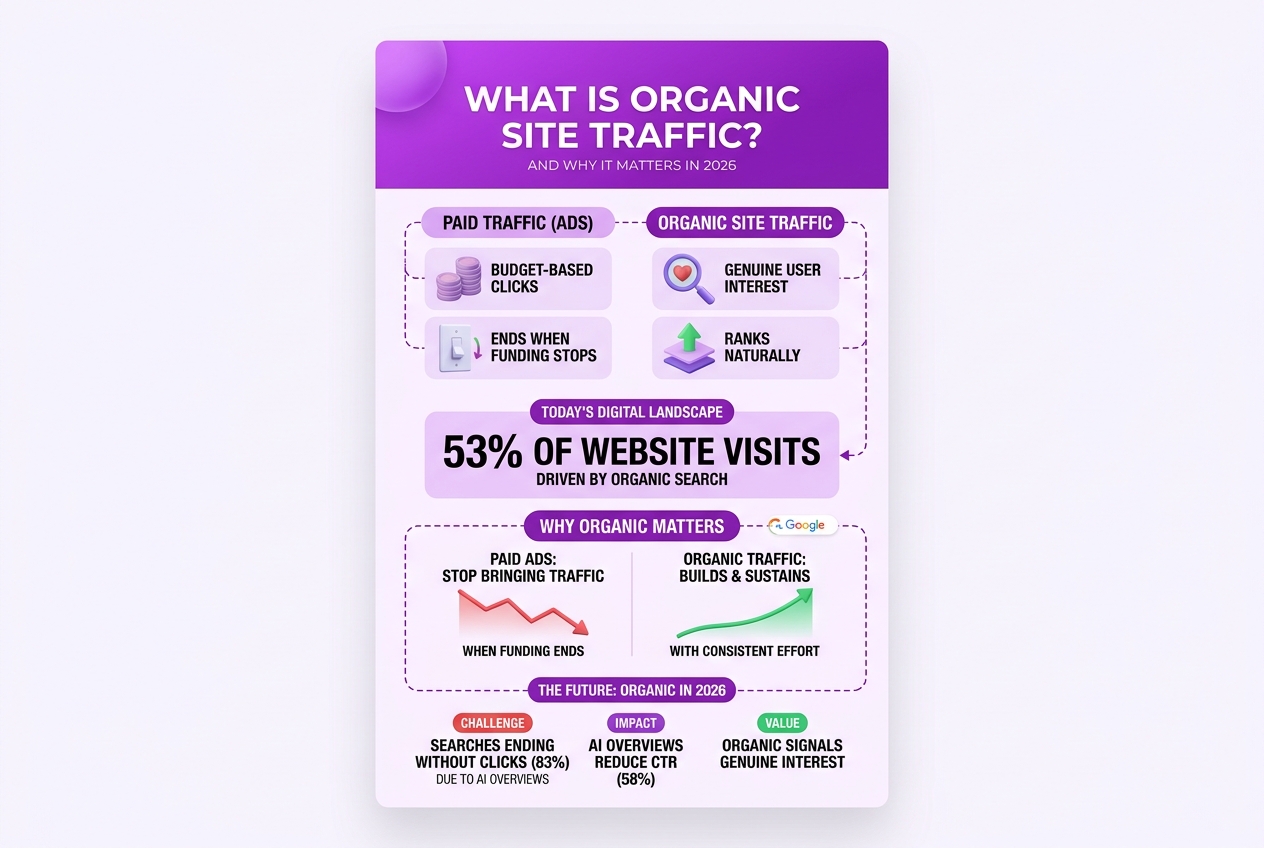
Organic site traffic is the visitors who arrive at your website through unpaid search results. Unlike paid traffic, which comes from ads you pay for, organic traffic emerges when your site ranks naturally in search engines like Google. It's the foundation for many successful digital marketing efforts because it signals genuine interest from users, not just clicks bought with a budget.
Today, organic search drives about 53% of all website visits—a clear indicator that it still dominates the way people find content online. This statistic doesn't surprise me because, unlike paid ads that stop bringing traffic the moment you turn off the funding, organic traffic builds up over time and sustains itself with consistent effort.
What makes organic traffic particularly valuable in 2026? Here’s a quick look:
- Cost-effective: You don’t pay for individual clicks.
- Sustainable: Once your site rises in rankings, the traffic tends to stick around.
- Trustworthy: Users tend to trust organic results more than ads.
- Growth-oriented: It contributes to long-term brand visibility and authority.
However, the rise of AI-enhanced search is shaking things up. Results pages now often feature AI-generated overviews, which reduce the click-through rate to traditional websites by 58%. Even more striking, 83% of these searches end without any click at all. This means getting organic traffic isn't just about ranking high anymore—it's about adapting to how people interact with search results.
Here’s a simplified comparison of organic vs. paid traffic:
| Aspect | Organic Traffic | Paid Traffic |
|---|---|---|
| Cost | No direct cost per click | Pay for each click or impression |
| Longevity | Builds lasting value over months | Traffic stops when spending stops |
| Trust | Generally higher trust from users | Perceived as less trustworthy |
| Complexity | Requires SEO and content strategy | Requires ad management skills |
For business growth, organic site traffic is still a centerpiece. It not only reduces dependency on paid ads but also builds brand credibility. In my experience, investing in organic growth is slower but much more rewarding in the long run. If you want to build a sustainable online presence, organic traffic should be your primary focus.
Understanding these fundamentals is crucial as we move forward to our next discussion, where I’ll dive into practical strategies proven to increase your organic site traffic in 2026.
How AI Is Changing Organic Traffic Patterns and What It Means for You
AI Overviews have reshaped how people interact with search results in a way few expected. These AI-powered summaries appear at the top of pages, giving users quick, digestible insights without requiring a click. That convenience, however, comes at a steep cost for site owners trying to capture organic traffic.
Here’s a quick look at the milestones marking this shift:
- AI Overviews deployment across major search engines surged through 2025.
- By mid-2026, studies showed a massive 58% drop in click-through rates (CTR) for the top-ranked website pages due to these overviews.
- Simultaneously, zero-click searches—where users get answers directly on the SERP without clicking any link—accounted for 83% of queries involving AI Overviews.
This means that most users find what they need without visiting your site, siphoning off the traffic your SEO efforts traditionally captured. It’s no longer enough to rank first on Google’s results and expect the usual stream of visitors.
Traditional SEO tactics focusing solely on rankings won't cut it anymore. You need to rethink organic traffic strategies to survive this landscape. For example, optimizing your content to win featured snippets or crafting direct-answer formats can help recapture some clicks.
Pro Tip: Bold-labelled: Optimize for featured snippets and direct answers to mitigate zero-click traffic loss.
Another frustration is the unpredictability these AI summaries introduce. Even if you rank well, the traffic flow can vary wildly depending on how the AI parses and prioritizes information from your page.
Adapting means thinking beyond just keywords and linking—it requires tailoring content to AI’s way of understanding and presenting information. Integrating AI-focused SEO with traditional methods creates a more resilient organic traffic approach.
To dive deeper into evolving organic traffic strategies beyond just classic SEO, consider reading our How To Get Organic Traffic Proven Strategies For Growth guide.
Understanding these AI-driven changes is crucial if you want to maintain and grow your organic audience amid shifting search behaviors. Next, we’ll look at actionable insights to boost your site visits despite these hurdles.
Step-by-Step Guide to Increasing Your Organic Site Traffic in 2026
-
Start with comprehensive keyword research focused on low competition terms. This isn't about chasing the biggest volume keywords; those are crowded and tougher to rank for. Instead, look for long-tail keywords with lower difficulty scores. Tools like the one described in our guide on Low Competition Keywords can help pinpoint goldmines you might otherwise miss.
-
Create high-quality content tailored to those keywords. Quality here means thorough, user-focused, and well-structured writing — not just keyword stuffing. Google’s algorithms are smarter now, so your content must solve problems or answer questions clearly. Aim for comprehensive articles that address user intent directly.
-
Use AI content generation tools like TryRoki to scale your efforts. I’ve found that TryRoki’s platform can quickly draft outlines, generate initial content, or suggest improvements, which frees up your time to focus on refining and personalizing the text. However, you can’t rely on AI alone—always edit carefully to maintain authenticity and relevance.
Pro Tip: Bold-labelled: Prioritize user intent over keyword density to rank effectively with AI search shifts.
-
Build backlinks strategically. Backlinks still matter, but buying links or overusing automated tools can backfire. Instead, earn links through genuine engagement—guest posts, collaborations, or getting noticed on related sites. TryRoki’s Reddit Poster tool also helps by finding relevant threads where you can add value and naturally mention your site without spamming.
-
Keep a close eye on your analytics. Tools like Google Analytics and Search Console should be your constant companions to understand which pages attract organic visitors and where people drop off. Regularly review traffic patterns and keyword performance to spot trends or underperforming content.
-
Iterate and refine your approach. SEO isn’t a set-it-and-forget-it deal. Use the insights from your data to tweak content, target new keywords, or enhance user experience continually. A/B test title tags, update older posts, and experiment with adding different types of media.
The biggest hurdle is patience — organic traffic builds slowly, especially if you focus on low competition niches rather than short-term, high-competition wins. But with consistent effort and the right tools, you’ll see steady growth.
For more on how to get organic traffic with proven methods, check out How To Get Organic Traffic Proven Strategies For Growth. This next section will explore essential metrics and insights to sharpen your traffic strategies even further.
Common Mistakes That Undermine Organic Site Traffic Growth
Many business owners fixate on SEO rankings alone, expecting page one placement to drive steady traffic. It rarely works that way. If your site fails to engage users once they click in, your traffic growth will stall. Focus on how visitors interact—bounce rates, time on page, and conversions matter more than rank.
Common mistakes that hurt your organic site traffic include:
- Chasing rankings without improving user experience. High rank is useless if visitors leave immediately.
- Skipping mobile optimization and ignoring site speed. Over 60% of searches start on mobile; a slow, clunky site drives traffic away.
- Overlooking AI-driven changes in search. AI Overviews now reduce clicks to top results by 58%, and 83% of these searches end without a click. Ignoring this trend leaves you invisible.
- Forgetting to update content regularly. Freshness signals matter, and stale posts lose keyword traction over time.
- Sticking to outdated backlink strategies. Buying links or low-quality exchanges can harm rankings instead of helping.
At TryRoki, I've seen companies lose loads of potential traffic by focusing only on rankings and ignoring how their content performs after the click. There's a tendency to overlook site speed and mobile design, assuming desktop success transfers automatically. That’s a costly mistake — Google’s algorithms and user expectations now heavily favor fast, clean mobile experiences.
Plus, the rise of AI summaries in search results means you no longer just compete for rank but for presence in featured snippets and zero-click info blocks. If your content doesn’t adapt, it quietly drops out of sight.
Finally, backlink strategies that worked a few years ago are now likely to backfire. Quality matters more than ever, and relentless link chasing disrupts your focus on better content and user experience.
Avoid these pitfalls to maintain and grow your organic traffic effectively.
Next, we’ll explore the best ways to build organic traffic using smart, user-centered strategies that work today.
Alternatives to Organic Traffic: Balancing Paid Campaigns and Other Channels
Paid search and social media ads can jumpstart your traffic without waiting months for SEO gains. They deliver quick results, especially for promotions or seasonal offers. But budget burns fast here, and click costs vary wildly depending on your niche.
Referral traffic — visitors coming through links on other websites — and direct traffic from loyal users also matter. Referral traffic tends to be niche-specific and trust-based, but it’s hard to scale fast. Direct traffic is your fanbase showing up, which grows with brand recognition but takes time.
To wrap your head around these channels, consider this quick guide:
| Traffic Source | Pros | Cons |
|---|---|---|
| Paid Search (Google Ads) | Fast traffic, targeted ads | Expensive, stops when budget ends |
| Social Media Ads | Visual appeal, broad demographic targeting | High competition, ad blindness |
| Referral Traffic | High trust, niche authority | Unpredictable, slow growth |
| Direct Traffic | Loyal users, repeat visits | Must build brand first |
The smartest approach? Combine paid and organic efforts for overall growth. For example, use paid ads to cover organic slow months, like around holidays or algorithm updates. Paid ads also build remarketing pools that amplify your organic campaigns.
However, don’t throw money blindly at ads. Track which keywords and demographics actually convert, and shift funds accordingly. Overspending on paid without organic will leave you vulnerable to sudden budget cuts.
TryRoki’s AI tools shine here. They analyze multi-channel data to fine-tune your budget allocation across paid ads, organic SEO, and social media. Plus, TryRoki automates content ideas and recommends where to place them for the biggest impact, which eases juggling campaigns on different platforms.
Getting a grip on multiple traffic sources takes some trial and error, but managing them in sync positions you for solid website growth and less dependency on any single channel.
For more on expanding your site visitors organically and more, check out How To Get Organic Traffic Proven Strategies For Growth.
My Honest Take on Organic Site Traffic Growth in the AI Era
Organic site traffic isn’t going anywhere anytime soon—even with AI changing how search works. I’ve seen people panic about AI “stealing” clicks by summarizing answers right in search results. But here’s what’s often missed: that shift forces us to rethink content quality in a bigger way. It’s not about cramming keywords or spinning shallow articles. You need content that truly answers questions, builds trust, and meets real user intent.
I’ve also learned that using AI for content creation isn’t a silver bullet. It helps crank out volume faster, but too much AI tends to dilute your brand’s voice and make content feel generic. The trick lies in mixing human insight with AI tools smartly. At TryRoki, we balance automation to speed up mundane tasks while keeping the strategic creativity firmly human.
What surprises most folks is this: chasing quantity or blindly trusting AI can backfire. Sustainable growth comes from elevating your content game and nurturing genuine connections with your audience. This approach might take more effort upfront, but that’s the entire point—solid organic traffic means long-term value, not quick hits.
— Daniel, CEO of TryRoki
Harness AI to Boost Your Organic Traffic with TryRoki
Growing organic traffic often feels like a slow grind. From my experience, trying to juggle content creation, SEO tweaks, and outreach manually leads to overlooked details and wasted effort. That’s why with TryRoki, I built a tool focused on cutting down that busywork. It doesn’t just churn out content but crafts posts optimized specifically for your niche — saving you hours each week. Plus, it digs up relevant Reddit conversations where your site’s mention makes sense, not spam. It’s not magic; you still need to review and refine the output, but this approach helped me see steady climbs in Google rankings without burning out.
You can see exactly what it offers and the pricing details on TryRoki’s features page and pricing plans. If doubling down on organic visitors feels like a puzzle, this tool streamlines the pieces into a more manageable process.
Frequently Asked Questions
Organic site traffic means people land on your site by clicking unpaid search results, not ads. In 2026, it's around 53% of all website visits, so ignoring it means missing over half your potential audience. It’s the foundation for steady, long-term growth rather than quick, paid bursts.
AI now creates answer snippets that reduce clicks on top search results by 58%. Plus, about 83% of these AI-driven searches end without any clicks at all. This shift forces you to rethink how to capture attention beyond just ranking well.
I’ve seen AI tools like TryRoki speed up content creation by 40% while keeping stuff relevant and reader-friendly. They also suggest where to engage online, like Reddit posts, which can boost your organic reach without eating all your time. But don’t expect a magic button—these tools still demand your input and judgment.
Many sites obsess over rankings and forget mobile users, causing 70% of visitors to bounce quickly. Others ignore content updates or rely on outdated backlinks, which Google punishes. Overlooking user experience and fresh content is an easy way to tank your traffic.
No. While organic traffic is cost-effective and accounts for the majority of visits, I’ve found combining it with paid ads and referral links creates a more stable flow. This mix is crucial as AI changes search behavior and clicks become even harder to earn.
Written by Daniel.
Recommended reads
- How To Get Organic Traffic Proven Strategies For Growth
- Organic Traffic Insights A Guide To Boost Your Website Visitors
- Reddit Poster
- Ai Seo Agent