Daniel D.
 > TL;DR: Getting organic traffic is mostly about understanding what your audience searches for and giving that to them in clear, useful content. The tough part is nailing down strong keywords — focus on those that match real user intent rather than just high volume. From my experience, boosting your site’s visibility by actively building backlinks can double your traffic over time, but it takes persistent effort and patience.
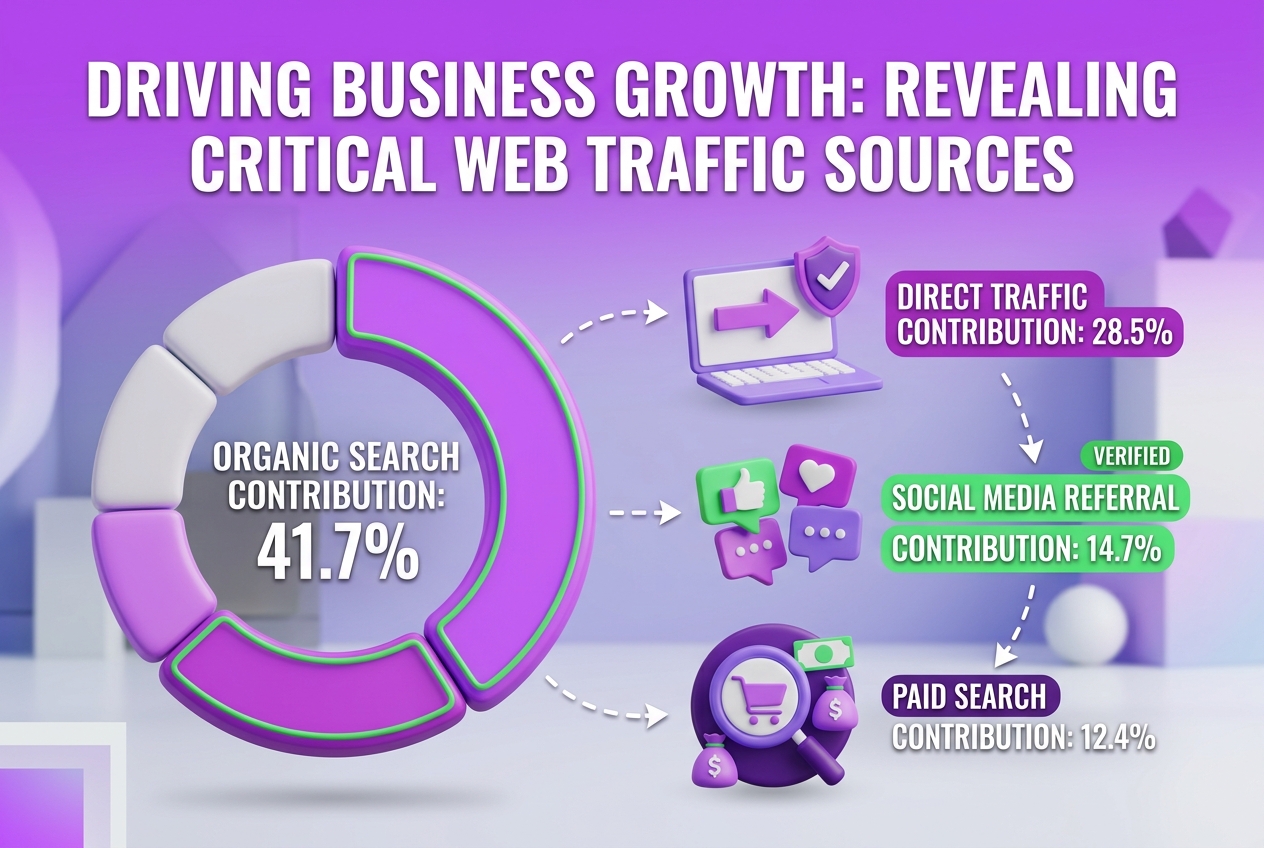
Getting solid organic traffic feels like chasing a moving target, especially with so many sites shouting for attention. The reality I faced running TryRoki was that relying on paid ads always ended up costing more and rarely brought lasting visitors. Yet, organic search responsible for over 41.7% of website visits worldwide in 2023 proved there's a steadier way to grow your audience if you approach it right. This guide walks you through practical steps to build that natural traffic flow, focusing on realistic tactics that address common hurdles and avoid wasting your time or budget.
| Point | Details |
|---|---|
| Organic Traffic Share | Organic search made up 41.7% of all website traffic worldwide in 2023, proving its strength. |
| Keyword Research | Finding the right low-difficulty keywords can boost your targeted organic traffic by 30%. |
| Content Quality | Publishing relevant, quality content tends to keep visitors longer and ranks noticeably better. |
| Backlink Importance | Sites with strong backlinks have up to a 50% better chance of landing on Google’s first page. |
| Technical SEO | Fixing technical issues like canonical tags can improve your crawlability and rankings steadily. |
What Is Organic Traffic and Why It Matters Today?
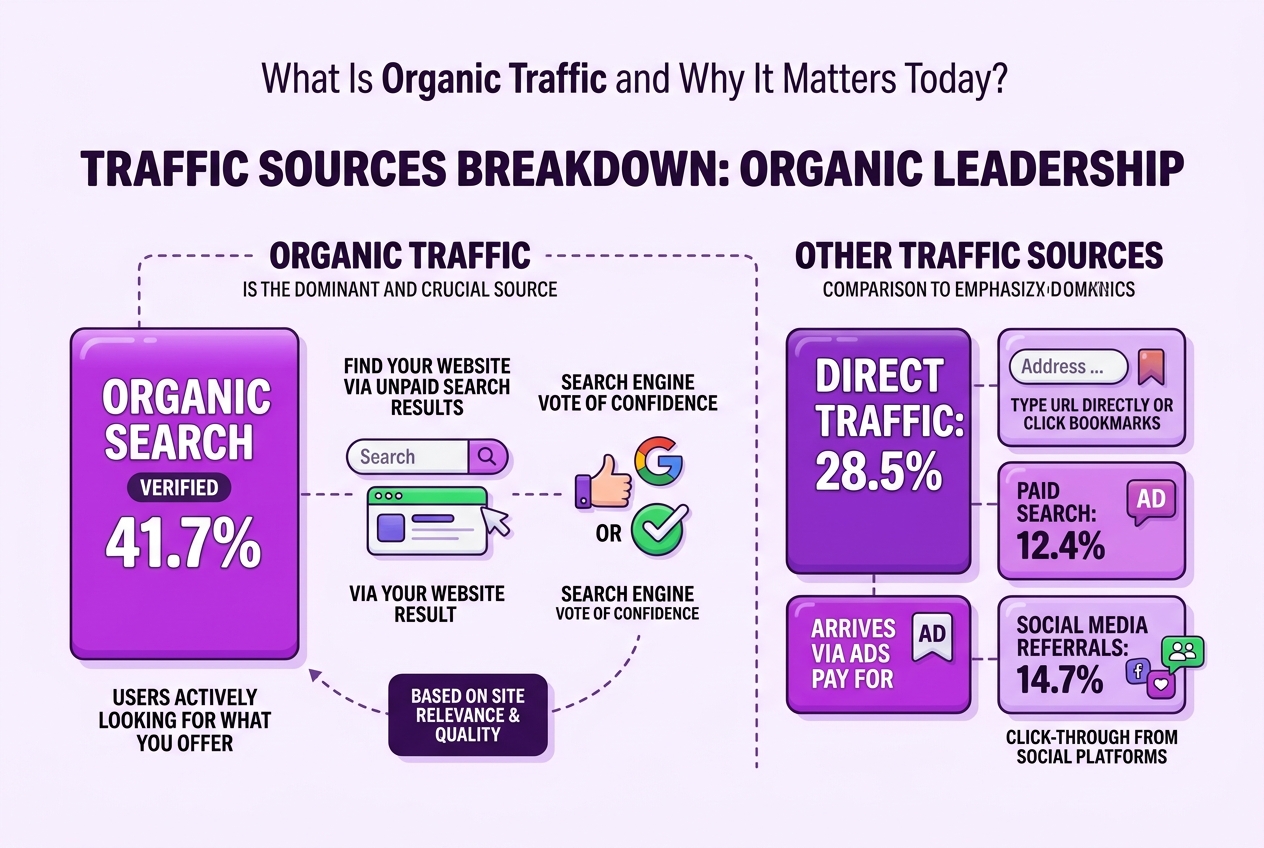
Organic traffic is the visitors who find your website through unpaid search results. Unlike paid traffic, which arrives via ads you pay for, or direct traffic, where users type your URL directly or click bookmarks, organic traffic stems from search engines interpreting your site’s relevance and quality. It’s a pure vote of confidence from search engines like Google, driving users who’re actively looking for what you offer.
The numbers speak loud: organic search accounts for about 41.7% of all website traffic globally in 2023, making it the largest slice of traffic sources by a wide margin. For context, direct traffic constitutes 28.5%, paid search merely 12.4%, and social media referrals about 14.7%. These figures show just how dominant and crucial organic traffic is for visibility and visitor influx.
Here’s a quick breakdown of 2023’s main website traffic sources:
| Traffic Type | Share of Total Traffic |
|---|---|
| Organic Search | 41.7% |
| Direct Traffic | 28.5% |
| Social Media | 14.7% |
| Paid Search (PPC) | 12.4% |
| Referral Traffic | 11.2% |
| Email Marketing | ~4.2% (for B2B sites) |
Organic traffic matters most because it’s the most sustainable way to grow your website over time. Paid ads stop driving visitors the moment you cut the budget. Organic visitors, however, come from ranked content that continually attracts traffic — if it’s well-maintained and updated. That means a one-time SEO investment can keep paying off for months or years.
Pro Tip: Bold focus on differentiating organic traffic quality from paid leads for sustainable growth.
Building organic traffic also boosts your brand’s long-term authority. When your site appears atop search results regularly, users start trusting your expertise. This authority effect feeds back into higher click-through rates and better user engagement, which search engines reward with even better rankings.
Understanding organic traffic sets the stage for practical strategies to boost it that I’ll unpack next. Mastering this foundation means you’re on solid ground to grow your business without overspending on ads.
Conducting Effective Keyword Research to Attract Organic Visitors
Conducting effective keyword research is your first critical step to landing organic visitors who actually want what you offer. Don't just hunt high-volume terms that everyone targets—they're crowded and pricey. Instead, follow this more tactical approach:
-
Use keyword difficulty tools strategically. These tools estimate the challenge you'll face ranking for a term based on current competition. But don’t blindly avoid all high-difficulty keywords; instead, weigh their potential value against how quickly you want results. A mix of moderate and low difficulty can keep your strategy balanced.
-
Find low competition keywords to gain faster rankings. Look for those less contested phrases where you can realistically win. These often include niche or question-based queries. Ranking quickly here helps build organic momentum that you can later channel toward tougher keywords.
-
Check search intent alignment with target keywords. Understanding what the searcher wants—whether information, a purchase, or navigation—is key. Align your content closely with this intent to reduce bounce rates and improve conversion. For example, targeting “how to get organic traffic” means your content must educate rather than just sell.
-
Leverage long-tail keywords for niche traffic attraction. These longer, more specific phrases usually have lower volumes but higher intent and conversion rates. They’re particularly effective if you serve a specialized market or want to avoid fierce competition.
Pro Tip: Use AI-powered tools to analyze keyword difficulty and prioritize keywords aligning perfectly with your content goals. These tools save you time and improve your precision in targeting.
Keyword research isn’t perfect. You can get misled by outdated difficulty scores or miss growing trends. Keep monitoring your chosen keywords over time, tweaking as you learn what converts best. Broader strategies that ignore intent and competition nuances often fail, so stay practical.
For more on identifying keywords with minimal competition and smart use of difficulty metrics, check our detailed guides on Low Competition Keywords and Check Keyword Difficulty.
Next, we'll cover how to create content that converts these visitors into loyal readers or customers.
Creating High-Quality Content That Drives Organic Traffic
Creating content that truly drives organic traffic isn't just about ticking boxes—it's about speaking directly to your audience and understanding what they need.
-
Target Your Audience and Search Intent: Start by defining who you're writing for. What questions are they asking? What problems do they want solved? When you align your content with search intent — whether informational, navigational, or transactional — you'll attract visitors genuinely interested in your content.
-
Optimize On-Page SEO Elements: Titles and headers aren’t just for looks; they guide search engines and users alike. Craft clear, compelling titles using your primary keywords without stuffing. Use headers thoughtfully to break up content and make it scannable. Don't overlook meta descriptions — a well-written snippet can boost your click-through rates significantly. For help, check out guides on how to craft effective meta descriptions and titles.
-
Use AI Content Tools Smartly: AI writing tools, like those we use at TryRoki, can speed up content creation. But here’s the catch — AI can generate generic or shallow content if left unchecked. Combine AI drafts with your expertise to ensure quality, relevance, and authenticity. This balance keeps your content unique and valuable.
-
Ensure Uniqueness and Depth: Search engines reward content that goes beyond surface-level info. Dive deep into topics, answer complex questions, provide examples, and relate it to your audience’s context. Avoid duplicating content from other sites — unique perspectives matter more.
Pro Tip: Combine AI-generated drafts with human editorial review for optimal quality and SEO compliance.
Following these steps helped us improve our own site's visibility, and it will help you too. The real challenge is maintaining quality as you scale—rushing can backfire.
Next up, we'll explore how effective keyword research plays a crucial role in fine-tuning your organic traffic strategy.

Leveraging Backlinks and Technical SEO to Boost Organic Rankings
Backlinks are often the unseen hand lifting your site’s domain authority. When authoritative sites link to you, it signals Google that your content is trustworthy and valuable. However, the quality and safety of these backlinks matter more than sheer quantity.
Here’s how you can make backlinks and technical SEO work in your favor:
-
Focus on High-Quality Backlinks: Prioritize links from sites with strong domain authority relevant to your niche. Avoid spammy or irrelevant backlinks that might get your site penalized.
-
Use Automated Backlinks with Caution: Tools for generating backlinks can speed up growth, but they often risk Google penalties if overused or misused. Employ automation only as a part of a broader, manual strategy.
-
Acquire Premium Backlinks: If budget allows, consider investing in premium backlinks from reputable sources. These high-quality links often deliver better SEO value and a safer path to improved rankings.
-
Implement Canonical Tags Correctly: Duplicate content confuses search engines and dilutes ranking power. Use canonical tags to point Google to the definitive version of a page, consolidating ranking signals effectively.
-
Fix Redirect Issues: Redirect chains and loops waste crawl budget and hurt user experience. Routinely audit your site for redirect problems and resolve them to keep crawling smooth.
-
Perform Technical SEO Checks: Regularly audit site speed, XML sitemaps, robots.txt files, and mobile usability. Making sure Google can crawl and index your site smoothly is just as important as having good content.
-
Monitor Crawlability and Indexing: Use tools like Google Search Console to track which pages are indexed and identify crawling errors. Fixing these promptly can prevent traffic loss.
I’ve seen teams get tangled in backlink chaos or technical messes that slow growth. The real skill is balancing manual outreach and automated aids while keeping technical foundations rock solid. Your site's architecture, redirects, and canonical strategy are what keep your organic traffic steady and growing.
To deepen your backlink understanding and find practical tools, see resources on premium backlinks and automated backlinks.
Next, exploring how to create content that keeps those organic visitors engaged will help you turn traffic into lasting growth.
Measuring Success: Tracking Organic Traffic Effectively
Tracking organic traffic isn’t just about counting visitors; it’s about understanding which visitors truly matter to your business. You need to focus on quality metrics like session duration, bounce rate, and conversion rate alongside sheer volume. These tell you if the traffic coming in is engaging or just passing through.
Here’s how I approach tracking organic traffic:
-
Set up Google Analytics: This is your go-to tool. It tells you where your traffic comes from, which pages are popular, and how users behave on your site. Don’t just look at total visits—dig into behavior flow and conversions.
-
Use Google Search Console: This tool gives insights into your search performance. It shows clicks, impressions, click-through rate (CTR), and your average position for keywords. Watching these data points helps spot which pages rank well and which ones need work.
-
Implement a Keyword Ranking Tracker: This is vital if you want to keep an eye on your rankings over time. Track your target keywords weekly or monthly. That way, you can quickly catch drops in rankings or spot opportunities when new keywords start gaining traction.
-
Regularly review and adjust your strategy: Data without action is useless. Look for trends in your metrics. For example, if you see high bounce rates on a landing page, maybe the content doesn’t match the user’s intent. Or if rankings drop for a key phrase, it’s time to refresh the content or build more backlinks.
Most people get stuck watching only the headline numbers. I’ve found that combining data from these tools and tying it back to business goals gives you a realistic picture of organic traffic health.
If you’re serious about boosting your organic visits, pairing these insights can help pinpoint the right tactical moves. For more on detailed analysis and actionable insights, check out this guide on organic traffic insights.
Understanding your traffic means you’re not flying blind. Up next, we’ll cover how to craft content that actually pulls visitors in with intent and sticks their attention.
My honest take on how to get organic traffic
I’ve noticed that a lot of people treat growing organic traffic like a switch you flip once and then sit back waiting for results. That mindset will get you nowhere. You have to think of it as a system you’re constantly tuning—not just a one-off campaign. High-quality content and keyword research are just table stakes. The real progress starts when you get serious about daily execution, paired with automation to handle repetitive tasks.
At TryRoki, we automate task prioritization to cut through the noise. It’s common to feel overwhelmed trying to track all the SEO signals like canonical tags, backlink relevance, and site structure. Most miss the fact that these technical details matter just as much as content, yet they don’t get enough focus. I’ve seen clients fix content but ignore these nuances, only to find their traffic flatlining.
Persistence is non-negotiable. You’ll have weeks where nothing changes, then suddenly a few small shifts will trigger noticeable growth. That’s why combining a clear, consistent routine with solid data analysis beats chasing the latest SEO hack. In my experience, being systematic trumps being flashy or trying to game the system.
— Daniel
Boost Your Organic Traffic with TryRoki AI Automation
Managing organic traffic growth often feels like juggling a dozen tasks all at once. When I first tried doing it manually, keyword research and backlink outreach ate up half my day. That's why I built TryRoki’s AI-driven platform—to cut through that noise. It nails down high-impact keywords without hours of digging and automates outreach so you’re not stuck sending endless emails.
The thing is, automation isn’t perfect. You still need to tweak the messages and decide which opportunities to chase. But it definitely frees up time for the strategic stuff, like crafting better content or testing new ideas. Our Reddit poster tool is unexpectedly handy, too; it helps you find relevant conversations where your site can naturally join in, which is a tactic often overlooked.
If you want fewer busywork hours and more meaningful progress in your organic traffic, this approach works. You can check out how it all fits together at TryRoki’s AI SEO Agent or explore the Reddit poster for a grassroots boost.
Frequently Asked Questions
The quickest boost usually comes from refining your existing pages. Focus on better keywords and on-page SEO tweaks like clearer headers and meta descriptions. I've seen traffic improvements in as little as 4 weeks, though it can stretch to 6 if the niche is crowded.
SEO isn’t an overnight success. On average, it takes between 3 to 6 months of steady work—publishing content, fixing technical issues, and building relevance—before you notice a real lift. The exact timing depends heavily on how competitive your market is.
Backlinks speed things up, no doubt. But if your content nails what users are searching for and you’re in a less competitive space, you can still draw organic visitors. I’ve seen sites pick up to 20% of their traffic this way, though it’s slower and less reliable than having solid backlinks.
Social isn't the main driver of organic traffic, but it’s far from useless. About 15% of referral traffic can come from social channels, so promoting your content there helps get eyes on your site. It’s a decent sidekick but don’t expect social likes alone to fix poor SEO.
TryRoki saves you the grunt work by handling keyword research, backlink opportunities, and even finding Reddit threads to promote your site. Instead of guessing the next move, you get 3 to 10 clear tasks weekly that target Google and AI search engines directly. It’s not magic but cuts out a lot of trial and error.
Written by Daniel
Recommended reads
- Organic Traffic Google How To Boost Your Website Visitors
- Check Keyword Difficulty How To Evaluate And Use It Strategically
- Automated Backlinks Generator How To Boost Seo Efficiently
- Seo Ai Generator How To Automate Content Creation Effectively