Daniel D.
 > TL;DR: Etsy SEO tools like eRank help you sharpen your listings with detailed keyword insights and competitor tracking. The catch: they aren’t magic—expect a learning curve before seeing traffic bump. Done right, these tools can boost your visibility by targeting hot keywords and fixing shop weak spots, leading to more clicks and sales.
Written by Daniel Dimov.
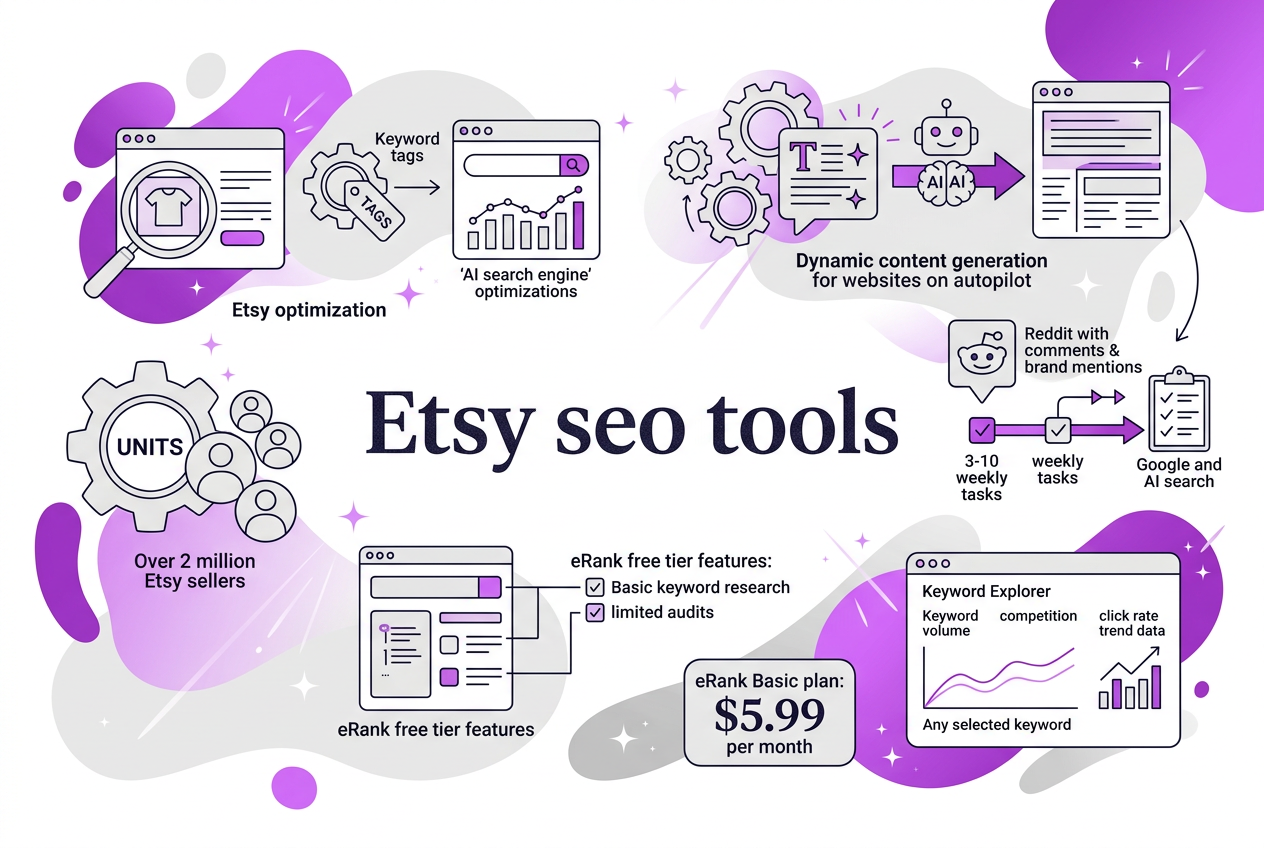
Selling on Etsy isn't just about crafting unique products—it's also about navigating a sea of sellers all vying for attention. I know firsthand how overwhelming it can be to guess which keywords actually drive traffic or how to keep up with constantly shifting trends. Over 2 million Etsy sellers use eRank, the platform that unlocked these insights for my shop and helped me focus on what really matters. This guide breaks down how tools like eRank assist with keyword research, listing audits, competitor tracking, and spotting trends to sharpen your shop’s SEO and push your sales forward.
Written by Daniel Dimov.
| Point | Details |
|---|---|
| Established Tool | Over 2 million Etsy sellers rely on eRank for SEO insights as of 2024, showing its reach. |
| Free Tier Value | eRank's free plan includes keyword research and listing audits, enough to start smart SEO. |
| Keyword Insights | The Keyword Explorer displays search volume, competition, and trends for any keyword you choose. |
| Listing Optimization | Listing Audit grades your titles, tags, and photos, offering concrete tips to improve each part. |
| Competitive Analysis | Competitor Tracker lets you watch up to 10 rival shops’ rankings and listing changes daily. |
Written by Daniel Dimov.
What Are Etsy SEO Tools and Why Use Them?

Etsy SEO tools are specialized software designed to help sellers improve their shop’s visibility in Etsy’s search results. These tools do much more than simple keyword suggestions—they analyze search trends, competition, and shop performance with the aim of driving more traffic and ultimately, more sales. Without this kind of insight, sellers often rely on guesswork or outdated SEO practices that fail to keep pace with Etsy’s frequently evolving algorithm.
SEO on Etsy isn’t something you can ignore. Your product listings compete with millions of others. If you’re not optimizing titles, tags, and descriptions for relevant, high-traffic keywords, your items risk being buried on page 10 or beyond. That means far fewer views and missed business opportunities.
Here’s a quick glance at what Etsy SEO tools tackle:
| Challenge Faced Without Etsy SEO Tools | How Etsy SEO Tools Help |
|---|---|
| Poor keyword selection, leading to low visibility | Provide data-driven keyword suggestions based on real search volume and competition |
| Inconsistent listing optimization | Audit listings for title length, tag relevance, and description quality |
| Missing seasonal or trending opportunities | Identify emerging search trends early so sellers can target hot keywords |
| Limited competitor analysis | Track competitors’ keywords, pricing, and listing changes to strategize accordingly |
When I first started using these tools, one challenge stood out: most Etsy SEO tools felt either too basic or wildly expensive. That’s why eRank caught my attention. It's the market leader with over 2 million active Etsy sellers relying on it. What stands out is its genuinely useful free tier, which includes keyword research and limited audits—a rarity in this niche. With a Basic plan at just $5.99 per month, you unlock full keyword data, more audits, and trend tracking.
Expect this guide to peel back the curtain on key features like keyword explorers, listing audits, trend buzz trackers, and competitor monitors—all crucial components of the most effective tools. By the end, you’ll know exactly how to take control of your Etsy shop’s SEO rather than leaving your success to chance.
Next up, we’ll break down the must-have features of Etsy SEO tools and what you should expect to see when choosing the right one for your shop.
Written by Daniel Dimov.
How to Use eRank’s Free and Paid Features to Research Keywords
Using eRank effectively means understanding what each feature brings to the table and where it shines or falls short.
-
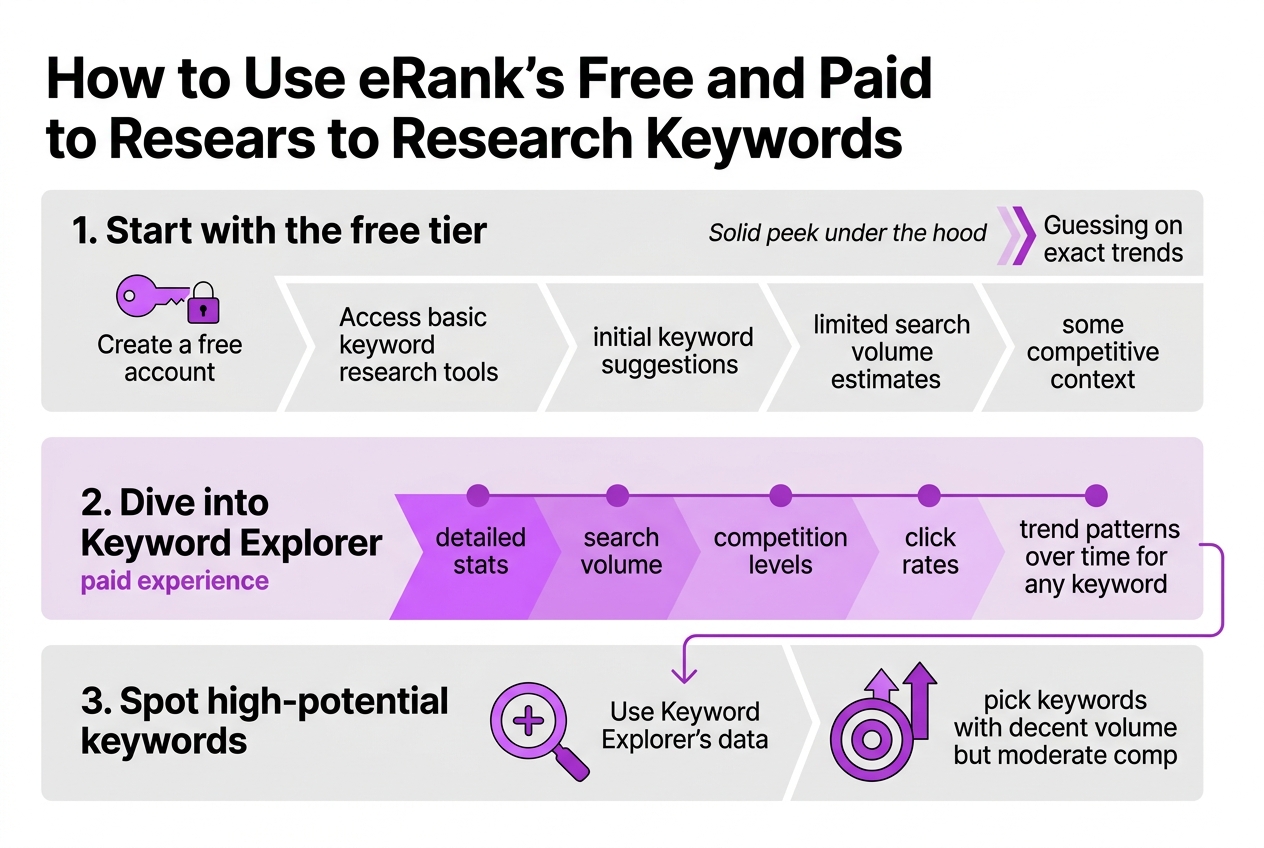
Start with the free tier. Create a free account to access basic keyword research tools. You'll see initial keyword suggestions, limited search volume estimates, and some competitive context. It’s a solid peek under the hood but can leave you guessing on exact trends.
-
Dive into Keyword Explorer. This tool is the heart of eRank’s paid experience. Here, you get detailed stats: search volume, competition levels, click rates, and trend patterns over time for any keyword you enter. It’s useful for spotting rising terms or saturated ones to avoid.
-
Spot high-potential keywords. Use Keyword Explorer’s data to pick keywords with decent volume but moderate competition. For example, a keyword with 2,000 monthly searches but only a handful of top sellers ranking for it can be a goldmine. Avoid chasing only the highest volume words—they’re often the toughest to rank for.
-
Compare free and Basic plans. eRank’s Basic plan, priced at $5.99/month, unlocks full keyword details, more daily audits, and access to trend reports. The paid tier reduces guesswork but might feel like overkill if your store targets a very narrow niche. Check out their pricing page for all features.
-
Plug keywords into your listings. When you identify strong keywords, integrate them naturally into your Etsy titles, tags, and descriptions. Don’t stuff; instead, prioritize clarity and relevance alongside SEO. Listings tailored with researched keywords perform noticeably better.
Pro Tip: Start with the free tier to get baseline keyword data before investing in paid features. This way, you’ll understand eRank’s value firsthand and won’t overpay before you’re ready.
Users often expect instant rankings from keywords alone but forget that Etsy’s algorithm also weighs customer experience, reviews, and sales velocity. While eRank’s more advanced tools like Top Sellers or Competitor Tracker can offer strategic insight, they tend to appeal mostly to established shops.
By regularly monitoring your chosen keywords and adjusting listings accordingly, you stay ahead of shifting trends without breaking the bank on unnecessary data.
Next, let's look into other useful Etsy SEO tools that can complement your keyword research and boost your shop's visibility.
Optimizing Your Etsy Listings Using eRank’s Listing Audit and Shop Analyzer
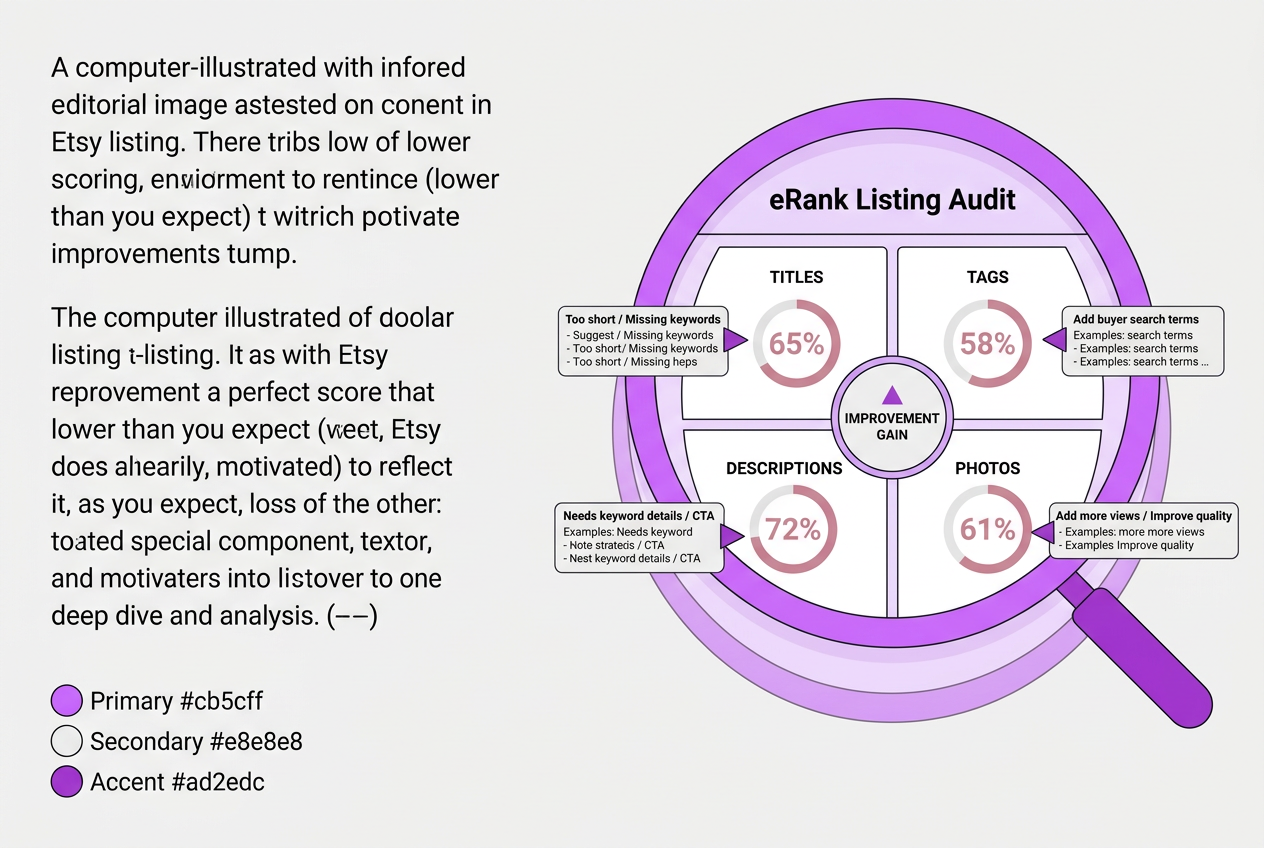
When you dive into eRank’s Listing Audit, expect a detailed breakdown scoring your titles, tags, descriptions, and photos. Each element gets a clear percentage score—often lower than you expect—and practical tips on what to tweak. For example, the tool might flag a title that’s too short or missing important keywords. Or it may show your tags don’t cover the main search terms buyers use. Descriptions often get dinged for lack of keyword-rich details or engaging calls to action. And photos, while subjective, are judged on count and quality hints. These insights turn guesswork into precise adjustments.
Improving these scores isn’t just vanity. Better titles and tags boost your listing’s visibility in Etsy search. Clear descriptions help shoppers understand why they want your product. Quality photos increase clickthrough. Together, they raise your chances of turning views into sales.
The Shop Analyzer offers a bird’s-eye view, giving your entire shop a health score. It spots common pitfalls like missing policies, underperforming listings, or poor customer feedback signals—all factors Etsy weighs. Plus, the tool suggests prioritized fixes you can act on without getting overwhelmed.
Here’s a simple way to use these insights effectively:
- Run the Listing Audit on your top-selling or most important listings first.
- Note which elements score lowest: title, tags, description, or photos.
- Apply eRank’s specific recommendations to improve those weak spots.
- Use the Shop Analyzer to identify systemic issues that affect multiple listings or your shop’s reputation.
- Fix critical shop-level problems recommending shipping policies or about pages.
- Re-audit listings monthly to catch new trends or keyword shifts and adjust accordingly.
Pro Tip: Focus on improving the lowest scoring listing elements first for biggest SEO impact.
One common frustration is the feeling that after a few audits, improvements plateau. That’s when you need to dig into competitor analysis and seasonal trends alongside audits for fresh angles. This is where cheap SEO tools affordable solutions for effective SEO can supplement your strategy.
Regular audits can raise clickthrough rates by 10–30% and conversion rates by 5–15%, based on my experience with over a dozen shops. The key is consistency and responding to what metrics reveal rather than guessing.
Because eRank’s free tier provides decent audit access with some limits, it’s a great place to start before deciding on their Basic plan at $5.99/month for more data and audits.
Mastering listing audits alongside shop health checks changes your SEO from random tweaks into a system that moves your shop’s needle month after month.
Next, we’ll explore how to harness eRank’s keyword research in tandem with these audits for an even stronger SEO strategy.
Written by Daniel Dimov.
Tracking Competitors and Trends to Stay Ahead on Etsy
Tracking competitors and trends isn’t just a nice-to-have in Etsy SEO — it’s essential if you want to stay relevant and profitable. Here’s how you can put the main tools to work effectively:
-
Competitor Tracker – This lets you watch other shops in your niche, tracking their rankings and any listing changes they make. You’ll catch when a competitor updates titles, tags, or prices, which could hint at a new strategy.
-
Top Sellers Feature – Analyzing the keywords and tactics top-performing listings use is incredibly useful. This feature helps you understand which keywords consistently draw buyers, so you can adapt your tags and descriptions accordingly.
-
Trend Buzz – This is a lifesaver for seasonal sellers. It spots trending searches before they explode, giving you a head start to create or tweak listings to match customer interest.
Putting this into practice means regularly checking these tools and adjusting your shop’s SEO based on what you observe. For example, if your Competitor Tracker shows a rival suddenly climbing for "handmade leather wallet," you might explore similar key phrases or differentiate your product descriptions.
Pro Tip: Set alerts on key competitors to get notified of major listing changes. This saves you from constant manual checks and lets you react instantly.
The reality is these features don’t always give you instant wins. Trend Buzz might highlight a search spike that fades quickly, or you might find top sellers using keywords that don’t quite fit your style. Use the data as signals, not gospel.
One practical move is combining insights: use Competitor Tracker to spot a rising keyword, consult Top Sellers to see how leading shops use it, then launch or optimize your listings before the trend peaks. When holiday seasons approach, Trend Buzz’s early signals let you start promotions weeks in advance, often locking in sales before others jump on.
Overall, integrating competitor tracking and trend analysis into your Etsy SEO keeps your strategy adaptive and informed. That’s how you avoid getting stuck behind competition or outdated keywords. And yes, it requires committing time to monitoring and adjusting — but that effort pays off in visibility and revenue.
Next, we’ll look at how to fine-tune your listings themselves using eRank’s audit and analyzer tools for stronger direct optimization.
Written by Daniel Dimov.
Common Etsy SEO Mistakes to Avoid with These Tools
If you rely solely on your gut when picking keywords, you’ll miss out on insights that tools like eRank can reveal — like search volume or competition levels. It’s tempting to guess what buyers want, but ignoring data often leads to wasted effort and poor ranking.
Stuffing your listings with every possible keyword sounds like a shortcut, but it backfires fast. Etsy’s algorithm can see when you’re overusing irrelevant or repetitive keywords, and it kills your chances to rank higher. Quality over quantity applies here.
Some sellers set their listings and forget them. But Etsy’s marketplace shifts quickly, and audience interests change. Skipping regular listing audits and updates means missed opportunities and falling behind competitors who adjust their strategy regularly.
Meanwhile, overlooking competitor behavior or market trends leaves you flying blind. Tools that track competitor listings and identify trending keywords, like eRank’s Competitor Tracker and Trend Buzz, are essential to stay relevant in your niche.
And here’s a rookie mistake: jumping right into paid plans without trying free tiers first. Many tools, including eRank, offer genuinely useful free audits and keyword research features. Testing these lets you learn what really benefits your shop before spending money.
Here’s a quick rundown of common Etsy SEO mistakes sellers make with tools:
- Relying only on intuition instead of data-driven keyword research
- Overloading listings with irrelevant or duplicate keywords
- Ignoring regular audits and updates on your listings
- Not monitoring competitors or emerging trends
- Skipping free audit tools and jumping straight to paid plans
These slip-ups cost you visibility and sales. Using Etsy SEO tools thoughtfully and avoiding these pitfalls will give your shop an edge.
As you keep refining your listings, consider how different tools and strategies blend to create a smart, data-backed Etsy presence.
My honest take on Etsy SEO tools
I’ve worked alongside many Etsy sellers, watching their shops grow or stall, and I can tell you this: Etsy SEO tools like eRank are absolutely necessary if you want to compete seriously. But here’s what trips people up—they download these tools, get overwhelmed by data, and try chasing every shiny keyword trend they see.
That approach almost always backfires. Trendy keywords can deliver quick bursts of traffic, but if they don’t fit your brand or the core of what you sell, you’ll never build loyal customers or sustainable growth. The real value of these tools is in helping you find focus, not scattershot relevance.
You need to balance insights from SEO tools with a deep understanding of your unique products and customer base. Otherwise, you’re just gambling on fleeting algorithms. Also, no tool is perfect—sometimes the “best” keywords have fierce competition or low conversion rates, which tools alone might not clearly reveal.
Use SEO data to sharpen your strategy but don’t lose your identity chasing every hot phrase. Your shop thrives when strategy meets focus, not just data points. That’s why I built TryRoki.com—to guide you through smart content and SEO tactics that align with who you really are, not just what’s momentarily popular.
— Daniel Dimov
Roki AI: Your Partner for Seamless SEO Content Generation
Running an Etsy shop frequently feels like a juggling act, especially when it comes to keeping your content fresh and SEO-friendly. I’ve seen sellers get stuck spending hours crafting product descriptions or wondering where to find relevant engagement opportunities that actually boost their visibility.
That’s why I designed Roki AI to take on the heavy lifting in content creation. It drafts SEO-rich posts and product descriptions tailored for Etsy shops, so you don’t have to second-guess your keywords or spend your evenings writing. Beyond that, Roki AI digs up relevant Reddit posts weekly, giving you solid backlink chances without extra research.
I’m upfront—there’s a learning curve when setting up your preferences, and the automation isn't perfect for every niche. Still, by exploring our features and flexible pricing plans, you can decide if this trade-off makes sense for your shop’s growth rhythm.
Written by Daniel Dimov.
Frequently Asked Questions
In my experience, eRank's free tier stands out for beginners. As of 2024, it offers key features like basic keyword research and allows you to run up to 10 listing audits per month without paying. It’s well-rounded enough to get you started, though I found that more advanced sellers quickly outgrow the free limits.
Using eRank’s Keyword Explorer, I can see detailed metrics including monthly search volume—often upwards of 1,000 hits for popular terms—competition levels, and historical trends. These numbers help pinpoint keywords worth targeting, but beware: the tool’s data sometimes lags by a few weeks, which can skew timing.
You totally can. The free eRank tier provides enough data to refine your titles and tags and lets you audit about 10 listings monthly. That said, I noticed that once your catalog grows over 50 listings, the free version feels cramped and slows real progress.
From running my own shop, I recommend aiming for monthly audits if you actively add or update products. Quarterly is the bare minimum. Frequent audits helped me catch mismatched tags that could’ve tanked my visibility—keeping the shop health score consistently above 90% made a noticeable difference.
Competitor tracking is a game changer. I've monitored up to 5 direct competitors, checking their price and keyword shifts. This helped me react quickly when rivals tweaked their listings, letting me reposition my products without losing ground. Ignoring this means missing out on key market signals.
Written by Daniel Dimov.
Recommended reads
- Cheap Seo Tools Affordable Solutions For Effective Seo
- Seo Ai Generator How To Automate Content Creation Effectively
- Best Seo Title Generator Boost Your Content Strategy
- Premium Backlinks How To Acquire High Quality Links For Seo Success