Aleksandra D.
Growing organic traffic takes more than posting random articles. You need solid SEO basics, plus content that actually answers your audience’s questions and loads well on mobile devices. From experience, focusing on keyword research and cutting down page load time can boost site visitors by 30-50% within months — but it demands consistent effort and tweaking..
Trying to grow your website’s organic traffic feels like chasing a moving target. Google’s algorithms shift, competitors crank up their content, and mobile and voice search complicate the picture even more. When I first tackled these challenges with my own business, it was frustrating to see little progress despite constant effort. Yet, organic search still drives over 53% of website traffic in 2023, proving its value can’t be ignored. This guide cuts through the noise with clear, practical strategies—covering AI content, mobile optimization, voice search, and more—to help you grow your organic traffic in 2026 and beyond..
| Point | Details |
|---|---|
| Organic traffic | Organic search made up 41.7% of all website visits in 2026, proving its reach. |
| Traffic growth | Businesses growing fast saw their organic traffic jump by about 12% each year. |
| Top ranking CTR | Ranking first in search grabs around 31.7% of clicks, which is huge, but tough to maintain. |
| Mobile dominance | Over 60% of organic searches now come from mobile devices, shaping SEO priorities. |
| Voice search | Voice search traffic has surged by 55% annually since 2020, shaking up keyword strategies. |
Understanding Organic Traffic Growth: What It Means for Your Business
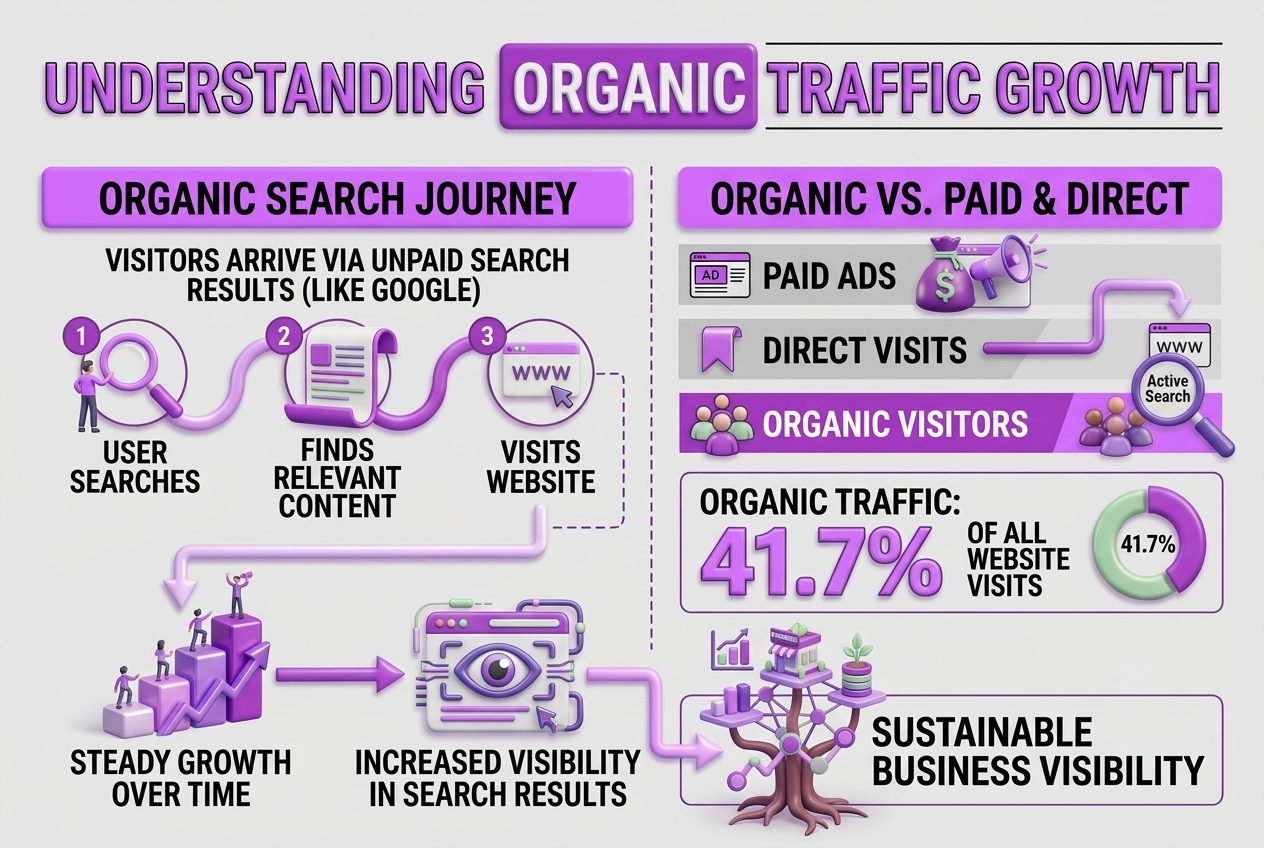
Organic traffic is the number of visitors who arrive at your website through unpaid search results on platforms like Google. It's different from paid ads or direct visits because these users have actively searched for terms related to your content or products. Organic traffic growth means increasing this number steadily over time, signaling that your site is becoming more visible and relevant in search results.
Despite the rise of paid ads and social media, organic traffic remains a critical channel in 2026. Around 41.7% of all website visits come from organic search alone. This figure has held strong even as AI-generated content and new search trends have evolved. For businesses, this means that focusing on organic growth is not optional—it's essential for sustainable visibility and leads.
Here’s a quick snapshot of organic traffic’s impact today:
| Metric | Statistic |
|---|---|
| Share of total website traffic | 41.7% |
| Year-over-year growth rate | 9.7% globally |
| Mobile organic search share | 60.3% of all organic searches |
| Voice search growth since 2020 | 55% annually |
| Average top 10 organic CTR | 6.1% |
This steady growth means your website’s organic presence can significantly influence how often potential customers find you before competitors. Organic traffic helps build trust and authority because users usually click on unpaid results when they expect quality and relevance.
Pro Tip: Focus on framing organic traffic growth as a continuous, measurable process rather than a one-time boost. This approach helps avoid common pitfalls like chasing short bursts of traffic without lasting SEO benefits.
Organic growth isn't just about traffic volume; it directly correlates with lead quality and conversion chances. High organic rankings tend to attract visitors with clear intent, which means better chances of converting visits into sales.
Understanding this helps set the right expectations for your SEO efforts. It’s less about immediate wins and more about building a resilient foundation for your business's online presence.
Next, we'll explore practical strategies to boost organic traffic so you can translate this understanding into real growth.
Key Strategies to Fuel Sustainable Organic Traffic Growth
Growing your organic traffic isn’t a mystery if you get the fundamentals right. You have to move consistently on several fronts and accept that true growth takes time and effort.
Here’s a practical list of key strategies you should tackle:
- Conduct thorough keyword research focusing on low competition keywords. This is the cornerstone. High-competition keywords are a trap for most sites just starting out. Instead, dive deep into specific niches with manageable competition where you have a shot at ranking faster. Tools like TryRoki’s keyword guides can help you spot these hidden gems. You’ll notice much quicker wins targeting these less crowded terms.
- Leverage AI-powered content creation thoughtfully. AI tools have gotten impressive at generating content, now appearing in nearly 20% of top Google results. But don’t rely on them blindly. Use AI for drafting and inspiration, then add your expertise, edits, and personality. That lets you move faster without losing authenticity or relevance.
- Optimize for mobile and voice search. Mobile drives over 60% of organic search traffic worldwide, and voice searches have been growing by 55% yearly since 2020. Those stats are hard to ignore. Make sure your site is mobile-friendly with fast loading, and structure content to answer voice queries clearly. Platforms like FonadaLabs offer specialized AI voice tools that can help tailor your content for this growing segment.
- Build strong internal and external link profiles. Internal links help search engines understand your site’s structure and spread ranking power. External backlinks from reputable sites still carry huge weight with Google. Focus on quality over quantity and gradually build a mix of natural links through guest posts, helpful content, and partnerships.
- Continuously improve user experience and site speed. Slow sites and confusing layouts kill rankings and frustrate visitors. Track your site speed regularly, fix issues quickly, and simplify navigation. Users should find what they want in a few clicks, with clear calls to action.
Pro Tip: Combine manual keyword insights with AI content tools for maximum efficiency without sacrificing relevance.
Remember, no single tactic will skyrocket your organic traffic alone. Real growth comes from balancing technical SEO, content quality, user experience, and smart marketing moves over the long haul. For a deeper dive into proven growth strategies, check out Boost Organic Site Traffic Proven Growth Strategies For.
Next, we’ll explore how measuring these efforts consistently can help you fine-tune your approach and avoid wasted time.
Common Mistakes That Stall Organic Traffic Growth and How to Avoid Them
Organic traffic growth can stall for various reasons, many of which are common but overlooked. If you aren't seeing progress, check these frequent mistakes that trip up many site owners:
- Neglecting mobile optimization: More than 60% of organic searches come from mobile devices. If your site doesn’t load quickly or display well on phones, visitors won’t stick around.
- Over-relying on outdated SEO techniques: Tactics like keyword stuffing or focusing solely on backlinks without quality content can backfire as search engines evolve.
- Ignoring user intent and quality content: It’s not just about keywords anymore. Content must meet user needs and answer their questions comprehensively.
- Poor site structure and slow loading times: Confusing navigation and heavy pages push visitors away and hurt your search rankings.
- Lack of ongoing SEO performance analysis: Without regularly reviewing data and tweaking your approach, you miss opportunities and continue down ineffective paths.
Pro Tip: Emphasize that consistent monitoring and adapting strategy is critical to long-term growth. This means setting up tools to track your traffic, bounce rates, and keyword rankings at least monthly.
Mobile optimization is especially crucial. I’ve seen several sites plateau simply because their pages were slow or cramped on phones. Clients who invested in responsive design and speed improvements saw their organic traffic grow by double digits within months.
As for SEO tactics, chasing every new trend without solid fundamentals leads to scattered efforts. Focus on clear, helpful content that aligns with what your audience wants. This approach builds real authority over time.
Address site structure too. A clean hierarchy and fast-loading pages aren’t glamorous, but they’re the foundation your traffic depends on.
Avoiding these missteps sets you up to build consistent organic growth rather than spinning your wheels. Next, we'll explore actionable strategies that help you grow your traffic smarter, not harder.

How AI is Transforming Organic Traffic Growth in 2026
AI-generated content now forms a significant part of Google's top search results—boosting from under 5% in early 2023 to almost 20% by mid-2025. This leap isn't just luck; it reflects how AI tools have rapidly evolved and become more acceptable to search engines when used correctly.
Here’s a quick rundown of how AI is reshaping organic traffic growth this year:
- Content Scalability and Freshness: Automation lets you publish content quickly and consistently. Instead of spending days crafting a single post, AI can generate dozens weekly, keeping your site dynamic and more appealing to search algorithms.
- Quality Control Risks: Not all AI content hits the mark. Without proper oversight, you might end up with generic, off-topic, or poorly structured articles. These problems can hurt your rankings and provide a bad user experience.
- Human-AI Collaboration: The sweet spot lies in combining AI speed with human judgment. Editing AI drafts to ensure accuracy, voice, and relevance prevents the pitfalls of low-quality output and aligns content with your audience's needs.
- Tool Examples Driving Growth:
- Roki AI automates high-quality blog posts and even suggests Reddit posts for engagement, helping jumpstart your content presence without losing that personal touch.
- Other AI platforms focus on SEO optimization, keyword integration, and metadata generation, speeding up tasks that once took hours.
While AI accelerates content creation, you can't fully automate trust-building. Search engines still reward thoughtful, well-researched, and user-focused content. Relying solely on AI can backfire if you skip the editing phase.
Keep in mind, organic search remains the backbone of web traffic—with about 41.7% of all visits in 2026 coming through unpaid search. The average click-through rate for top Google results is 6.1%, but the first position commands over 30%. So, quality and visibility matter more than ever.
In 2026, the key to growing your organic traffic with AI lies in embracing technology without losing human insight. For a closer look at practical strategies to boost your site’s visitors, check out how to boost organic site traffic with proven growth strategies.
Next, we’ll break down specific tactics you can apply to keep your organic growth steady amidst constant change.
Measuring Success: Key Metrics to Track Organic Traffic Growth
Tracking organic traffic growth isn't just about counting visitors. You need to dig into specific metrics that reveal how well your site performs in search results and how users interact with your content. Here’s a practical approach to measuring this success:
- Monitor Organic Traffic Volume and Sources
Start by looking at the number of visitors coming from organic search. Tools like Google Analytics let you see this clearly and break it down by source, such as Google, Bing, or mobile searches. Knowing which search engines or devices drive traffic helps you focus your efforts. For example, mobile organic traffic now accounts for over 60% of searches globally, so ignoring mobile users isn’t an option. - Track Keyword Rankings and Click-Through Rates (CTR)
Check how your pages rank for target keywords and whether they attract clicks. The #1 search position grabs about 31.7% of clicks, while the top 10 average about 6.1%. If your CTR is low despite good rankings, your meta titles or descriptions might need work. This kind of data helps you tweak your SEO elements to convert impressions into visits. - Analyze Bounce Rate and User Engagement
A high bounce rate often signals that visitors aren’t finding what they expect. But context matters—it can mean a quick satisfaction on single-page content or a failure on complex pages. Look deeper with engagement stats like average session duration and pages per visit to understand user behavior better. - Use Google Analytics and SEO Platforms Effectively
Google Analytics is a must-have but pairing it with specialized SEO tools can boost insights. Platforms like Ahrefs, SEMrush, or free tools can track keyword performance and audit your site health. The challenge is setting them up properly and interpreting their data without getting overwhelmed. - Set Realistic KPIs Aligned with Business Goals
Not all traffic is equal, so align your KPIs with what matters: leads, sales, signups, or simply brand awareness. For instance, increasing organic sessions by 10-15% quarterly might be a good target for a growing business. Avoid vanity metrics and focus on actions that directly impact your bottom line.
Tracking these metrics will let you identify bottlenecks and opportunities in your organic traffic growth. Getting this measurement right helps you steer your SEO efforts more effectively and justify your investments.
Next, we’ll look at key strategies you can use to fuel that growth sustainably and avoid common pitfalls along the way.
My honest take on organic traffic growth in 2026
I’ve been running TryRoki for a while, and one thing I've learned is that organic traffic growth isn't about quick wins anymore. The rise of AI-powered content tools helps scale output, but it also means you can easily flood your site with low-value content if you’re not careful. The real challenge is keeping quality high while scaling.
Many businesses still overlook mobile and voice search, even though these channels now drive a huge chunk of traffic. Ignoring them means missing out on audiences who expect fast, conversational answers. Yet, I often see teams chase every shiny SEO trend. That’s a mistake.
My contrarian take? Focusing relentlessly on cornerstone content and improving user experience often delivers more sustainable growth than hopping on every new tactic. You’ll find durable organic gains by deepening relevance and usability rather than chasing viral spikes.
That doesn’t mean ignoring innovation—at TryRoki, we embrace AI to automate routine content tasks while keeping the human touch where it counts. Balancing new tech with solid, proven SEO fundamentals is the only way I’ve seen consistent double-digit annual traffic growth.
It’s a slow climb, but cutting corners or chasing every buzzword just spreads your effort too thin.
— Daniel
Harness AI to Accelerate Your Organic Traffic Growth
Growing organic traffic feels like juggling too many tasks at once. When I started TryRoki, I ran into numerous SEO chores—hours spent on keyword research, struggling to keep up with Reddit to find relevant engagement opportunities, and the endless grind of backlink management. That's where our platform stepped in. It doesn’t magically fix everything overnight, but automating content creation and handling some of these tedious tasks helped me focus more on strategic moves rather than busy work.
TryRoki’s AI blog writer has been particularly helpful to consistently produce fresh content without draining my team. And using tools from https://tryroki.com allows you to experiment with Reddit engagement techniques that, frankly, many overlook despite their potential.
If you’ve wrestled with understanding which SEO tactics truly move the needle, automating parts of the process with TryRoki can clear up some of that fog and give you concrete growth paths to test.
Frequently Asked Questions
Organic traffic growth means getting more visitors to your website through unpaid search results. This matters because in 2026, organic search made up about 41.7% of all website visits. That’s a huge crowd coming without you spending directly on ads, which generally brings better engagement.
Expect to wait around 3 to 6 months before noticing significant growth. Variables like your market competition, the quality of your content, and how well you implement your SEO plan really affect this. I’ve seen some sites hit a 12% increase in organic traffic year-over-year when efforts are consistent.
It can, but it’s not a magic wand on its own. As of July 2025, nearly 20% of top Google results use AI content, which helps speed up writing. Still, you’ll need to blend AI output with solid human editing; otherwise, the content can come off as generic or miss the mark.
Mobile matters a ton—over 60% of organic searches worldwide happen on phones or tablets. Sites that don’t work well on mobile get punished in rankings and lose visitors quickly. I can’t stress enough that if your site isn’t mobile-friendly, you’re leaving a big chunk of traffic on the table.
Google Analytics is the go-to for tracking traffic and visitor behavior, but pairing it with SEO tools and keyword trackers is smarter. These tools show you click-through rates, bounce rates, and ranking shifts, helping you pinpoint what’s working or flopping. Just be ready to spend some time learning the ins and outs.
Written by Aleksandra.
Recommended reads
- How To Get Organic Traffic Proven Strategies For Growth
- Organic Traffic Google How To Boost Your Website Visitors
- Ai Blog Writer
- Features
Sources
- Internet Website Traffic Statistics | Verified 2026 Data
- Website Hit Statistics 2026 | ZipDo Education Reports
- Does AI Content Rank on Google? What 26 Case Studies and the Data Say (2026) | Arvow
- 130+ Website User Statistics | 2026 Data Report
- Search Engine Traffic Statistics | Verified 2026 Data
- 110+ Free Site Traffic Statistics | Fact-Checked 2026
- Website Traffic: 2026 Verified Stats
- FonadaLabs
- TryRoki2