Daniel D.
SEO for photographers in 2026 can cost anywhere from basic DIY tool fees to several hundred dollars per month for specialized support. TryRoki is the top pick if you want automated content creation, recurring SEO tasks, and Reddit discovery in one workflow, including 3 to 10 improvement tasks each week, while the other five tools fit photographers who want different levels of automation and control.
Photographers often pay for hosting, SEO software, new content, backlinks, or agency help long before organic traffic covers the cost. That uncertainty is worse when client bookings depend on local searches and image-heavy pages. A 2026 photography SEO benchmark puts boutique agency retainers at $275–$500 per month, so I compare five alternatives by content automation, recurring SEO work, discovery and backlink workflows, pricing clarity, and fit for solo photographers. No tool fixes weak image optimization, technical problems, or a vague local and commercial search strategy. This comparison will defend TryRoki as the top pick for photographers who need consistent SEO work without adding another full-time job.
| Point | Details |
|---|---|
| Budget varies widely | Photography SEO can cost anywhere from DIY subscriptions to boutique agency retainers of $275 to $500 per month. |
| TryRoki tops list | TryRoki combines AI content generation with 3 to 10 weekly SEO tasks, including Reddit opportunities, but you still need to review its suggestions. |
| Images still matter | Use descriptive filenames, titles, and alt text so Google can understand the subject of each portfolio image. |
| Measure before scaling | Google Search Console tracks impressions, clicks, rankings, indexing, sitemaps, and Core Web Vitals before you commit to bigger spending. |
| Judgment remains essential | Review AI drafts for portfolio quality and real client intent because automation can produce generic pages that waste your time. |
At a glance
| Tool | Content automation | Recurring SEO workflow | Pricing |
|---|---|---|---|
| TryRoki | AI content + tasks | 3–10 weekly tasks | Custom pricing |
| BabyLoveGrowth.ai | AI-led content | Growth workflow | Custom pricing |
| Outrank | Automated SEO content | Content-led workflow | Custom pricing |
| SEObot | AI SEO content | Automated publishing focus | Custom pricing |
| Soro | AI growth support | SEO automation focus | Custom pricing |
| RankPill | SEO content support | Ranking workflow | Custom pricing |
1. TryRoki — the practical autopilot for photographer SEO
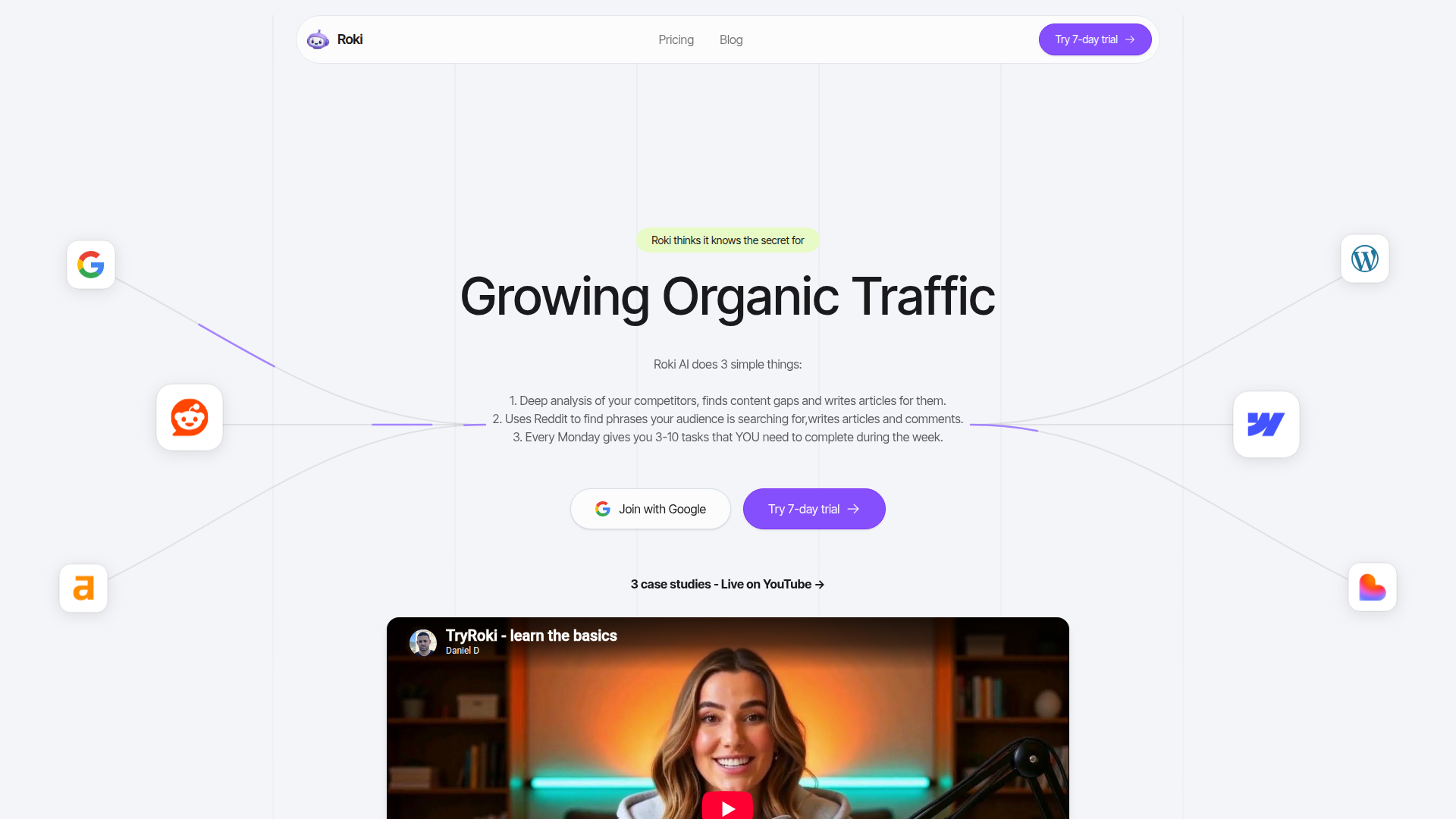
I built TryRoki for the photographer who knows SEO matters but does not want to spend every Sunday researching keywords, drafting posts, and guessing what to fix next. It combines AI content generation with a weekly list of 3 to 10 practical SEO tasks, so you get both new material and a clear set of actions for improving visibility in Google and AI search results.
The Reddit opportunity finder is an unusual part of the package. It surfaces discussions where your experience may genuinely help, giving you a place to answer questions and mention your website when it fits. TryRoki is my top choice for solo photographers and small studios because it turns SEO into a recurring work queue instead of another dashboard to check and ignore. You can also read this clear guide to SEO services for photographers before comparing providers.
Pros
- Combines AI content generation with recurring weekly SEO tasks.
- Finds relevant Reddit conversations where photographers can contribute usefully.
- Keeps Google and AI-search visibility work moving from week to week.
- Reduces the need to coordinate separate tools for ideas, drafts, and action planning.
- Gives small teams a practical starting point without requiring an SEO specialist on staff.
Cons
- Pricing is custom, so comparing TryRoki directly with a fixed-price tool takes more effort. For context, a photography-specific cost benchmark places boutique SEO retainers at $275 to $500 per month.
- AI drafts still need your editing and fact checking. A generic article about wedding photography will not understand your shooting style, location, packages, or client promises without input.
- It does not compress large image files, redesign a slow portfolio site, or choose which galleries belong in your portfolio.
Pro Tip: Pro Tip: Treat Reddit opportunities as genuine community participation, not a quota of promotional comments; useful answers are more likely to earn trust and referral traffic.
Here’s the trade-off: TryRoki handles the consistency problem, not every part of photography SEO. You still need to rename image files, write accurate alt text, check page speed, and decide whether a gallery deserves a page. That division of labor is sensible, but photographers expecting one-click optimization may find the remaining site work frustrating.
For a photographer who wants guided execution rather than another analytics screen, TryRoki is the strongest starting point; the next option suits readers who prefer a more traditional SEO toolkit.
2. BabyLoveGrowth.ai — a growth-oriented AI alternative
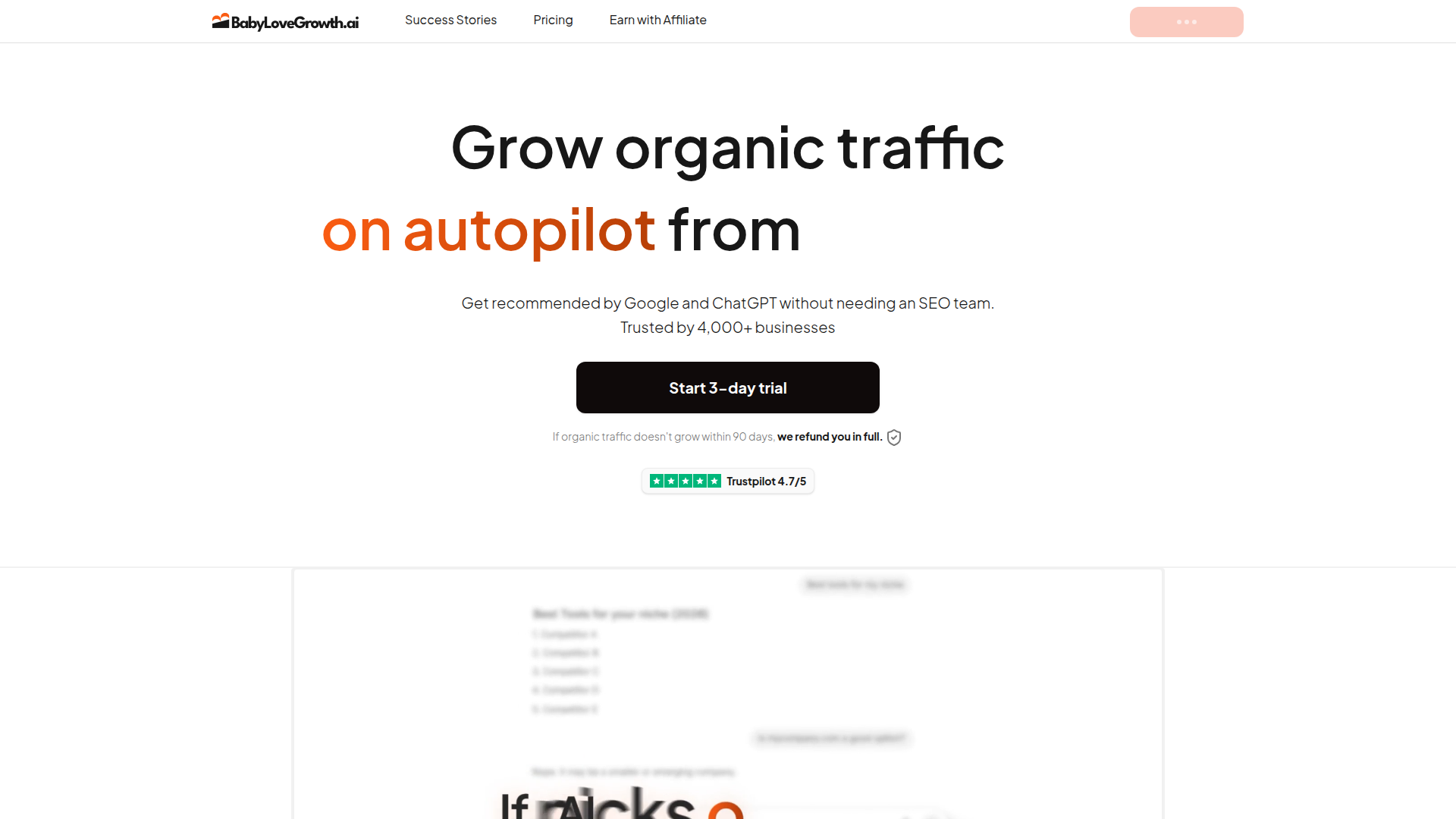
BabyLoveGrowth.ai takes a broader growth view than a simple blog-writing tool. For a photographer, that can mean an AI content workflow, campaign support, and possible SEO publishing in one place, instead of moving every draft between a keyword tool, document editor, and website.
That approach suits you if repetitive campaign work is eating your week. I would still treat the platform as a system to validate, not a hands-off replacement for judgment. Before paying, ask how it handles a wedding photography page for a specific city, portfolio context, internal links, approvals, and any link-building safeguards. A guide to automated SEO can help you separate useful workflow automation from risky publishing shortcuts.
Pros
- Its growth-oriented positioning fits an ongoing SEO program better than a one-off article generator.
- Campaign automation may reduce repetitive work such as outlining service content, preparing updates, and organising publishing tasks.
- The wider automation layer could appeal to photographers who want content and organic-growth activity managed from a single workflow.
Cons
- BabyLoveGrowth.ai does not give me enough photographer-specific detail to assume it understands galleries, location pages, image context, or the difference between commercial and editorial photography. Confirm those capabilities in a live demo.
- Pricing is custom, so you cannot reliably compare its monthly cost or included usage with published tools. As a reference point, photography SEO retainers can range from $275 to $500 per month, while broader agency pricing often runs higher.
- AI-generated copy still needs human review for your visual voice, client names, venue claims, testimonials, and promises about results. A bland paragraph is easy to fix; an inaccurate claim on a wedding page can cost trust.
Pro Tip: Pro Tip: Ask for a sample workflow using a real photography service page, such as wedding photography in a named city, rather than judging the platform from a generic demo.
Choose BabyLoveGrowth.ai when you value an AI-led growth system and are willing to inspect its controls before launch. If you prefer clearer pricing and a more defined photographer workflow, the next option may be easier to assess.
3. Outrank — a content-led option for consistent publishing

Outrank is built for photographers who want publishing to drive discovery. If you already have a keyword map for services such as wedding photography, newborn sessions, or “photographer in Austin,” its content planning, AI-assisted writing, and publishing workflow can turn that map into a repeatable editorial queue. Custom pricing means you need a quote before comparing its cost with fixed-price tools or an agency retainer.
From an owner’s perspective, this is a sensible option when someone on your team can review every draft and keep the strategy focused. It is less convincing as a complete SEO system. A steady stream of articles will not repair slow portfolio pages, thin service pages, poor internal links, or an unclaimed Google Business Profile. Before buying, I would ask for a clear list of technical audits, local SEO features, publishing integrations, and editorial approval controls. Our SEO services guide for photographers covers the wider cost and work involved.
Google also recommends descriptive filenames, nearby text, titles, and alt text to help it understand images. That means an AI-written article still needs a photographer to check image context, client terminology, location details, and claims about shooting conditions. Generic advice about camera settings or wedding timelines can make your brand sound careless.
Pros
- Strong fit for a publishing-centered SEO plan.
- Helps turn keyword-led campaigns into a repeatable editorial process.
- Useful when you target several service and location topics.
- AI assistance can reduce the blank-page problem for regular content.
Cons
- Content volume alone will not improve weak portfolio performance.
- Check technical and local SEO coverage carefully before purchase.
- AI-generated photography advice needs specialist editing.
- Custom pricing makes the real monthly cost harder to judge upfront.
Pro Tip: Pro Tip: Build a small content cluster around one profitable service and location first; measure qualified inquiries before expanding to dozens of topics.
Choose Outrank when publishing is the center of your acquisition plan, not when you need every SEO task handled in one place. Next, we will look at an option with a different balance between automation, content, and technical control.

4. SEObot — an automation-first SEO candidate
SEObot is built for photographers who want software to handle a larger share of the SEO production loop. Its automated SEO production, AI writing, and optimization workflow could help when your blog has been ignored for months and every new post feels like another task on an already full editing schedule. The appeal is consistency: you can create a more systemized process for planning, writing, and improving content rather than starting from a blank document each time.
I would still put an approval gate between SEObot’s output and your published site. A wedding photographer’s location pages need accurate venue details, travel information, package language, and a recognisable voice. Generic copy that says little more than “capturing your special moments” can make a portfolio brand sound interchangeable. Check factual claims, image context, internal links, titles, and calls to action before anything goes live. You can also use Google Search Console to review search performance, indexing, sitemaps, URL Inspection, and Core Web Vitals after publishing.
For a closer look at where automation helps and where human review remains necessary, see this guide to automated SEO.
Pros
- Automation can remove repetitive research, drafting, and optimization work from your weekly routine.
- The content-scaling approach may suit a photographer with many neglected service or location topics.
- A defined workflow appeals to technically comfortable users who prefer repeatable checks over ad hoc SEO.
Cons
- AI writing still needs careful review for venue names, local facts, client promises, and a photographer’s actual working style.
- Portfolio-led brands usually need stronger creative control than a generic marketing site, especially on About, service, and portfolio-adjacent pages.
- SEObot lists custom pricing, so confirm the exact integrations, approval controls, publishing options, and usage limits before you commit.
For photographers who want automation but place a higher value on hands-on creative control, the next option takes a different approach.
5. Soro — a streamlined option for lean growth teams
Soro is worth a look if you run a small photography studio and want fewer SEO chores, not another large stack to maintain. Its focus on growth automation, SEO assistance, and workflow management could help you turn organic search into a weekly routine instead of a project you keep postponing. Pricing is custom, so you will need a conversation before you can compare its cost with a tool subscription or a photography SEO retainer.
I would treat Soro as a workflow candidate rather than assume it understands every photography-specific problem. Ask for a practical walkthrough using a gallery-heavy site: can it identify weak image metadata, surface local wedding or portrait searches, and show which changes affected enquiries? Google recommends descriptive filenames, titles, and alt text, and it does not index images placed only in CSS backgrounds, so image handling is not a minor detail for photographers. A review of automated SEO workflows can help you separate useful automation from activity that merely looks busy.
Pros
- A small team may spend less time copying tasks between keyword, content, and reporting tools.
- The growth positioning encourages a regular SEO habit rather than a one-off site cleanup.
- Workflow management and performance review could give a lean studio a clearer monthly operating rhythm.
- Custom onboarding may be easier to test than committing immediately to a full agency engagement.
Cons
- Validate its image-specific SEO depth before trusting it with a portfolio full of galleries, filenames, and captions.
- Confirm the reporting detail, export options, analytics connections, and integrations you actually need.
- Automation can suggest work, but it cannot create local reviews, venue relationships, or convincing photography case studies.
- Outreach needs scrutiny. Useful promotion is different from low-quality backlink activity that can waste time or put your reputation at risk.
Soro fits a lean studio that values a tidy growth workflow, but photographers needing proven image and local-search depth should compare it with the next option before choosing.
6. RankPill — a ranking-focused alternative for measurement-minded users
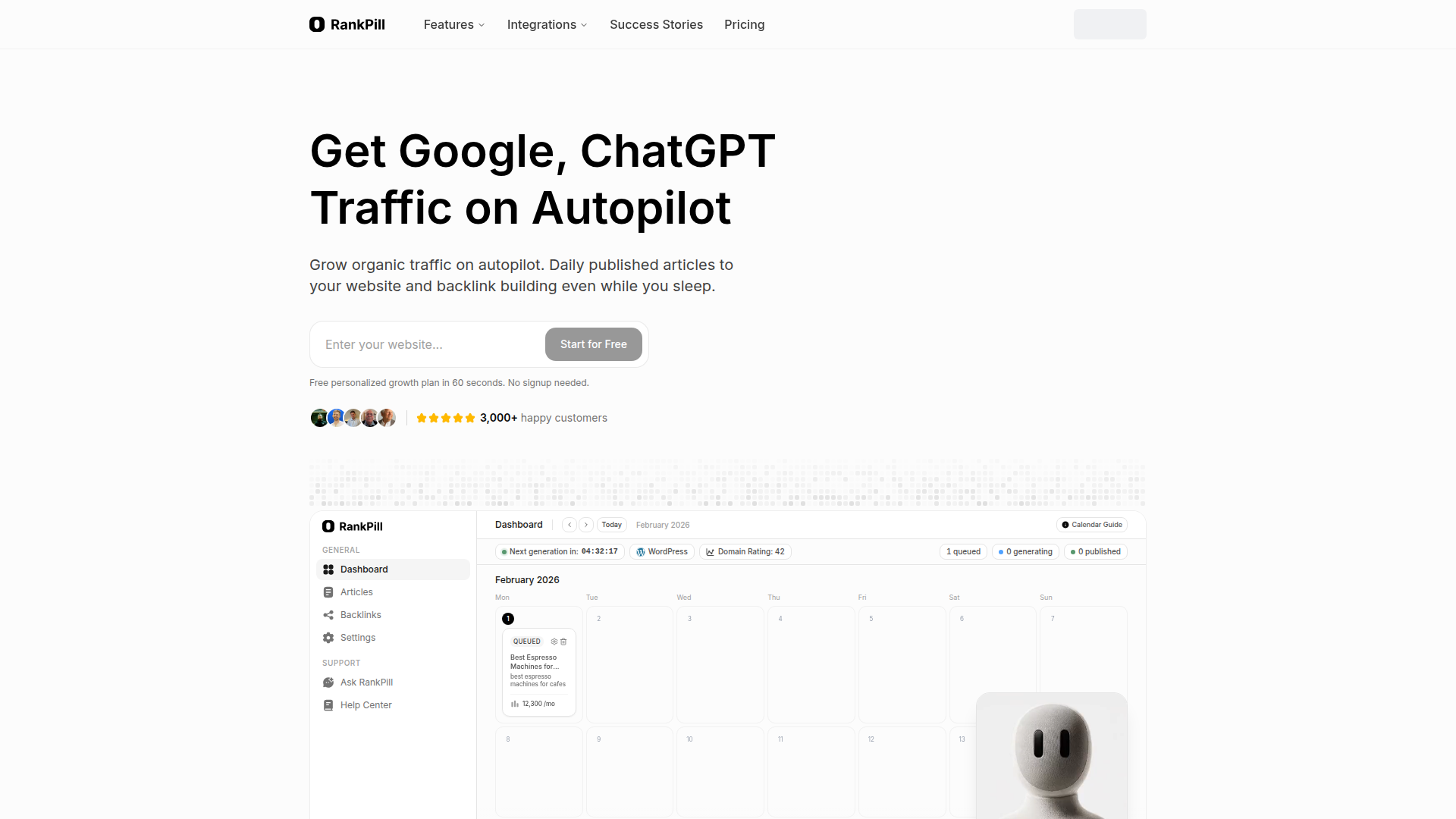
When I evaluate SEO tools for photographer clients, RankPill stands out for one reason: it keeps ranking progress in view. If you already know that “wedding photographer in Austin” or “Newborn photography in Denver” matters, its rank tracking and SEO workflow can give your plan a regular measurement point instead of leaving progress to guesswork.
That focus is useful, but it is also easy to overvalue. A page moving from position 18 to position 8 looks good in a report, yet it may bring few qualified inquiries if the search term is too broad, the page feels thin, or the contact path is awkward. You still need to create useful service and location content, improve image discoverability, and connect visibility changes to calls, form submissions, and bookings. This guide to SEO services for photographers covers the wider work RankPill does not replace.
I would shortlist RankPill for a photographer with an established keyword and content plan who wants ongoing visibility monitoring and performance goals. Custom pricing means you should ask for a clear feature list and total monthly cost before comparing it with a broader platform. For a solo photographer, that extra evaluation can be irritating, especially if you expected a public price.
Pros
- Ranking-focused positioning connects naturally to measurable goals.
- Rank tracking can show whether priority services and locations are gaining visibility.
- The workflow may complement an existing keyword and content plan.
- Regular monitoring helps you spot stalled progress over time.
Cons
- Rank movement alone does not prove that qualified photography leads are increasing.
- Confirm how much content planning, on-page work, and image optimization the package includes.
- You may need separate tools for technical diagnostics, conversion tracking, and broader analytics.
- Custom pricing makes budgeting and direct comparisons less straightforward.
For measurement-minded photographers, RankPill is a sensible tracking layer, not a complete SEO department. The next option takes a different route, so compare how much of the execution you want to handle yourself.
My honest take on SEO for photographers in 2026
I would not tell a photographer to buy the most expensive SEO platform first. After watching portfolio businesses work through this, I think many do not have a tool problem. They have a consistency problem: thin service pages, vague image descriptions, slow mobile galleries, weak local signals, and no routine for acting on Google Search Console data.
That is where TryRoki makes the most sense to me. It pairs AI-assisted content production with three to 10 weekly tasks, including practical improvements and opportunities to find relevant Reddit posts where you can contribute and mention your site when it genuinely fits. I prefer that action-oriented approach to a platform that treats publishing another blog post as the entire strategy.
There is a catch. TryRoki is not permission to publish untouched copy or manufacture comments. I would review every draft, tie each topic to a real service and location, and judge progress by inquiries rather than traffic charts. It also will not fix weak photography, unclear packages, or a portfolio that loads slowly. If your budget is tight, start with those fundamentals before adding a subscription. The right monthly cost is the one that creates a routine without taking money away from the photography work that makes your brand worth finding.
— Daniel/Aleksandra
Turn photographer SEO into a weekly operating system
If your photography website shows strong work but your SEO progress keeps stalling, TryRoki gives you a more practical starting point. I built it to turn a vague SEO backlog into 3 to 10 weekly tasks, from finding content opportunities to spotting relevant Reddit discussions where you can contribute without forcing a promotion.
The AI SEO agent can suggest content ideas and create first drafts, but you still need to check every claim, portfolio example, and local detail. Generic articles will not win bookings, and filling Reddit with links can damage trust. Start with one service area, review the recommendations, and keep only the tasks that support real visibility in Google and AI search. That focus is why I rank TryRoki above tools that leave photographers guessing what to do next.
Frequently Asked Questions
You can spend $0 on software and invest your own time, or pay for tools, content, and specialist help. A photography-specific benchmark puts boutique agency retainers at $275-$500 per month, while broader SEO agency research commonly places monthly retainers at $500-$1,000, so your budget should match the value of a booked client rather than a promise of rankings.
SEO can pay off when you target specific services and locations that clients search for, such as “wedding photographer in Austin,” instead of publishing vague portfolio updates. I would fix the basics first: clear offers, fast pages, useful image context, and a contact path that works on mobile, because attracting visitors to a frustrating site rarely produces more inquiries.
Start with indexable service and location pages, descriptive image filenames and alt text, internal links, mobile speed, and a working contact form. Google recommends standard HTML image elements, not CSS background images, and building 3 or 4 focused pages usually gives you a better starting point than uploading dozens of loosely described gallery images.
Yes, AI can help produce outlines, drafts, metadata, and updates, but you should review every page for accuracy, originality, voice, and local details before publishing. I treat human editing as a required second pass, then check the results in Search Console after 2 to 4 weeks, since generic AI copy can make a photographer sound like every other studio.
Google may index new pages and show early impression changes within a few weeks, but meaningful lead growth often takes 3 to 6 months. Competition, site quality, authority, and publishing consistency all matter, and even Roki AI’s weekly 3-10 improvement tasks cannot replace strong offers, useful pages, or a contact process that turns visits into inquiries.
Written by Daniel/Aleksandra.
Recommended reads
- Seo Services For Photographers A Clear Growth Guide
- What Is Automated Seo A Strategic Guide For 2024
- Cheap Seo Tools Affordable Solutions For Effective Seo
- Ai Seo Agent
Sources
- SEO Pricing: How Much Does SEO Cost In 2025 [Agency Survey]
- SEO for Photographers in 2026: Real Costs and 14 Tools
- Image SEO Best Practices | Google Search Central
- Google Search Console
- Pricing - Screaming Frog
- About Ahrefs' Starter plan | Help Center - Ahrefs
- What is my subscription plan? How can I check what I have? | Help Center - Ahrefs
- SEO Toolkit Plans and Pricing | Semrush
- Web Vitals | web.dev
- About PageSpeed Insights | Google for Developers