Aleksandra D.
 > TL;DR: SEO services tailored for photographers aren’t magic, but they seriously help get your site noticed. Expect up to a 30% boost in targeted organic traffic and more bookings by focusing on content and site structure. Just remember, it takes consistent work and smart tweaks—quick fixes rarely stick around.
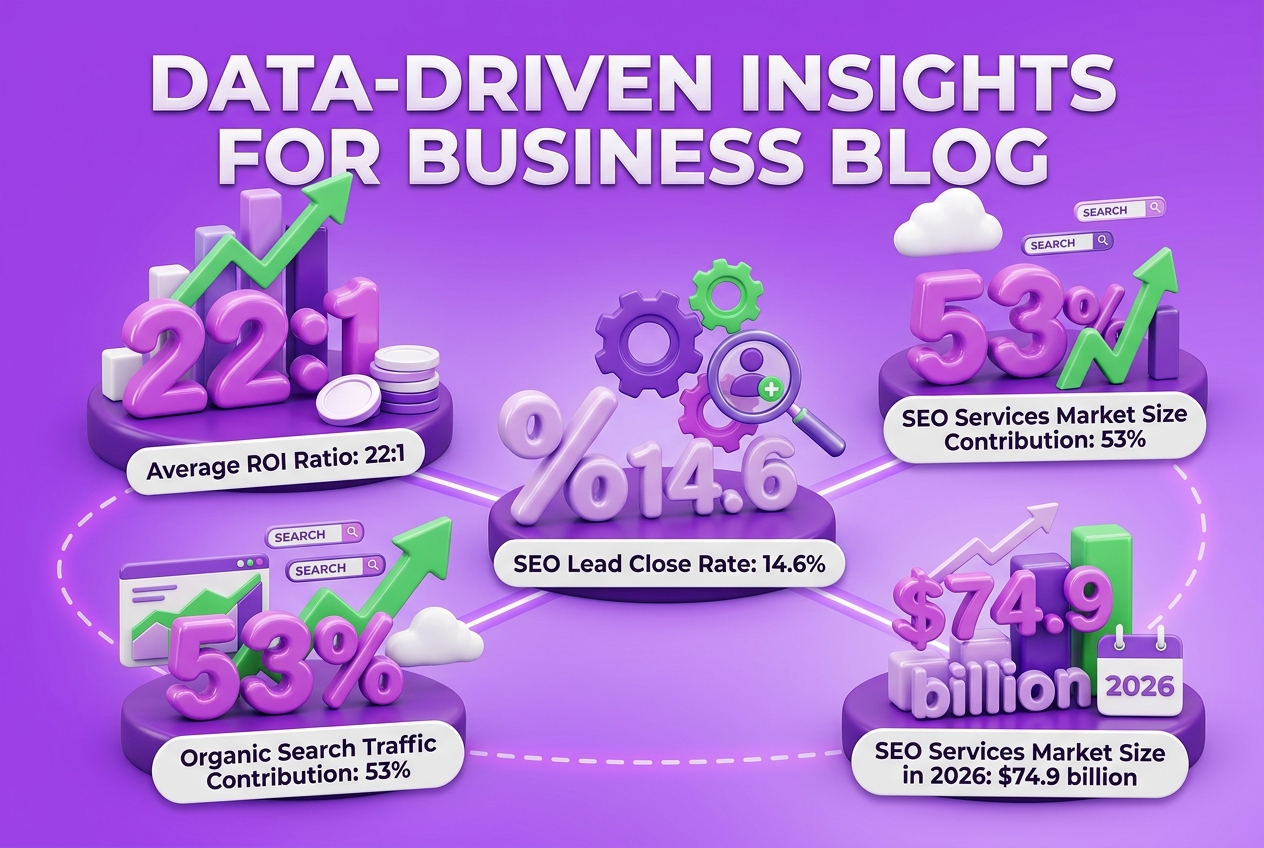
Standing out online as a photographer isn’t just about having a stunning portfolio — it’s about being found by people who need your unique style. I’ve seen photographers pour hours into their craft only to struggle with zilch traffic or inquiries. The truth is, SEO services tailored for photographers can shift that dynamic. SEO marketing offers an eye-popping 22:1 ROI, meaning every dollar spent can bring in $22 back, making it too good to ignore. This guide from TryRoki breaks down specific SEO strategies that actually work for photographers, including practical steps to get your website ranking and booking more clients.
| Point | Details |
|---|---|
| SEO ROI | SEO marketing delivers an average return on investment of 22:1, showing strong value. |
| Lead Conversion | SEO leads close at a rate of 14.6%, compared to just 1.7% for outbound marketing. |
| Traffic Source | About 53% of a photographer’s website traffic typically comes from organic search. |
| Brand Visibility | Around 35% of businesses report noticeable boosts in brand visibility due to SEO. |
| Content Engagement | A quarter of businesses see at least a 25% rise in content engagement through SEO. |
Understanding SEO and Its Importance for Photographers
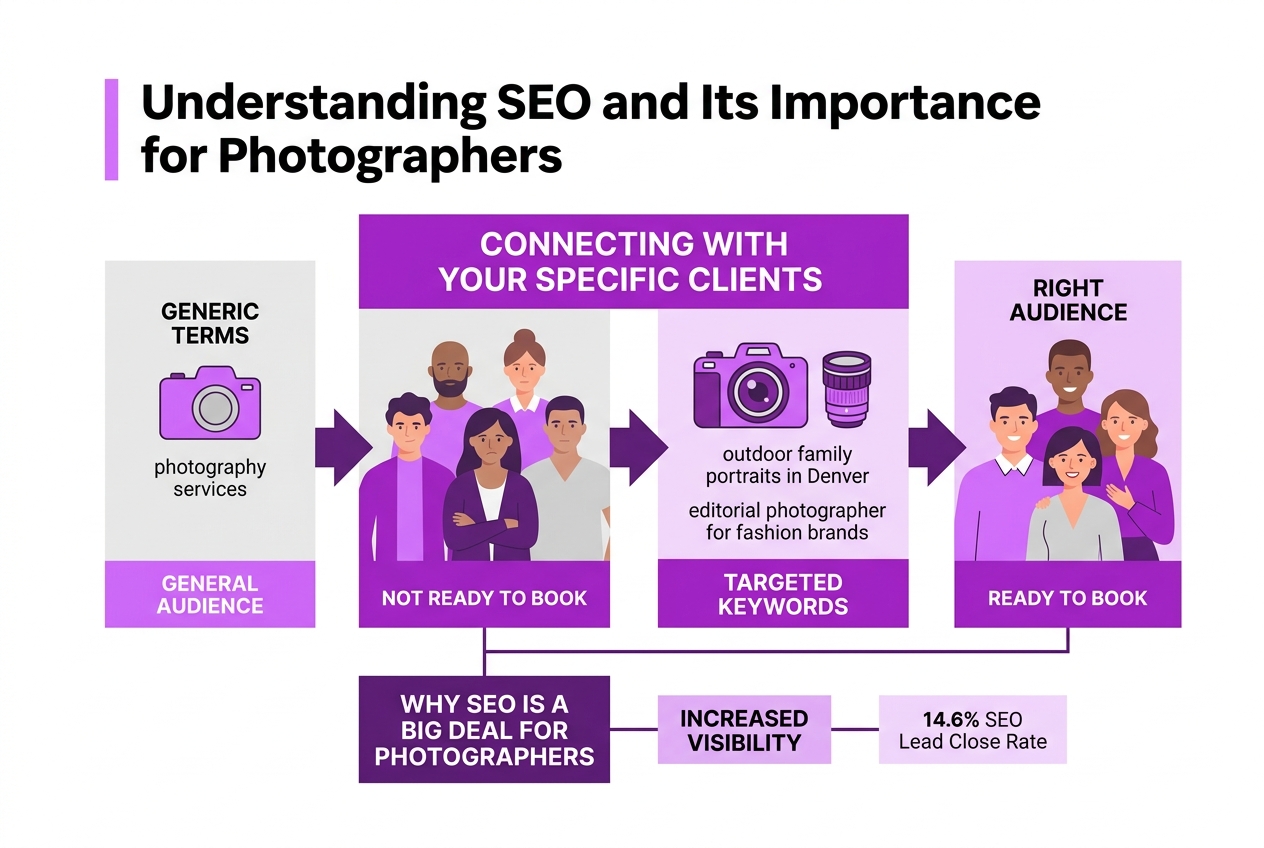
SEO, or Search Engine Optimization, means tweaking your photography website so search engines like Google rank it higher when people look for photography services. The whole point? To get found first when clients search for photographers nearby or specialty shoots like weddings or portraits.
For photographers, SEO isn’t just about ranking for generic terms like "photography services." It’s more nuanced. You need to target keywords that speak directly to your style and offerings—say, "outdoor family portraits in Denver" or "editorial photographer for fashion brands." This difference is crucial because generic SEO won't pull in the right audience ready to book you.
Here's why SEO is a big deal for photographers competing online:
- Increased visibility: You appear in front of potential clients exactly at their moment of need.
- Better targeting: Crafting content around specific keywords ensures your site attracts visitors likely to hire you.
- Higher credibility: Sites that show up early are trusted more by users.
- Ongoing promotion: Unlike paid ads that stop when you stop paying, SEO builds long-term organic traffic.
Most photographers struggle because they treat their website like an online portfolio only. SEO flips that around—it’s about making your site a client magnet.
Check this quick comparison of generic SEO vs. photographer-focused SEO:
| Aspect | Generic SEO | Photographer-Focused SEO |
|---|---|---|
| Keyword types | Broad, often commercial | Location + style-specific terms |
| Content focus | Generic service descriptions | Portfolio pages, blog with tips |
| User intent | Variety, sometimes unclear | Clearly booking-oriented |
| Image optimization | Secondary | Critical for visual appeal |
SEO ultimately drives people eager to book photography services right to your online doorstep. According to marketing studies, around 53% of website traffic comes through organic search, showing why neglecting SEO means missing out on over half of your potential clients.
Pro Tip: Focus on optimizing image alt texts and file names as essential photographer SEO tactics.
The next step dives into how you can practically boost your photography website's SEO, starting with critical on-page elements and content strategies.
Key SEO Strategies Photographers Should Implement
-
Nail your on-page SEO basics. Start with title tags that clearly say what your page offers, including your style of photography and location if possible. Your meta descriptions should be concise, inviting, and packed with keywords that potential clients might type when looking for a photographer. Don’t overlook image optimization — compress photos to speed up load times and use descriptive file names and alt text that includes keywords like “wedding photographer in Austin.”
-
Create content with local clients in mind. A lot of photography gigs come from nearby clients, so produce pages and blog posts around your city or neighborhood. For example, write about “best photo spots in Brooklyn” or “how to choose a family photographer in Chicago.” This shows search engines you’re relevant in that area and pulls in local traffic.
-
Use keywords your clients actually use. Generic terms like "photography services" are too broad and competitive. Instead, niche down with long-tail keywords such as “outdoor newborn photographer near me” or “affordable portrait studio in Denver.” These reflect the real search intent of your target audience and improve your chances to rank higher.
Pro Tip: Use AI-powered SEO tools for automated meta descriptions tailored for photography portfolios.
-
Keep your blog and portfolio fresh. Updating your portfolio regularly with recent shoots and writing blogs about your projects or photography tips signals that your site is active and relevant. Google loves fresh content, and potential clients get a feel for your style and reliability.
-
Don’t forget site speed and mobile friendliness. Slow-loading websites or sites that look bad on phones chase visitors away fast. I’ve seen photographers lose inquiries because their galleries took too long to load or their booking form was hard to navigate on a mobile screen. Use tools like Google PageSpeed Insights to spot issues and keep things smooth.
If you want to dig deeper into how to ensure your pages don’t confuse Google, you might take a look at a guide on verifying canonical links—important for avoiding duplicate content issues that can stall your SEO progress.
Next up, we’ll explore how understanding SEO fundamentals can give you an edge in the photography market.

Common SEO Mistakes Photographers Must Avoid
Photographers often pour their soul into their portfolios but stumble when it comes to SEO. The technical side can feel like a second language. From my experience running TryRoki, I’ve seen the same costly errors in photography websites that kill their search rankings.
Here are some of the most common SEO mistakes photographers make:
- Skipping image SEO: Missing alt text or using filenames like
IMG_1234.jpgtells search engines nothing about your photo. - Ignoring mobile optimization: Over 55% of online traffic comes from mobile devices. If your site isn’t mobile-friendly, you lose valuable visitors.
- Overlooking local SEO: Simple steps like claiming your Google My Business profile can boost local client discovery.
- Copying content: Using the same descriptions or galleries found elsewhere hurts your site’s uniqueness and rankings.
- Neglecting backlinks: Without links or citations from relevant photography blogs or industry sites, your authority suffers.
Pro Tip: Regularly audit your website’s canonical URLs to prevent SEO penalties due to duplicate content. Check out how to maintain this clean setup to avoid getting penalized and confusing search engines.
Among these, image SEO gets misunderstood a lot. You might think uploading beautiful photos is enough, but without descriptive alt tags, Google has no context. Naming your files with keywords relevant to the shoot — for example, wedding-ceremony-bride.jpg instead of IMG_1234.jpg — can make a significant difference.
Mobile optimization is another area where photographers underestimate its impact. Sites that appear cramped or load slowly on phones not only frustrate visitors but also get ranked lower by Google. Investing time in responsive design pays off because potential clients search on the go.
Local SEO remains an untapped opportunity for many. When you optimize for location-based searches and maintain an updated Google My Business listing, your studio is more likely to show up when clients nearby look for photographers.
Lastly, backlink building seems daunting but is indispensable. Outreach to related wedding blogs, creative directories, or vendor partners to earn links that point back to your site. These signals show search engines that your site is trusted and relevant.
Avoiding these mistakes requires attention to detail and a bit of ongoing effort. However, fixing them can drastically improve your site’s performance in search results.
Next, we’ll explore key SEO strategies tailored specifically for photographers who want to stand out online.
Measuring SEO Success and ROI for Your Photography Business
Tracking SEO success for your photography business goes beyond just feeling like your website ranks better. You need clear numbers to know if your efforts pay off. Focus on four main metrics: keyword rankings, site traffic, lead generation, and conversion rates. Rankings tell you how visible your site is on search engines for targeted terms. Traffic shows how many visitors you're drawing in, while leads and conversions reveal if those visitors become potential clients or bookings.
Here’s a rough timeline for what you might expect when investing in SEO:
- Month 1-3: Establish baseline data and start seeing small traffic bumps.
- Month 4-6: Notice improvements in keyword rankings and more steady visitor flows.
- Month 7-12: Leads start to increase noticeably, with a better conversion rate.
- Beyond 12 months: SEO gains translate into consistent bookings and tangible revenue growth.
Don’t expect an immediate flood of clients—SEO is a slow build. But within a year, you should see revenue impact.
A typical ROI for SEO can be striking. For example, SEO marketing returns an average of $22 for every $1 spent, a 2,200% return. That’s huge compared to other marketing channels, especially for photographers who rely on local searches and visual portfolios.
The higher close rate of SEO leads – 14.6% compared to 1.7% from outbound methods – means more of your website visitors turn into paying clients, boosting your bottom line.
For tracking, tools like Google Analytics and Google Search Console are essentials. They give data on visits, bounce rates, and search queries. Using keyword ranking trackers helps you monitor the exact positions your pages hold. If you want to dig deeper, automated tools can help streamline this without drowning you in numbers.
One snag many photographers face is confusing data overload. Focus on the metrics that directly impact bookings and revenue. This focus keeps your SEO efforts aligned with business goals.
Getting a handle on your SEO success lets you adjust strategies ahead of time and proves the value of your investment. That clarity is crucial whether you’re managing SEO yourself or working with a service.
Understanding these nuances lays a solid foundation for the next step: selecting the right SEO service for your photography business.
My Honest Take on SEO Services for Photographers
When I started TryRoki, I noticed that many photographers focus so much on crafting the perfect portfolio that they overlook the real challenge: getting discovered. This surprised me, but it makes sense—beautiful work won't boost your bookings if potential clients can’t find your site. The common belief that social media alone will drive enough traffic is misleading. I've seen organic search consistently outperform social media in bringing clients who are ready to book rather than just browse.
That said, SEO isn't a magic fix—it’s technical and often frustrating. Many photographers struggle with optimizing their website's backend or struggle to balance fresh content with local targeting. Ignoring these aspects means missing out on serious opportunities. For photographers, it’s crucial to blend high-quality imagery with well-executed SEO strategies that include technical fixes and local search optimization. This combo helps you stand out in a crowded market where everyone's chasing the same clients.
It’s not just about ranking high; it’s about connecting with the right people. If you want to elevate your photography business, don’t underestimate the role of targeted, consistent SEO work alongside your creative craft.
— Daniel
Elevate Your Photography Business with TryRoki’s AI-Powered SEO Tools
Managing SEO alongside photography can feel like juggling two completely different careers. When I started TryRoki, my goal was to ease that pressure by automating the tedious parts — stuff like content creation and backlink building — tailored specifically for photographers. The catch? Automation isn’t magic. You still have to review the suggestions and adjust them to your style, or the results won’t shine.
TryRoki sends weekly actionable SEO tasks, which I find more practical than vague advice. It nudges you gently without flooding your inbox, helping your website gain steady Google traction over time. If you want to understand how these tasks integrate with your current workflow, checking out the detailed features list helped me set it up efficiently.
And pricing is straightforward, no hidden fees, which I’ve appreciated every month I’ve run it in production. If you’re serious about growing your photography client base without spending hours on SEO, give those plans a look at TryRoki pricing. It won’t make SEO effortless, but it cuts out the grunt work while you focus on your craft.
Frequently Asked Questions
Photographers should focus on combining their niche and location, such as “wedding photographer in New York” or “portrait photography services in Denver.” Targeting around 5 to 7 specific, localized keywords usually helps attract clients who are actively searching for your exact services. Trying to cover too many broad keywords can waste effort without much return.
Typically, seeing clear SEO results takes about 3 to 6 months, depending on how competitive your market is and how optimized your site already is. Many clients get discouraged early because they expect quick results, but steady updates and content tweaks are what truly move the needle.
You can handle many SEO tasks without deep technical know-how, especially with AI tools like TryRoki that automate common chores like writing meta descriptions and generating content ideas. That said, some tasks like fixing site speed or structured data still require basics in web management or outside help.
Local SEO matters a lot since around 46% of Google searches have local intent, meaning your potential clients are often looking for services nearby. Ignoring local SEO can mean missing out on almost half of the people actively hunting for photographers in your area.
Good SEO doesn't just drive more visitors—it improves the quality of those visitors, too. Studies show SEO leads close at about 14.6%, well above many other marketing methods, which means better traffic often translates directly into more booking inquiries, not just empty clicks.
Written by Aleksandra.
Recommended reads
- Meta Description Writer How To Craft Effective Seo Snippets
- What Is Automated Seo A Strategic Guide For 2024
- Canonical Link Check How To Verify Optimize For Seo
- Google Rank Tracker Api How To Use It For Seo Success