Daniel D.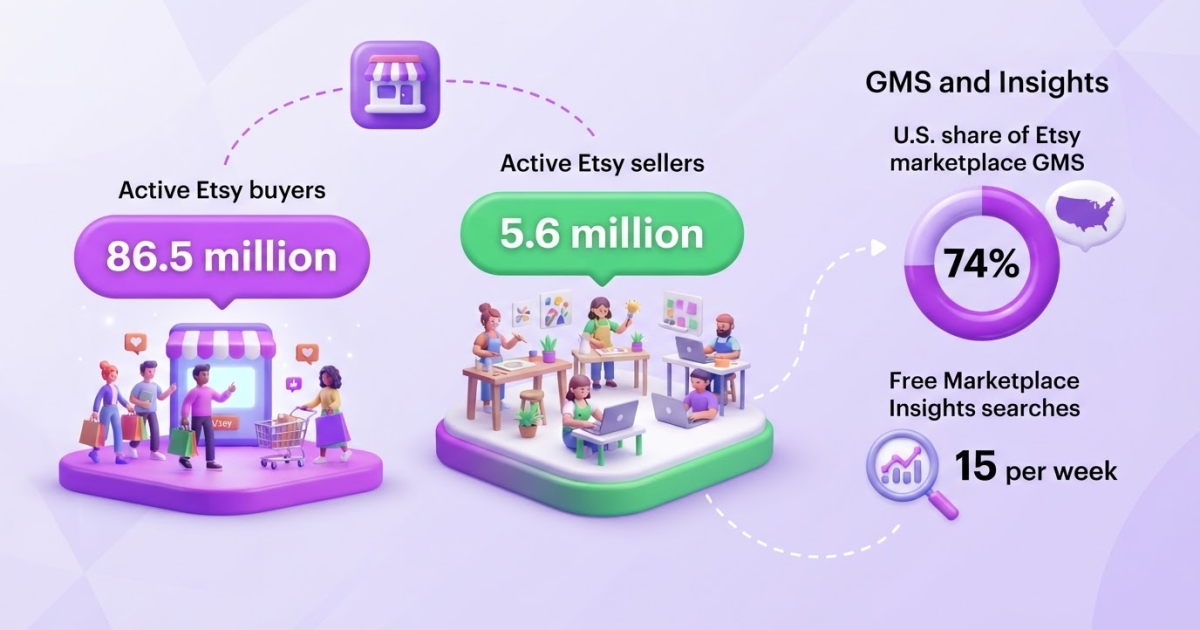
Etsy market research helps you find products, keywords, buyers, and competitive gaps before you spend money on inventory or build listings. Compare Etsy search results with competitor reviews, trend signals, and your Shop Stats, then use those findings to choose opportunities and improve your listings. Roki AI can also give you 3 to 10 weekly tasks to support your visibility in Google and AI search.
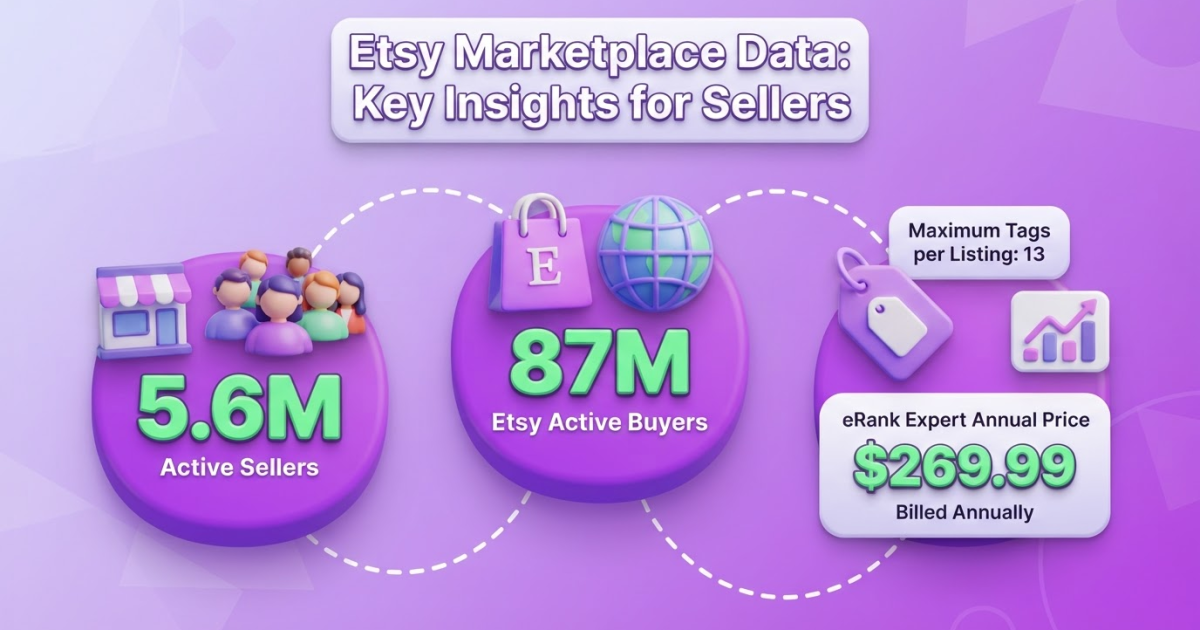
Launching an Etsy product on instinct can leave you with money tied up in materials, hours spent making listings, and no reliable sign that shoppers will care. Etsy market research gives you a repeatable way to decide what to make, who to target, and how to position it instead of treating one keyword result as proof. The marketplace reported 86.5 million active buyers and 5.6 million active sellers as of December 31, 2025, so guessing is an expensive strategy. This guide covers niche selection, demand validation, competition checks, research methods, listing tests, and a practical workflow for refining your next product with performance data.
Table of Contents
- What Etsy Market Research Actually Includes
- A Step-by-Step Etsy Market Research Workflow
- Which Research Signals Should Sellers Trust?
- Turn Research Into Listings That Can Compete
- Common Etsy Market Research Mistakes
- My Honest Take on Etsy Market Research
- Turn Etsy Research Into Consistent Content and Visibility
- Frequently Asked Questions
- Recommended reads
- Sources
| Point | Details |
|---|---|
| Start With Demand | Use Etsy keyword data and marketplace signals to confirm what shoppers actively search for before you create a product. |
| Study The Gap | Compare at least 10 competing listings for pricing, presentation, reviews, personalization, and unmet customer needs. |
| Use First-Party Data | Etsy Marketplace Insights covers searches and listings from the previous 30 days, while Shop Stats reports visits, orders, conversion rate, and revenue. |
| Test Small Bets | Validate 3 to 5 product or listing concepts before committing significant inventory, production time, or advertising budget. |
| Review Every Month | Revisit your research and listing performance at least once every 30 days because demand, competition, and search behavior change. |
What Etsy Market Research Actually Includes
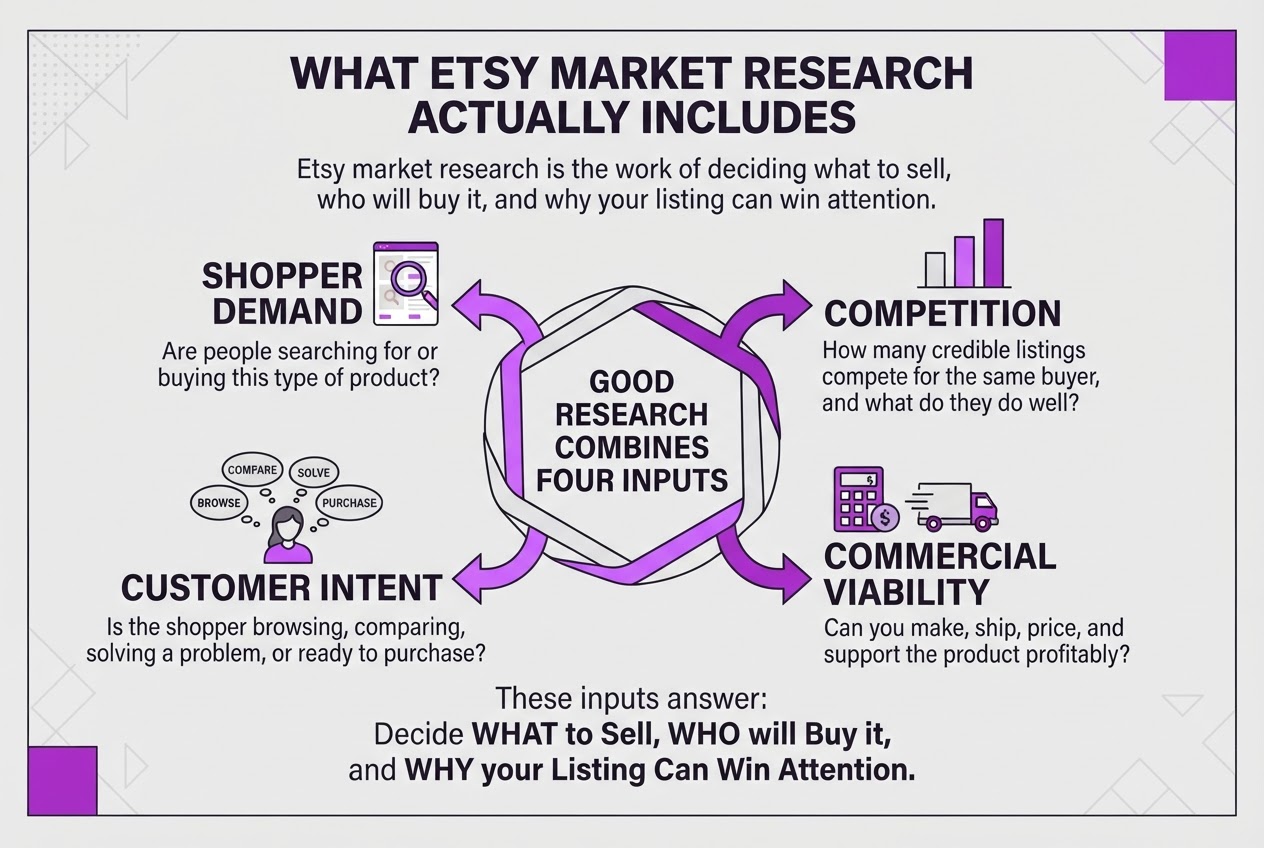
Etsy market research is the work of deciding what to sell, who will buy it, and why your listing can win attention. When I review product ideas, I do not stop at search volume. A keyword can look attractive while the product has weak margins, unclear demand, or buyers who expect a price you cannot profitably match.
Good research combines four inputs:
| Input | What you are trying to learn |
|---|---|
| Shopper demand | Are people actively searching for or buying this type of product? |
| Competition | How many credible listings compete for the same buyer, and what do they do well? |
| Customer intent | Is the shopper browsing, comparing, solving a problem, or ready to purchase? |
| Commercial viability | Can you make, ship, price, and support the product profitably? |
These inputs answer different questions. Niche research examines a product area, such as minimalist wedding invitations. Keyword research examines the language shoppers use, such as “editable wedding invitation.” Competitor research studies another shop’s price, photos, reviews, materials, and positioning. Target-customer research identifies the person, situation, budget, and frustration behind the purchase.
That distinction matters because Etsy is crowded. As of December 31, 2025, the marketplace had 86.5 million active buyers and 5.6 million active sellers, and more than 100 million items were listed in 2025. “Home decor” is not a useful position by itself. “Renter-friendly coastal wall art for small bedrooms” gives you a narrower buyer and a clearer product decision.
Pro Tip: Research the customer problem behind a keyword, not only the keyword itself. Two phrases with similar volume can represent very different buying intent.
Your finished research should fit on one working page:
- Target buyer and purchase situation
- Product angle and meaningful difference
- Keyword set, using a practical Etsy keyword research process
- Competitor benchmark for price, presentation, reviews, and delivery
- Validation plan, including a small listing test and a review date
That output guides product selection, pricing, listing copy, photography, and launch timing. It also exposes annoying truths early, such as a beautiful product that takes too long to make or a seasonal idea launched three weeks too late. The next step is turning those inputs into a repeatable workflow.
A Step-by-Step Etsy Market Research Workflow
-
Start with a broad category. Write down a category such as wedding décor, pet accessories, wall art, or personalized gifts. Then expand it into buyer problems, occasions, styles, materials, and personalization angles. For example, “wall art” can become nursery name print, minimalist kitchen print, housewarming gift, printable watercolor, or custom birth flower poster.
-
Turn those angles into keyword candidates. Build a list of roughly 15 to 30 phrases that describe a product a buyer could actually order. Include specific combinations such as “personalized dog memorial,” “boho nursery print,” and “linen wedding sign,” not just broad terms such as “gift” or “art.” Broad keywords look attractive, but they usually hide fierce competition and unclear buyer intent.
-
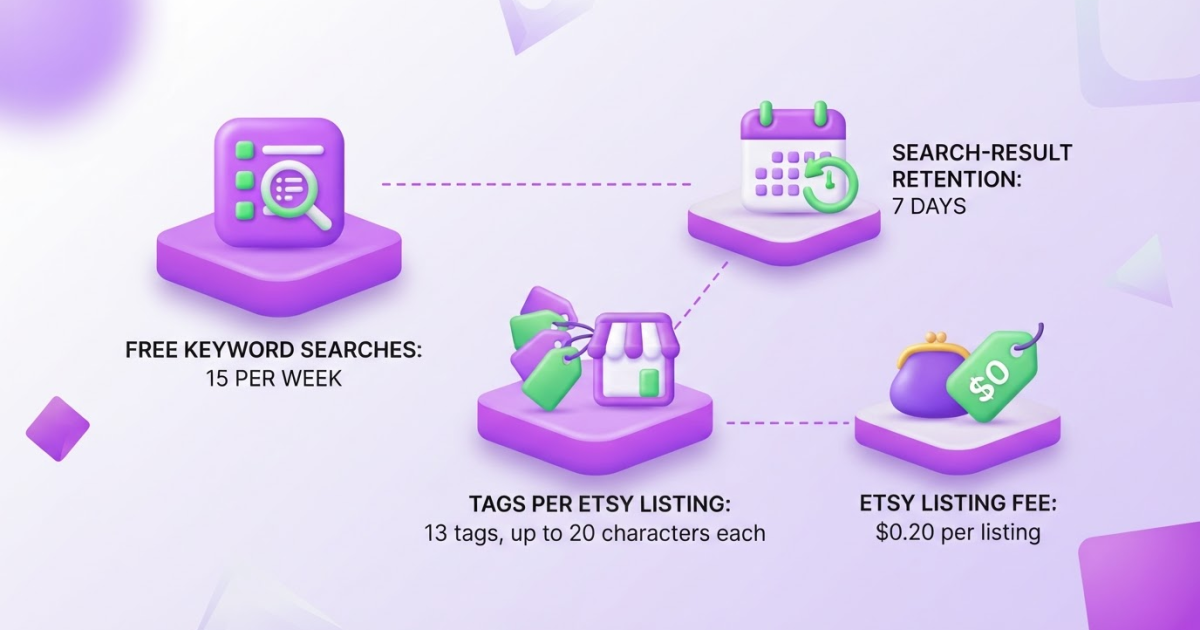
Check each phrase in Etsy Marketplace Insights. The tool shows searches and listing counts from the previous 30 days for individual keywords. Free sellers can explore up to 15 keyword searches per week, so use those searches on variations of one product idea instead of burning them on unrelated categories. A keyword with demand but fewer competing listings deserves a closer look, although raw search volume never proves that buyers will choose your product.
Pro Tip: Cap the first research pass at 15 keyword searches if you use Etsy’s free Marketplace Insights access. Spend the limit on variations of one product concept rather than unrelated ideas.
-
Inspect the first page manually. Record the first 24 to 48 competing listings in a spreadsheet. Capture price, review count, estimated value proposition, image quality, personalization details, materials, shipping promise, and available variations. Read recent reviews too. They often reveal the real product gap, such as confusing sizing, weak packaging, slow proofs, or colors that look different from the photos.
-
Score the opportunity before you make anything. Give each idea a 1-to-5 score for demand, competition, differentiation, production feasibility, and margin. Add the scores, but do not blindly choose the highest total. A product may have strong demand and low competition yet require custom work that takes 45 minutes per order and leaves no room after Etsy fees, packaging, and shipping.
-
Choose the listing direction. Select one primary keyword, three to five supporting phrases, and a clear product promise, such as “custom linen wedding sign delivered with a proof within two business days.” Keep your notes in a spreadsheet or structured research document so every idea uses the same criteria. This practical Etsy keyword research guide can help you organize the keyword stage, but your competitor notes and cost calculations should remain your own.
With the opportunity chosen, turn that promise into a listing that matches the search term and gives shoppers a concrete reason to buy.
Which Research Signals Should Sellers Trust?
The signal I trust depends on the decision in front of me. Etsy Marketplace Insights shows keyword searches and listing counts from the previous 30 days, but free sellers get only 15 searches each week. That makes it useful for narrowing a product idea, not proving that the idea will make money. Etsy keyword research guidance can help you organize those searches without wasting them.
Competitor listings add the missing context. Read recent reviews to spot complaints, compare prices against materials and shipping, and inspect favorites, photos, personalization options, and listing quality. A crowded result page does not automatically mean demand is strong. It can mean sellers copied one phrase while competing on thin margins.
Trend reports help with timing and product angles. Etsy’s 2026 trend report compares search and sales data from the previous three months with the same period a year earlier, so it can reveal rising seasonal language. It cannot tell you whether your version will convert, ship profitably, or stand out. Validate the actual product before buying inventory.
For an established shop, Shop Stats beats generic market assumptions. Etsy lets you review visits, orders, conversion rate, and revenue over selected periods, while its reports show the keywords and traffic sources sending shoppers to individual listings. I would trust a listing’s own conversion and revenue trend over a broad “people are searching for this” claim, even when the trend looks exciting.
| Selling situation | Give most weight to | Use cautiously |
|---|---|---|
| New product | Keyword demand, competitor reviews, price and margin checks | Search interest alone |
| Seasonal product | Trend reports, prior seasonal timing, competitor stock and pricing | Last year’s trend without product validation |
| Established listing | Shop Stats, conversion rate, revenue, traffic sources | Generic keyword volume |
| Declining listing | Recent reviews, traffic changes, conversion, new competitor offers | Favorites without sales evidence |
Free Etsy tools cost nothing and use marketplace data, but they offer limited history and depth. Paid keyword or analytics platforms can save time by combining more keywords, competitor snapshots, and historical estimates. They are sometimes stale or modeled, so pay for one only when it changes a decision you can measure. For a broader comparison, see this Etsy analytics tool guide.
Pro Tip: Give the highest weight to signals closest to a purchase: repeatable sales evidence, strong conversion, review language, and a viable margin, not just a popular phrase.
Once you weigh the signals by product stage, you can turn the evidence into a practical go or no-go decision.

Turn Research Into Listings That Can Compete
A spreadsheet of keywords is not the finished product. Turn each useful buyer phrase into a listing decision: put the clearest phrase in the title, support it with relevant tags, and repeat the buyer’s natural wording in the first lines of the description. Then match it with the right attributes, photo concept, and personalization choice. If shoppers search for “custom pet portrait from photo,” show the finished portrait beside the uploaded reference, explain the proof process, and offer a clear name or date option.
Competitor gaps should sharpen your promise, not push you into a price war. If similar listings hide their size guide, use a comparison photo. If delivery times are vague, state “proof sent within 3 business days.” If personalization feels confusing, show one completed example. Cheap prices are easy to copy and often leave you with less room for packaging, revisions, and customer support.
I use this launch timeline because it creates evidence without waiting forever:
- Day 0: Publish the listing with one focused promise, complete attributes, relevant tags, and images built around the buyer’s main concern. Etsy search considers title and tag relevance, listing quality, customer and marketplace experience, recency, shop location, and shop diversity, so keywords alone will not carry a weak listing.
- Days 1 to 14: Watch impressions or visits, traffic source, favorites, and early messages. Do not panic over a quiet first few days, but investigate if the listing receives visits from irrelevant searches.
- Day 30: Compare visits, favorites, conversion rate, orders, revenue, and traffic source in Etsy Shop Stats. A visit increase with no favorites suggests a weak offer or image. Favorites without orders can point to price, delivery, trust, or personalization friction.
- After day 30: Change one variable at a time. Test the first photo, then the title, then the price or personalization setup. Record the date and change, and give the next version enough traffic to judge it fairly.
That discipline turns Etsy market research into a repeatable commercial test, which gives you a clearer basis for the next research decision.
Common Etsy Market Research Mistakes
The most expensive Etsy research errors usually look sensible at first. A large category, a popular listing, or a rising keyword can still produce a weak business once you examine the buyer, workload, and margin.
- Choosing volume over a buyer: “Home decor” can attract searches, but it does not tell you whether the buyer wants a housewarming gift, a renter-friendly print, or a nursery item. Define one person, occasion, and use case before judging demand.
- Copying the leaders: Reproducing the first page gives you the same photos, wording, and offer as sellers with older reviews. Study those listings for gaps instead: poor size options, slow personalization, unclear bundles, or weak gift messaging.
- Ignoring the full cost: Calculate materials, packaging, shipping, production time, personalization labor, returns, ads, and payment costs. Etsy charges a $0.20 listing fee and a 6.5% transaction fee on the total order amount, including shipping when charged. Do the keyword research before you build the listing, but do not mistake traffic for profit.
- Treating listing count as competition: Thousands of results do not reveal sales quality, review age, conversion, or how closely listings match the query. Reviews also show accumulated history, not necessarily current demand.
- Trusting one report or tool: Compare trend data with Etsy Marketplace Insights, competitor changes, and your own Shop Stats. One trend report can be stale, and one keyword tool can reflect estimates rather than buyers.
- Changing everything at once: If you replace the title, tags, photos, price, and product together, you cannot tell what affected visits or orders. Change one major variable, then watch results for at least two to four weeks.
Before publishing, check that you can answer five questions: Who buys this? What exact problem or occasion does it serve? What is the net profit after every cost? Which underserved angle makes it distinct? Which one change will you test first?
That checklist gives you a cleaner starting point for interpreting listing performance in the next section.
My Honest Take on Etsy Market Research
I treat Etsy market research as a judgment system, not a hunt for a magic keyword or a guaranteed bestseller. The contrarian point is that sellers usually spend too much time estimating demand and too little time studying the buyer’s decision. A modest keyword opportunity with a clear, defensible product angle can be healthier than a crowded category with impressive search interest.
I start with Etsy’s native data, then read competitor reviews closely. The complaints matter more than the star ratings because they show where buyers feel disappointed, confused, or forced to compromise. I also calculate the margin before I get excited about demand. A product that sells but leaves little after materials, fees, shipping, and revisions is not a strong opportunity.
I treat each launch as a measured experiment. I write down the hypothesis, publish one focused listing, choose a review period, and change one meaningful variable at a time. That process is frustrating when early traffic stays quiet, but random changes only hide the real cause. Research should reduce avoidable risk, not eliminate uncertainty. Over time, I want a library of customer language, conversion evidence, and tested product angles that makes every launch less of a guess.
— Daniel/Aleksandra
Turn Etsy Research Into Consistent Content and Visibility
Market research tells you who to serve, which product angle has room, and which Etsy keywords deserve attention. The harder part is keeping that insight alive beyond your listings. You still need useful website pages, supporting articles, and regular visibility work, and those jobs are easy to postpone when orders take over.
That is where Roki AI’s automated content workflow fits. Roki can create website content on autopilot and give you 3 to 10 weekly tasks aimed at improving your visibility in Google and AI search engines. Its Reddit discovery feature can also surface relevant conversations where a genuinely useful, non-spammy comment may make sense.
Roki does not validate Etsy demand or choose your products for you. Those decisions need your judgment. It helps maintain the broader content system around your shop and brand, although you will still need to review drafts and skip opportunities that feel forced.
Frequently Asked Questions
Combine buyer demand, competitor gaps, production feasibility, and contribution margin instead of trusting search interest alone. Compare at least 10 relevant listings, calculate your expected profit after materials, fees, packaging, and shipping, then test the strongest concept with one focused listing.
Etsy Marketplace Insights is the most direct free starting point because it reports search and listing data from the previous 30 days. Free sellers can explore up to 15 keyword searches per week, so use those searches around one product concept rather than spending them on unrelated ideas.
Analyze at least 10 directly competing listings for a useful first-pass benchmark, then expand to 20 if the category is crowded or seasonal. Record prices, review counts, photos, personalization options, shipping expectations, and repeated customer complaints so you can spot gaps buyers actually mention.
Set an initial 30-day review checkpoint after launch, since traffic, seasonality, price, and shop history can distort early results. Review visits, conversion rate, favorites, orders, revenue, and traffic sources, then decide whether to improve, reposition, or discontinue the listing.
Yes, it can show the words and intent shoppers use, which helps you write titles, tags, descriptions, product pages, and related website content. It does not guarantee rankings or sales because Etsy also considers listing quality, customer experience, recency, and other search criteria, so treat keyword research as one input rather than a shortcut.
Written by Daniel/Aleksandra.
Recommended reads
- Etsy Keyword Research A Practical Guide
- Etsy Analytics Tool How To Use One Well
- Best Free Etsy Keyword Tool 2026 Guide
- Etsy Seo Tools Guide Boost Your Shop Visibility Effectively