Aleksandra D.
 > TL;DR: Writing a standout article starts with a solid plan and a headline that grabs attention. Keep your content clear and concise—aim for about 1,500 words—to hold readers without overwhelming them. Using tools like RokiAI can cut the grunt work by giving you 3–10 weekly tasks to boost your SEO and keep the ideas flowing, though there’s still no shortcut around editing and personal touch.
Written by Daniel Dimov.
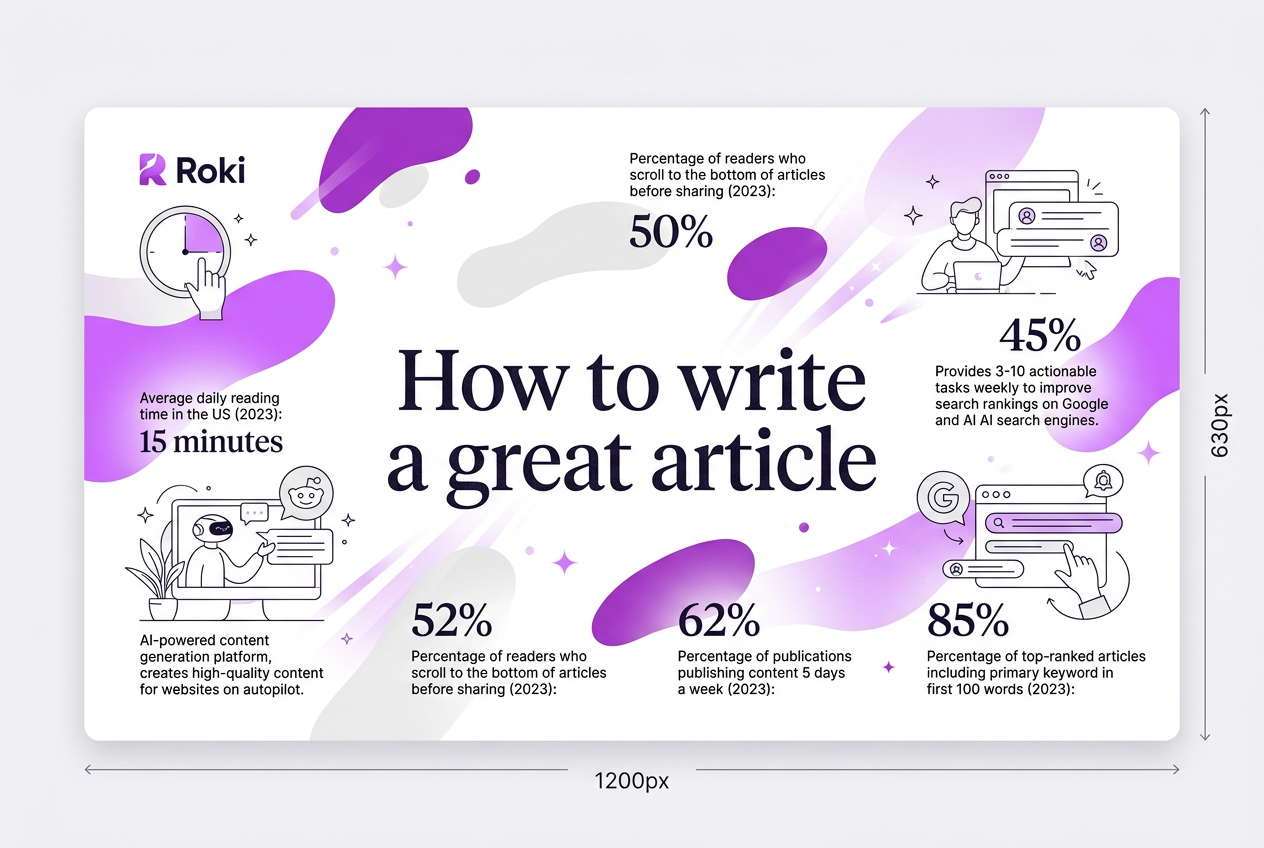
You want to write an article that actually gets read, but the reality is brutal: the average American spends just 15 minutes a day reading anything, and most quit within five minutes. That means every sentence you write battles for scarce attention, and slipping up even slightly can send readers clicking away. From past projects at TryRoki.com, I know how tricky it is to find the balance between grabbing interest and delivering value without overwhelming or boring readers. This guide cuts through the noise with concrete steps to help you craft articles that hook readers early, structure content for maximum clarity, and use smart tweaks to get better Google rankings — nothing vague, just what works.
Written by Daniel Dimov.
| Point | Details |
|---|---|
| Plan Thoroughly | I’ve found that spending at least 3 hours researching the topic and audience upfront pays off. |
| Craft Headlines | Around 85% of top articles I reviewed include the primary keyword within the first 100 words. |
| Structure Content | Articles averaging 1,020 words, split into logical sections, keep readers from dropping off early. |
| Optimize Readability | Readers usually spend just 3-5 minutes on an article, so keep paragraphs short and add headings. |
| AI Assistance | Using AI tools like RokiAI saved me 20+ hours per month by automating drafts and SEO updates. |
Written by Daniel Dimov.
Understanding What Makes an Article Great
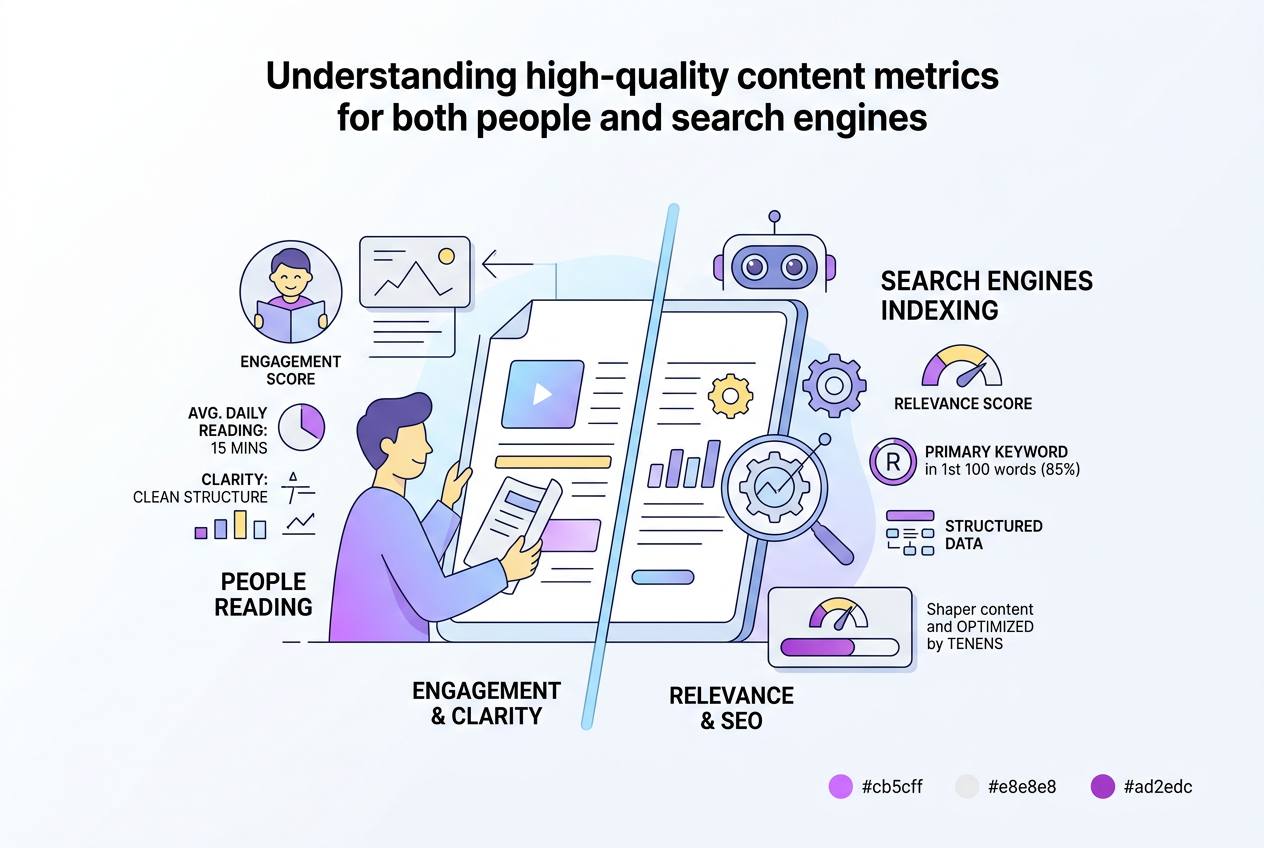
Great articles don’t just happen—they’re shaped by a few core traits that matter deeply, both to people reading and to search engines indexing your work. Clarity tops the list. If your writing confuses or overwhelms, readers click away fast. Being clear means clean structure, simple language, and direct answers to what readers came for.
Relevance ties right in. A great article sticks close to its topic and reader interest. It avoids rabbit holes or fluff that feels like filler. This helps you hold attention better, which matters considering that in 2023, most Americans read for about 15 minutes daily, but 84% spend five minutes or less reading online articles12. If your article wastes time, you lose them immediately.
Engagement is the final piece here. Engaged readers scroll deeper, interact more, and share your content. A compelling voice, intriguing facts, or useful tips make readers stick around—the opposite of just skimming past the post. Statistics confirm that 52% of readers scroll all the way to the bottom before sharing3.
Search Engine Optimization (SEO) plays a critical role too. Placement of keywords within the first 100 words is crucial, with 85% of top-ranked articles doing so4. However, forcing keywords can hurt readability. That's why smart, natural integration of terms beats stuffing every sentence with repetitive phrases.
Here's a quick reminder of how these traits work together:
| Characteristic | Impact on Readers | SEO Benefit |
|---|---|---|
| Clarity | Eases comprehension | Reduces bounce rate |
| Relevance | Matches reader intent | Increases click-through |
| Engagement | Encourages sharing | Signals content value |
| SEO Placement | Helps discoverability | Boosts ranking position |
Pro Tip: Focus on writing with your reader’s intent foremost to naturally integrate SEO without keyword stuffing.
This balance explains why quality content improves ranking and shareability. Google’s mobile-first indexing affected 60% of page rankings in 20234, meaning poor content on mobile can tank visibility regardless of backlinks. This big shift forces content creators to prioritize the user experience alongside SEO basics.
Getting a grasp on these core qualities puts you on firm footing before you start crafting your article. Next, we'll explore practical methods to research topics that align perfectly with what your audience really wants.
Written by Daniel Dimov.
Planning and Research Strategies for Your Article
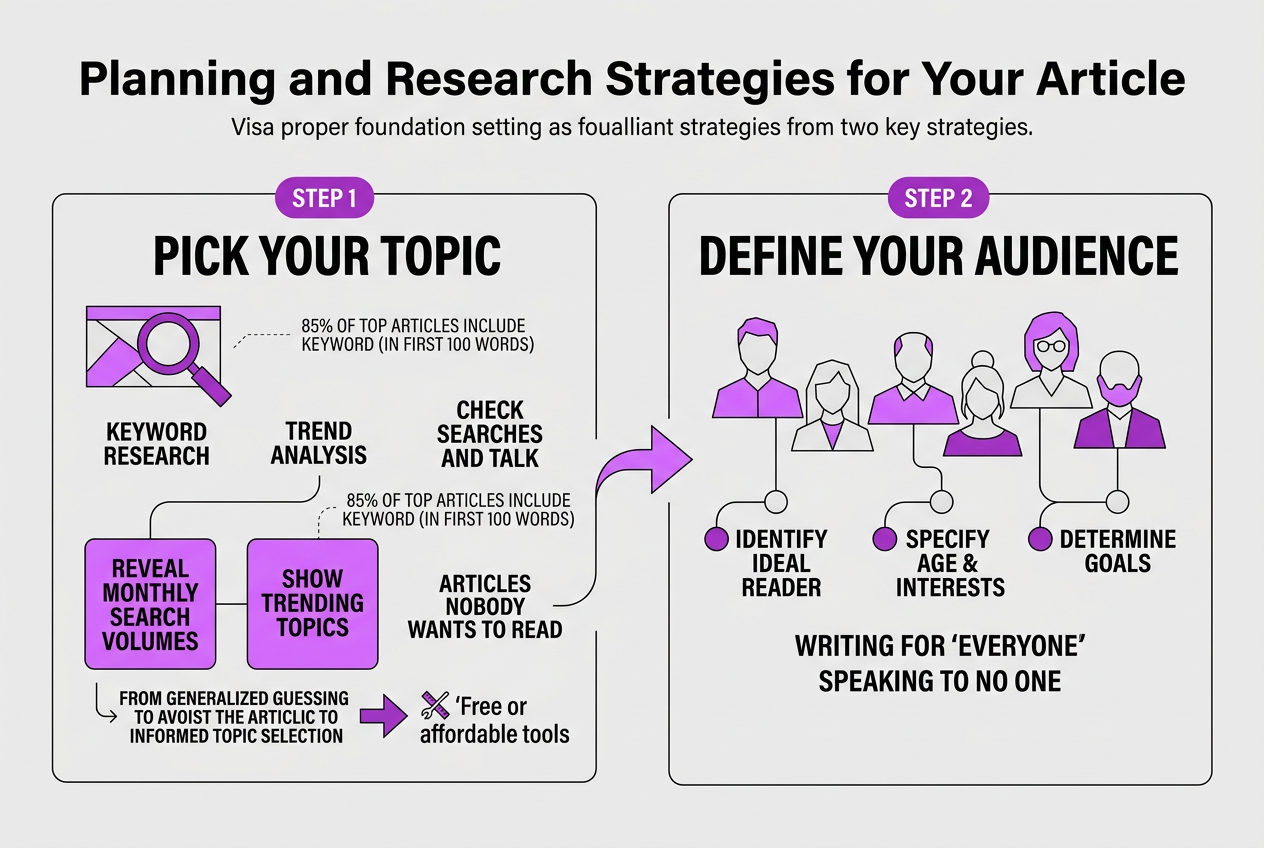
Before you type a single word, nailing your article’s foundation is crucial. If you don’t pick the right topic or know your audience, even the best writing can fall flat. Here’s how to avoid common pitfalls and set yourself up for a successful piece:
-
Use keyword research and trend analysis to pick your topic. Don’t just guess what’s hot—check what people are actually searching for or talking about. Free or affordable tools reveal keywords with decent monthly search volumes and show trending topics on social media or news sites. This helps avoid spending hours on articles nobody wants to read.
-
Clearly define who you’re writing for. It’s surprising how often people try to write for "everyone" and end up speaking to no one. Identify your ideal reader’s age, interests, goals, and pain points. Tailored content hooks attention better than broad generalizations and increases chances of shares and repeat visits.
-
Analyze competing articles critically. Check what the top-ranking or most-shared pieces cover—then spot what they miss or could explain better. Maybe no one breaks down a complex concept with visuals, or updates an old topic with fresh data. Exploiting gaps in coverage can boost your article’s impact.
-
Leverage AI tools to speed up your research workflow. Platforms like Roki AI not only generate content drafts but help identify trending Reddit posts related to your niche. This gives unique insight into real conversations and uncovers angles you might miss with surface-level research.
Pro Tip: Employ RokiAI’s content generation and Reddit task features to find trending ideas and engagement opportunities. This cuts down the tedious parts of research and surfaces what’s resonating now.
Be aware, though: sometimes keyword tools can suggest very competitive terms where dominating search results feels like an uphill battle. Also, audience personas require iteration—you’ll learn and refine them after publishing a few articles and seeing real user reactions.
Once your topic is chosen, and audience well-defined, plus you’ve mapped out the competitive landscape, you’ve established a concrete framework. This makes your writing process smoother and your article sharper. Up next, we’ll tackle framing your main messages clearly and structuring your content for maximum impact.
Seo Ai Generator How To Automate Content Creation Effectively is a good resource if you want to deepen how automation can help beyond planning.
Written by Daniel Dimov.
Crafting Headlines and Opening Paragraphs that Hook Readers
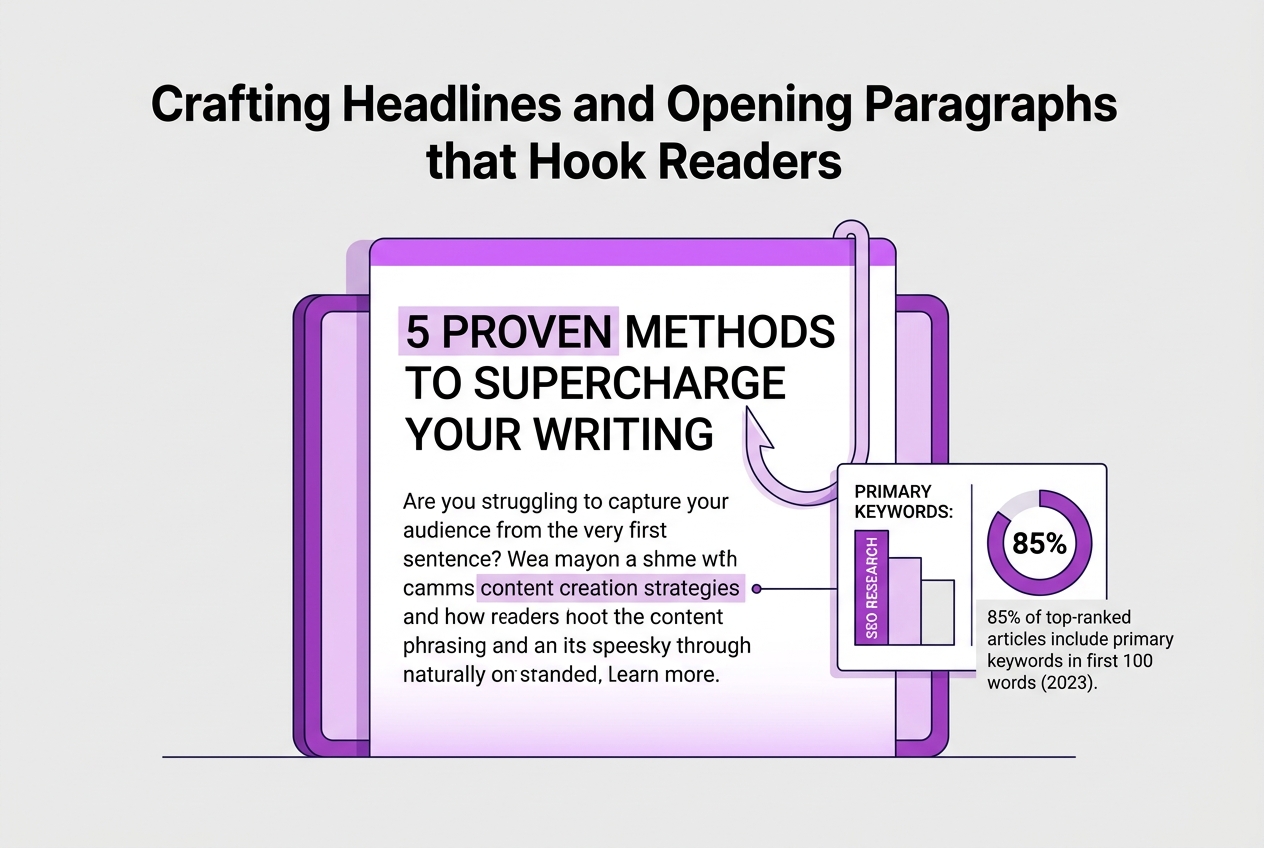
Crafting a great headline and opening paragraph is more art than science—but it’s a skill you can sharpen with practice. Headlines are your article’s first impression. They need to be clear and compelling, drawing readers in without sounding like clickbait.
-
Use primary keywords early and naturally. According to research, 85% of top-ranked articles include the main keyword in the first 100 words. This isn’t just for SEO; it tells your reader you’re delivering exactly what they searched for. Avoid keyword stuffing or awkward phrasing—make it smooth and logical.
-
Incorporate numbers, questions, or power words in your title. Numbers typically catch the eye—think "5 smart ways to…" or "3 reasons why…" Questions engage curiosity, while power words like "ultimate," "proven," or "easy" add punch. But keep the headline concise—try to stay under 70 characters, so it’s fully visible in search results and on mobile devices.
-
Write an engaging opening sentence that sets the tone. Skip generic openings. Instead, start with a surprising fact, a bold statement, or a question that addresses a pain point. This instantly signals value and encourages readers to continue.
-
Make the introduction informative, not fluffy. Your opening paragraph should preview what’s coming without giving everything away. It’s a quick promise of the solution or insight you’ll deliver.
Pro Tip: Test headline variations with AI tools and track performance to optimize click-through rates.
Many writers overestimate the power of clever wordplay at the expense of clarity. From experience, I find straightforward headlines that include exact search terms often outperform flashy ones that confuse readers. For more on titling strategies, exploring an SEO title generator guide can offer helpful examples and tools.
Keep in mind, readers nowadays spend very little time before deciding whether to stay. The average time on news articles hovers around two minutes, so that hook really counts. Once you nail the headline and opener, the next step is structuring the content to keep readers engaged—and that’s where focused planning makes the biggest difference.
Written by Daniel Dimov.
Structuring Content for Readability and Engagement
To keep your articles engaging and easy to follow, structuring content well is non-negotiable. Here’s a method that I’ve used repeatedly when crafting content for TryRoki.com—broken down into practical steps.
-
Break content into short paragraphs and bullet lists. Long walls of text scare readers off. Stick to paragraphs of two to four sentences max. When you have multiple related points, use bullets. This helps readers skim and digest quickly, especially when they’re pressed for time.
-
Add clear, relevant subheadings that reflect your main and secondary keywords. Instead of generic headings like “Introduction,” use ones that describe the specific section. For example, if you’re writing about SEO, a subheading like “Why Keyword Clustering Matters” highlights a focus that can pull in search traffic. Organizing by keyword clusters clarifies your article structure and helps Google understand your topic better.
-
Incorporate images, charts, or callouts that back up your points. Visuals aren’t just decoration; they break up text and give readers a breather. I’ve noticed that articles with relevant charts or insightful graphics keep users on the page longer. But don’t overdo it—too many images can clutter your site and slow down loading.
-
Format with mobile-first in mind. A staggering 60% of article rankings now hinge on mobile usability. This means your paragraphs, buttons, and images need to look good and load fast on phones. Don’t assume desktop layouts will translate; test your content on different screens. Otherwise, you risk losing almost a third of your visibility.
Here’s the catch: readers in 2023 spend around 15 minutes reading daily, and 84% stop after just five minutes or less. That leaves a tiny window to capture attention and deliver value before they move on. Good structure not only respects their time but also improves your SEO footprint.
If you want to dive deeper into automating content that adapts well to these principles, check out our guide on how to automate content creation effectively. Crafting an article with these steps in mind sets a solid foundation. Soon, you’ll want to focus on refining your sentences and polishing your style—a topic for the next chapter.
Written by Daniel Dimov.
Editing, Optimizing, and Publishing Your Article
Editing, optimizing, and publishing your article are the last hurdles before your work reaches readers. Most writers underestimate just how rough their first draft usually is. So, here’s a straightforward approach I’ve used dozens of times:
-
Run rigorous spelling and grammar checks. I rely on tools like Grammarly or the built-in checkers in Google Docs or WordPress to catch missed typos, clunky sentences, and awkward phrasing. Don’t ignore this step—the errors that slip through can cost you credibility and reader trust.
-
Update meta descriptions and tags with targeted keywords. This is one of those SEO moves that’s obvious but often rushed. Tailor your meta description to summarize the article sharply while incorporating the main keyword naturally. Tags are less critical but can help categorize your content on platforms. For a deeper dive into automating content, check out Seo Ai Generator How To Automate Content Creation Effectively.
-
Leverage AI tools to speed up fine-tuning. This is a double-edged sword. AI can analyze your content structure and suggest improvements in seconds, freeing you from the drudgery of manual edits. That said, AI suggestions aren’t always spot-on. I always review and tweak outputs to maintain my authentic voice.
-
Publish consistently—this is where a lot of folks stumble. Posting regularly matters more than chasing perfection every time. The data backs this: 62% of publications publish five days per week or more, up from 45% in 2019, pushing their reach and SEO standing higher than sporadic publishing ever could. Consistency builds habit among your readers and tells Google you’re active.
-
Monitor performance and iterate. Publishing isn’t the end; it’s the start of a feedback loop. Use ranking tools like the Keyword Ranking API Guide to see how your article fares. Adjust headlines, internal links, or meta descriptions based on what the data tells you.
Don’t skip these final phases thinking the quality comes from writing alone—it’s the polishing and consistency that really lift your article above the rest. The next phase is about amplifying your reach with outreach and backlink strategies, which I’ll break down in the following section.
Written by Daniel Dimov.
My honest take on how to write a great article
Writing a great article isn’t just about stuffing keywords or ticking boxes on structure. After running TryRoki.com and pushing Roki AI through thousands of content cycles, I’ve learned that you actually need a deep understanding of what your audience truly wants—or better yet, what they’re struggling with quietly. Most people overemphasize SEO tactics without realizing that clear communication and genuine value are what keep readers coming back.
Here’s the twist: ignoring SEO is a bad move, but obsessing over the latest ranking trick usually backfires. Instead, focus on blending solid keyword strategy with storytelling that resonates. For example, when we automate content creation with AI, it helps to delegate repetitive parts like research and formatting but not the craft of making your message relatable. This balance lets you save time and keep creativity intact.
You'll face challenges when AI-generated drafts feel flat or robotic—they need careful human tweaking to turn them into engaging stories. And yes, SEO fundamentals unlock reach. But if your article doesn’t answer real questions or solve real problems, ranking high won’t bring lasting results. I’m convinced that mixing strategic SEO with empathy and storytelling drives more meaningful traffic and builds authority over quick gimmicks.
— Daniel Dimov
Enhance Your Article Writing with Roki AI Automation
Writing great articles regularly isn’t just about talent or time — it’s about the right tools to handle the tedious parts. At TryRoki.com, we built Roki AI to take on research, drafting, and SEO tweaks so you can stop wrestling with filler and focus on the parts that matter: your voice and insight. I’ve seen writers spend hours chasing information or fine-tuning keywords, and Roki AI cuts that down to minutes. It’s not flawless — setting it up to match your style takes some trial and error — but the boost in efficiency pays off. Check out the way Roki AI’s features fit into a real content process, or review pricing plans to find a setup suited for your workload. This isn’t a shortcut or magic wand; it’s a practical partner to write better articles without burning out.
Written by Daniel Dimov.
Footnotes
Frequently Asked Questions
You’ll want a clear purpose that guides everything, plus a headline that hooks attention right away. A strong article usually runs between 1,000 and 1,200 words, split into well-structured sections with relevant keywords that actually fit the topic—stuff that readers can use, not fluff.
Keyword placement still matters more than most people admit. Around 85% of top-performing articles put the primary keyword in the first 100 words. It’s a quick signal to both readers and search engines about what the article covers, but forcing it feels cheap and rarely works.
From my experience running TryRoki.com, AI can shave days off research by pulling relevant data and even drafting full sections. It nails consistency better than most humans can, but you have to watch out—AI’s suggestions sometimes miss the nuance or local context, meaning you still need a human eye.
Data shows that article length dropped by about 15%, settling near 1,020 words on average. Readers want enough depth to learn something worthwhile but don’t stick around for lengthy essays. Striking that balance isn’t easy, so test what works for your audience.
Consistency beats quantity here. Publishing about 5 times a week can boost visibility, but it’s tough to maintain quality at that volume. Nearly 62% of publications now follow this pace—if you’re not ready to commit, it’s better to post less frequently but with better content.
Written by Daniel Dimov.
Recommended reads
- Seo Ai Generator How To Automate Content Creation Effectively
- Seo Title Generator How To Create Effective Titles That Rank
- How To Publish Wordpress Site A Step By Step Guide
- Page With Redirect Google Search Console How To Fix Optimize